By Peter Nyanje
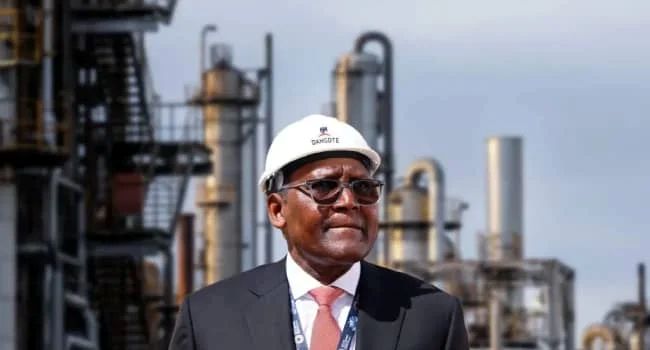
The decision by Nigerian industrialist Aliko Dangote to build East Africa’s largest oil refinery on Kenya’s Lamu Island is more than another multibillion-dollar investment. For Tanzania and the wider East African Community (EAC), it has the potential to reshape regional fuel markets, strengthen energy security and alter the economics of doing business across the region.
If completed as planned, the 700,000-barrel-per-day refinery will become Africa’s second-largest after Dangote’s Lagos refinery and one of the continent’s most significant privately financed industrial projects. Although the final investment cost has not been confirmed, estimates place it at as much as US$17 billion, making it one of the largest industrial investments ever undertaken in East Africa.
For Tanzania, whose economy depends heavily on imported refined petroleum products despite possessing natural gas reserves and an expanding transport network, the refinery could prove transformative.
A new fuel map for East Africa
Today, East Africa remains one of the world’s largest importers of refined petroleum products. Most petrol, diesel, jet fuel and industrial fuels consumed in Tanzania, Kenya, Uganda, Rwanda, Burundi, Zambia and the eastern Democratic Republic of Congo are imported from refineries in the Middle East, India and Asia.
That dependence has repeatedly exposed the region to global disruptions.
Russia’s invasion of Ukraine, supply-chain bottlenecks following the Covid-19 pandemic and recent tensions in the Middle East all triggered fuel price spikes that filtered through to transport costs, food inflation and industrial production.
A refinery within East Africa would significantly shorten supply chains.
Instead of relying almost entirely on overseas refiners, countries such as Tanzania could source a substantial portion of their refined fuels from within the region, reducing shipping times and potentially lowering freight costs.
“It is a massive project, but one that is needed in many ways on the continent and in the East Africa region,” Oge Onubogu, Director and Senior Fellow at the Center for Strategic and International Studies (CSIS) in Washington, told Deutsche Welle. She noted that beyond Kenya, the investment could create jobs and stimulate regional economic activity.
Strategic implications for Tanzania
For Tanzania, the implications extend well beyond cheaper fuel.
The country is implementing some of the largest infrastructure projects in its history, including the Standard Gauge Railway (SGR), expansion of the Port of Dar es Salaam, the East African Crude Oil Pipeline (EACOP) and major mining and industrial investments.
All of these projects depend on reliable fuel supplies.
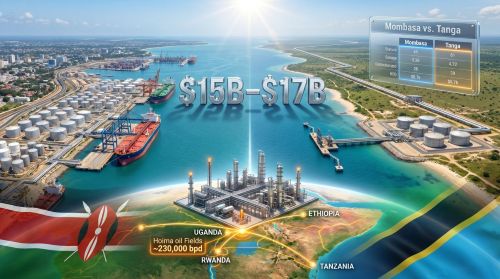
Lower logistics costs would improve the competitiveness of Tanzanian manufacturers, exporters and transport companies while reducing operating expenses across sectors ranging from agriculture to mining.
Energy analysts have long argued that fuel costs remain one of the biggest constraints on industrial competitiveness in East Africa.
According to the African Development Bank (AfDB), efficient regional energy infrastructure is essential for accelerating industrialisation and reducing production costs across the continent.
Regional integration in action
The refinery also aligns with the broader vision of the East African Community and the African Continental Free Trade Area (AfCFTA), both of which seek to strengthen regional value chains.
Rather than importing refined fuels from outside Africa, East African countries could increasingly source products from within the continent.
That would retain more value within African economies while strengthening regional trade.
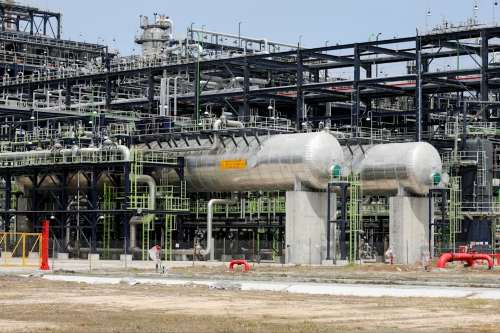
Economist Leo Kemboi of the Institute of Economic Affairs Kenya believes the project represents an economic opportunity for the region despite ongoing negotiations over investment incentives.
“Given the size of the East African oil market, it’s a good thing for the economy of the EAC,” he told Deutsche Welle.
For Tanzania, which has consistently promoted regional trade through investments in ports, railways and logistics corridors, the refinery could complement its ambition to become East Africa’s transport and commercial gateway.
Competition – and opportunity
The project also carries a degree of irony.
For months, Tanzania and Kenya were both viewed as potential hosts for Dangote’s second refinery before the Nigerian billionaire eventually selected Lamu.
While Tanzania missed out on hosting the investment, its economy still stands to benefit from proximity to what will become one of Africa’s largest refining centres.
The refinery could provide fuel for northern Tanzania through existing transport corridors while easing pressure on fuel imports arriving through the Port of Dar es Salaam.
Some analysts also believe the project may encourage Tanzania to accelerate its own downstream petroleum strategy, particularly as natural gas developments gather pace and demand for industrial energy rises.
The environmental equation
Not everyone views the investment without concern.
Lamu is a UNESCO World Heritage Site, and environmental groups have questioned the long-term ecological implications of such a large industrial complex.
Onubogu cautions that African governments should draw lessons from Nigeria’s Niger Delta, where decades of oil production have left significant environmental damage.
“I hope these considerations will feature in their conversations,” she said, adding that environmental safeguards must accompany economic development.
Kenya itself has made substantial progress in renewable energy, with more than 90 per cent of its electricity generated from renewable sources, particularly geothermal and hydropower.
The challenge will be balancing fossil-fuel infrastructure with Africa’s longer-term clean energy transition.
A changing regional energy landscape
For Tanzania, the refinery arrives at a pivotal moment.
The country is seeking to industrialise, expand manufacturing and position itself as a regional logistics hub under Dira 2050. Achieving those ambitions will require abundant, reliable and competitively priced energy.
While renewable energy will play an increasingly important role, petroleum products are expected to remain essential for transport, mining, aviation, construction and heavy industry for decades.
The Lamu refinery therefore represents more than another industrial project.
It is a strategic asset that could strengthen East Africa’s resilience against global energy shocks, deepen regional integration and provide Tanzania with a more secure and potentially less costly source of refined fuels. For businesses across Tanzania, the refinery may ultimately mean lower operating costs, more stable fuel supplies and a stronger foundation for industrial growth. In a region where energy security increasingly defines economic competitiveness, that could prove to be its greatest value.