By Benny Mwaipaja, Banjul
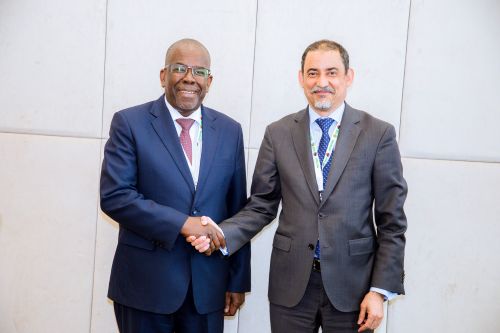
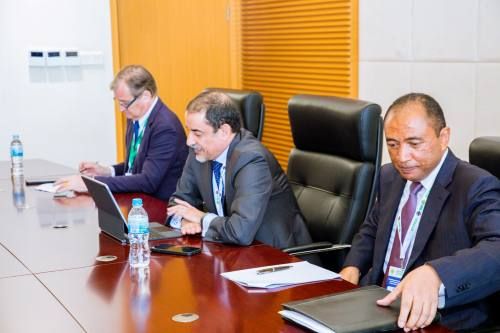
Tanzania has reaffirmed its long-standing partnership with the International Monetary Fund (IMF), signalling a new phase of cooperation focused on supporting economic reforms, development financing and macroeconomic stability, following high-level talks between Finance Minister Ambassador Khamis Mussa Omar and the Fund’s newly appointed Director of the African Department, Zeine Zeidane.
The meeting took place on the sidelines of the 2026 African Caucus Meetings in Banjul, where finance ministers and central bank governors from 54 African countries are engaging with the IMF and the World Bank on the continent’s economic priorities.
The discussions centred on strengthening the strategic relationship between Tanzania and the IMF, which has evolved over more than six decades into one of the country’s key international development partnerships.
Zeidane recently assumed leadership of the IMF’s African Department, succeeding Abebe Aemro Selassie, who completed his tenure after serving as one of the institution’s most influential voices on African economic policy.
For Tanzania, the meeting offered an opportunity to introduce the country’s new economic priorities while reinforcing cooperation with one of its most important multilateral financial partners.
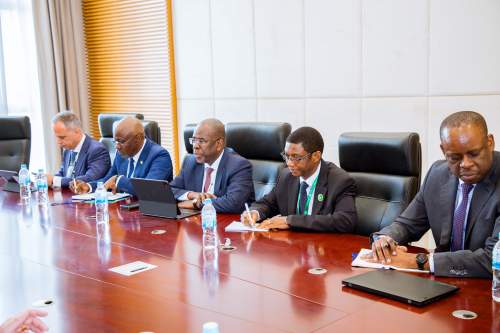
The Tanzanian delegation also included Zanzibar’s Minister for Finance and Planning, Dr Juma Malik Akil, and Bank of Tanzania Governor Emmanuel Tutuba, underscoring the importance the Government attaches to its engagement with the Fund.
A relationship spanning more than six decades
Tanzania’s partnership with the IMF dates back to September 10, 1962, barely a year after independence, when the country became a member of the institution.
Over the past 64 years, the relationship has evolved from traditional balance-of-payments support into a broader partnership encompassing financial assistance, policy advice, technical expertise and institutional capacity building.
According to the Ministry of Finance, cumulative IMF lending commitments to Tanzania have reached Special Drawing Rights (SDR) 3.27 billion, with an active lending portfolio currently standing at approximately SDR 1.8 billion.
Beyond financing, the IMF has played a significant role in supporting reforms aimed at strengthening public financial management, enhancing domestic revenue mobilisation, improving monetary policy frameworks and safeguarding macroeconomic stability.
The Fund has also provided technical assistance to the Bank of Tanzania, the Ministry of Finance and other public institutions, helping strengthen economic governance and policy implementation.
Supporting Tanzania’s economic transformation
The renewed engagement comes at a time when Tanzania is pursuing an ambitious development agenda under Dira 2050, which places industrialisation, private-sector-led growth, infrastructure investment and export competitiveness at the centre of long-term economic planning.
Maintaining macroeconomic stability remains critical to achieving these objectives.
The IMF has repeatedly recognised Tanzania for sustaining relatively strong economic growth while keeping inflation under control despite global shocks, including the COVID-19 pandemic, supply chain disruptions and geopolitical tensions that affected food and energy prices.
Recent collaboration between Tanzania and the IMF has also supported reforms designed to improve fiscal sustainability, strengthen debt management and build resilience against external economic risks.
For investors, continued engagement with the IMF is often viewed as a positive signal of sound macroeconomic management and policy credibility, helping reinforce confidence in the country’s economic outlook.
African Caucus focuses on shared priorities
The meeting took place during the annual African Caucus, a forum that enables African countries to present common positions to the IMF and the World Bank on issues affecting the continent’s development.
This year’s discussions are focusing on debt sustainability, climate finance, infrastructure development, job creation, trade expansion and accelerating economic transformation across Africa.
The gathering brings together finance ministers, central bank governors, policymakers and development partners to strengthen cooperation on challenges that increasingly require coordinated regional responses.
Against this backdrop, Tanzania’s bilateral engagement with the IMF reflects its broader strategy of leveraging international partnerships to support domestic economic priorities while maintaining policy independence.
Way ahead
As Tanzania continues implementing large-scale infrastructure projects, expanding industrial production and strengthening its financial sector, cooperation with multilateral institutions such as the IMF is expected to remain an important pillar of economic policy.
The meeting between Ambassador Omar and Zeidane signals continuity in a relationship that has supported Tanzania’s economic development for more than six decades while opening the door to deeper collaboration in areas such as fiscal reforms, financial sector resilience, technical assistance and sustainable economic growth. With both parties expressing commitment to enhancing their strategic partnership, the discussions in Banjul reaffirm Tanzania’s determination to combine sound macroeconomic management with an ambitious long-term development agenda designed to accelerate inclusive and sustainable growth.