By Business Insider Reporter
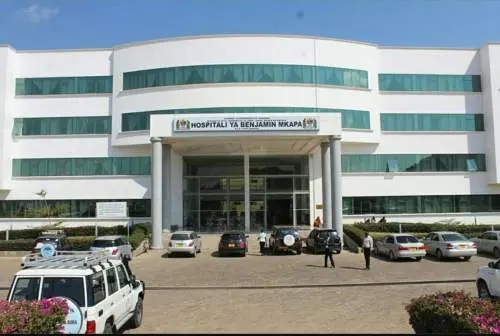
Benjamin Mkapa Hospital (BMH) is steadily emerging as one of East and Central Africa’s leading centres for specialized healthcare, as it pursues an ambitious vision of transforming Dodoma into a regional medical tourism destination, Executive Director Prof Abel Makubi has revealed.
“Our long-term ambition is to see Dodoma evolve into a leading medical tourism city and a centre for world-class specialized healthcare in Africa,” Prof Makubi said.
In a recent exclusive interview with Business Insider, he said the hospital’s rapid transformation reflects Tanzania’s growing ability to provide advanced, high-quality treatment locally while attracting patients from across the region seeking affordable and internationally competitive healthcare services.
According to him, BMH’s growing regional reputation is being driven by expanded specialized treatment capacity, rising numbers of international patients, and increasing confidence in the hospital’s clinical expertise, modern technology, and quality of care.
Confidence in Tanzania’s Healthcare Expertise
Prof Makubi said the hospital’s growing success in highly specialized treatment is increasingly attracting international patients from countries including Comoros, Burundi, Malawi and the Democratic Republic of the Congo (DRC).
“For the first time, we successfully conducted a bone marrow transplant for a patient from the DRC, which demonstrates the growing regional confidence in Tanzania’s healthcare expertise,” he said.
The hospital has also established a Royal, International Patients and Master Health Check-up Clinic targeting foreign patients, dignitaries, and individuals seeking comprehensive medical examinations without travelling abroad.
Prof Makubi emphasized that central to achieving the medical tourism city vision is sustained government support through timely and strategic investment, which has enabled the hospital to expand critical medical infrastructure, strengthen specialized healthcare capacity, and recruit highly skilled professionals needed to deliver advanced world-class treatment.
Furthermore, the close partnership between BMH and the University of Dodoma (UDOM) has strengthened the delivery of high-standard, quality healthcare, bringing together clinicians, academicians, and researchers to work collaboratively as an integrated team.
He said the institution’s progress over the past two years has been guided by a deliberate strategy focused on strengthening service delivery, expanding highly specialized medical services, improving patient experience, and positioning Tanzania as a credible healthcare and medical tourism hub in Africa.
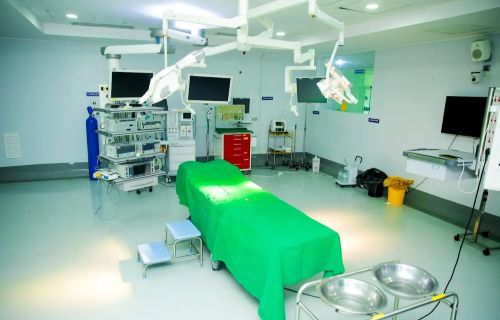
“We want Tanzania not only to meet its domestic healthcare needs, but also to become a trusted destination for specialized treatment and medical tourism across the region,” he said.
“Over the past two years, one of our major priorities has been aligning ourselves with the hospital’s vision of providing high-quality healthcare services through modern technology while ensuring those services reach more citizens and meet international standards,” Prof Makubi said.
He noted that when he assumed office nearly two years ago following his appointment by President Dr Samia Suluhu Hassan, the hospital identified the need to strengthen patient experience and operational efficiency despite already offering quality services.
“We focused first on changing the mindset of our staff and leaders so that patient care becomes not just treatment, but a service rooted in professionalism, compassion, and dignity,” he said.
According to him, the hospital introduced extensive customer care training programme aimed at improving communication, reducing waiting times, and strengthening accountability among healthcare workers.
The reforms have since expanded into technology-driven patient support systems, including a 24-hour call centre, SMS notifications for services such as laboratory results, and interactive WhatsApp platforms known as “BMH Family,” where patients and citizens directly engage hospital management.
“These systems have helped us become more responsive while also improving public trust in the services we provide,” he explained.
Beyond patient experience, the hospital has recorded major milestones in highly specialized treatment areas that were previously unavailable or inaccessible within Tanzania.
This July BMH will mark its 10th anniversary, celebrating a decade of progress in specialized healthcare delivery.
Among its standout achievements is the successful performance of bone marrow transplants for patients with unmatched blood groups – a breakthrough that Prof. Makubi described as the first of its kind in Tanzania and across the Great Lakes region, underscoring the hospital’s growing role as a centre of medical innovation.
In the past five years alone, BMH has performed kidney transplants on 50 patients, conducted 30 bone marrow transplants for children with sickle cell disease, and completed 518 knee and hip replacements as well as 1,347 laser lithotripsy procedures. The hospital has also carried out 2,074 cath lab procedures, performed open-heart surgeries on more than 73 patients, and implanted pacemakers in 34 others.
The hospital has also expanded minimally invasive laparoscopic surgery across neurosurgery, urology, gynecology, ophthalmology, and general surgery, enabling faster recovery and fewer complications for patients.
“We have also established a dedicated Stroke Unit and one of the country’s largest Diabetic Foot Clinics within the public healthcare system,” he added.
Government Investment in Driving Transformation
Prof Makubi attributed much of the hospital’s rapid transformation to sustained government investment under President Dr Samia Suluhu Hassan’s administration, particularly in medical equipment, medicines, technology, and human capital development.
Over the past two years, medicine availability at the hospital has increased from between 89 and 90 percent to nearly 99 percent, while the workforce has expanded from about 800 employees to more than 1,100, including an increase in specialist doctors from 60 to nearly 100.
“This achievement has been made possible through strong government investment and collaboration among hospital staff, the Ministry of Health, the Hospital Board of Trustees, and our development partners,” he said.
Meanwhile, partnerships with institutions including University of Dodoma and development partners from Japan have secured more than TSh 28 billion for the establishment of a Centre of Excellence for Kidney Transplantation.
BMH has also officially been recognized by the East African Community as a regional Centre of Excellence in bone marrow transplantation services, while its laboratory recently earned international accreditation for quality and diagnostic accuracy.

Last year, the hospital was also recognized by Tanzania’s Ministry of Health as the best hospital in its category nationwide.
Healthcare Emerging as a Strategic Economic Sector
Health sector analysts say BMH’s progress signals Tanzania’s growing capacity to reduce dependence on overseas treatment while positioning healthcare as a strategic economic sector capable of generating foreign exchange, supporting regional integration, and strengthening national healthcare resilience.
Prof Makubi said BMH’s transformation reflects how strategic leadership, sustained investment, innovation, and strong public-sector collaboration can reposition Tanzania as a leading healthcare destination in Africa.
“Benjamin Mkapa Hospital is evolving into a strategic national institution supporting healthcare innovation, economic growth, regional cooperation, and national development,” he said. And if the current trajectory continues, Benjamin Mkapa Hospital may well become not only a symbol of healthcare transformation in Tanzania, but also one of the defining pillars of the country’s emerging regional influence in advanced medicine.