

By Business Insider Reporter
The proposed connection of the Lobito and Tanzania-Zambia Railway Authority (TAZARA) corridors is emerging as more than a railway infrastructure project. It could create a strategic transcontinental trade route linking two oceans, opening new economic opportunities for landlocked African countries while reshaping the geopolitical dynamics surrounding access to the continent’s critical mineral resources.
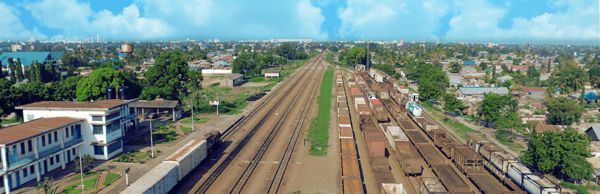
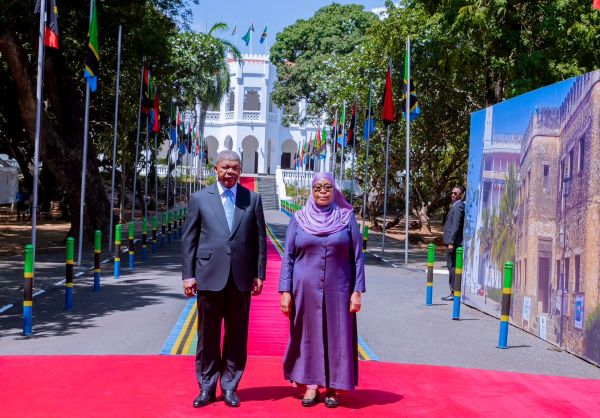
President Samia Suluhu Hassan announced the agreement on October 29, 2026, at State House in Dar es Salaam, during a joint press briefing with visiting Angolan President João Manuel Gonçalves Lourenço. The proposal would connect Angola’s Benguela Railway, which forms part of the Western-backed Lobito Corridor, with the Chinese-built TAZARA railway linking Dar es Salaam to Kapiri Mposhi in Zambia.
The envisaged network would extend across Angola, the Democratic Republic of Congo (DRC), Zambia and Tanzania, connecting the Atlantic port of Lobito with Dar es Salaam on the Indian Ocean.
Its economic significance lies in the possibility of providing mineral-producing countries in Central Africa with alternative export routes, improving access to international markets and reducing dependence on individual transport corridors.
The proposed link brings together two infrastructure projects that have become increasingly important in the international competition for access to Africa’s strategic minerals, particularly copper and cobalt, which are essential to electric vehicle manufacturing, renewable energy technologies and other industries driving the global energy transition.
The Lobito Corridor, anchored by Angola’s Benguela Railway and the Atlantic port of Lobito, provides an export route for mineral-producing areas of the DRC and Zambia. It has attracted substantial support from the United States, the European Union and other Western partners seeking to diversify mineral supply chains and strengthen commercial links with Central Africa.
On the other side, TAZARA was built in the 1970s with Chinese assistance to give landlocked Zambia an alternative route to the Indian Ocean, reducing its dependence on transport networks running through southern Africa. Its strategic importance has gained renewed attention following a US$1.4 billion modernisation agreement signed by Tanzania, Zambia and China in 2025.
Connecting the two systems would create an unusual infrastructure convergence: a Western-supported transport corridor meeting a railway network historically associated with Chinese development cooperation.
Turning geopolitical competition into economic opportunity
The proposed connection could challenge the perception that African countries must choose between Chinese and Western infrastructure partnerships.
Rather than operating as competing routes, Lobito and TAZARA could become complementary networks, giving Zambia and the DRC access to both the Atlantic and Indian oceans. This would provide exporters with greater flexibility in choosing shipping routes, potentially improving freight efficiency, reducing logistics costs and strengthening their negotiating position with transport operators.
For Tanzania, analysts say, the economic opportunity is particularly significant. Dar es Salaam could consolidate its position as a major gateway for Central and Southern African trade, attracting additional mineral cargo and stimulating demand for port services, warehousing, freight forwarding and railway operations.
The potential benefits would also extend to domestic businesses through opportunities in logistics, engineering, construction, maintenance and supporting services. Increased cargo volumes could strengthen the commercial case for further investment in Tanzania’s railway and port infrastructure.
However, they add, translating the proposal into an operational corridor will require more than diplomatic agreement. The countries involved must establish the technical, financial and institutional arrangements needed to connect the existing networks. This includes financing the missing railway sections, harmonising railway operating systems, coordinating customs procedures and ensuring competitive freight tariffs.
The project will also need to demonstrate that its commercial benefits justify the substantial investment required, particularly given the long distances, infrastructure constraints and different operating conditions across the four countries.
Beyond railway diplomacy
The railway initiative formed part of broader efforts to deepen economic cooperation between Tanzania and Angola during Lourenço’s state visit.
The two countries also signed a bilateral air services agreement intended to facilitate direct flights between Dar es Salaam and Luanda. Angola further invited Tanzania to participate in the development of its Lobito oil refinery, with the Tanzania Petroleum Development Corporation assessing the feasibility of a potential investment partnership.
These initiatives reflect an opportunity to expand bilateral relations beyond traditional diplomacy into transport, energy, investment and trade.
Ultimately, the analysts further contend, the Lobito-TAZARA proposal carries significance beyond the construction of railway infrastructure. If realised, it could strengthen Africa’s control over its trade routes, improve the commercial value of its mineral resources and demonstrate how countries can leverage competing international partnerships to advance their development priorities. For Tanzania, the strategic prize is not simply a railway connection to Angola, but a stronger position in an emerging continental trade network linking two oceans and some of Africa’s most economically important mineral-producing regions.