

By Business Insider Reporter
Ecobank Group has agreed to join China’s Cross-Border Interbank Payment System (CIPS), strengthening efforts to simplify trade payments between Africa and China as businesses seek more efficient ways to settle transactions in Chinese yuan.
The Togo-based banking group operates in 34 African countries, including Tanzania. Its planned connection to CIPS follows similar moves by Standard Bank Group and the African Export-Import Bank to expand access to China’s cross-border payment infrastructure.
The development has particular relevance to Tanzania, where Stanbic Bank Tanzania, part of Standard Bank Group, has already introduced direct Tanzanian shilling-to-yuan payments, enabling eligible customers to pay Chinese suppliers without first converting their funds into US dollars.
Ecobank’s initiative adds momentum to growing efforts to make Africa-China trade payments more direct, efficient and potentially less costly.
Stanbic cuts out an extra currency conversion
Stanbic launched its CIPS-enabled service on August 12, 2026, and highlighted its significance at a Tanzania-China business forum in Dar es Salaam on August 27.
Previously, a Tanzanian importer paying a Chinese supplier might have to convert shillings into US dollars before converting the dollars into yuan. The new payment route removes that additional currency-conversion step, potentially reducing transaction costs and exchange-rate exposure.
“For businesses trading with China, the payment process has traditionally involved converting Shillings into US dollars and then into Yuan. Our direct Shilling-to-Yuan solution removes that extra step, helping customers save time, manage costs and transact more efficiently,” said Fredrick Max, Stanbic Bank Tanzania’s Head of Business and Commercial Banking.
The bank said eligible transactions could settle within minutes, subject to normal banking requirements and operating hours. It also waived transfer charges on direct yuan payments through December 31, 2026, subject to applicable terms.
Anthony Kimambo, Stanbic Bank Tanzania’s Head of Trade, underscored the importance of China to Tanzania’s import bill.
“About 3,000 out of every 10,000 Shillings Tanzania spends on imports goes to China,” Mr Kimambo said, explaining that CIPS provides customers with a more direct bank-to-bank payment route.
For importers of machinery, solar equipment, pharmaceuticals, construction materials and industrial inputs, the service offers another option for settling payments. Actual savings, however, depend on exchange rates, bank charges and suppliers’ payment terms.
Dar es Salaam businesswoman Lulu Kheri said fluctuating exchange rates and informal payment arrangements had created uncertainty for traders, including concerns over whether suppliers would receive their money.
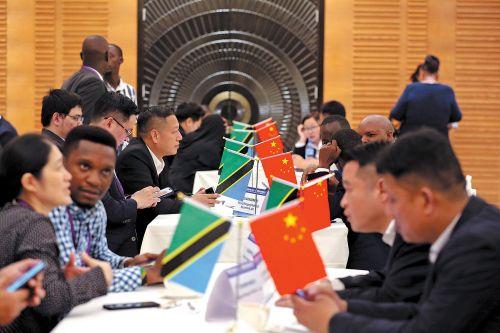
She said predictable exchange rates, lower costs and confidence in payment completion were critical benefits for businesses.
Part of Standard Bank’s African strategy
Stanbic’s service forms part of Standard Bank Group’s broader initiative to strengthen financial connections between Africa and China.
Working with the Industrial and Commercial Bank of China (ICBC), Standard Bank has expanded its access to China’s renminbi payment infrastructure. In June 2026, the two institutions received authorisation to clear renminbi transactions in Africa, with operational capacity covering 19 African countries.
By July 2026, Standard Bank reported that it had facilitated more than CNY8 billion, equivalent to approximately US$1.2 billion, in transactions through CIPS. Tanzania was among the markets covered by its expanding service.
The group’s strategy extends beyond payments. Mr Max said Stanbic wanted to help Tanzanian businesses identify credible Chinese suppliers, establish commercial relationships and connect with potential buyers for Tanzanian products.
Investment and export opportunities
The benefits could extend to investment flows. Alfred Ngelula, Head of the China Desk at the Tanzania Investment and Special Economic Zones Authority (TISEZA), said reducing currency-conversion costs could improve the economics of investment between the two countries.
“When an investor brings capital in Yuan, it has traditionally had to pass through the dollar before becoming Shillings. Take away that additional cost and you reduce the cost of investing,” Mr Ngelula said.
However, payment efficiency is only one factor in investment decisions, alongside regulation, infrastructure, taxation and market opportunities. Tanzania also faces the challenge of expanding exports to China rather than relying predominantly on imports.
“We buy from China, but we also want to sell so that we improve the balance of trade,” said Benson Nkini, Senior Trade Officer at the Tanzania Trade Development Authority (TanTrade).
More efficient yuan settlements could help exporters receive payments where Chinese buyers agree to transact in the currency. Increasing exports will nevertheless require competitive products, reliable supply, appropriate certification and stronger access to Chinese markets.
Ecobank widens the regional picture
Ecobank’s planned CIPS participation could extend yuan payment connectivity across its extensive African network, although the availability of specific services will depend on implementation and arrangements in individual markets.
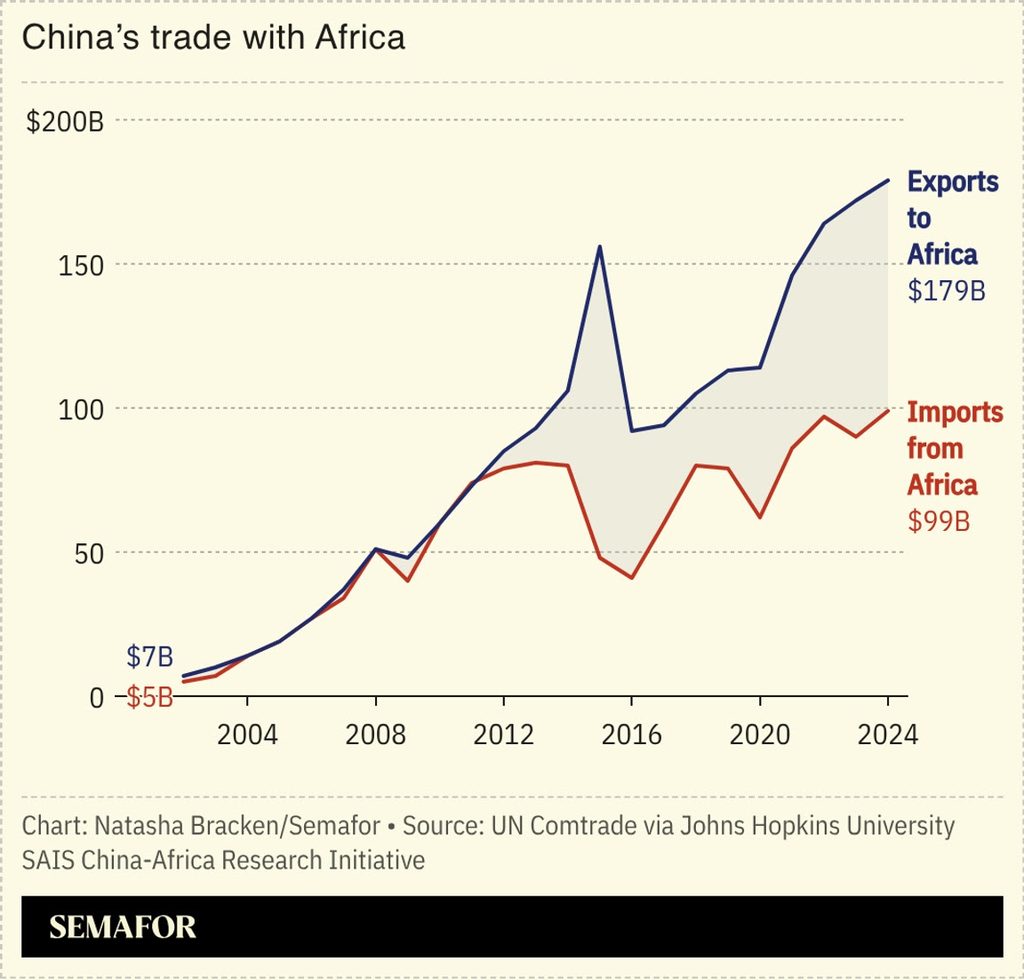
The move comes amid expanding China-Africa trade, which increased by 18 per cent in 2025. China’s decision to remove import tariffs for African countries except Eswatini from May 2026 has added further impetus to commercial engagement.
Launched in 2015, CIPS supports the clearing and settlement of cross-border payments denominated in renminbi. Its expansion complements existing international payment arrangements; it does not eliminate the US dollar’s role in global trade. For Tanzania, Stanbic’s existing service and Ecobank’s planned participation signal growing access to alternative payment channels. The larger opportunity is to turn more efficient settlements into stronger trade and investment ties, while enabling Tanzanian businesses to expand exports and capture greater value from their commercial relationship with China.