By Business Insider Reporter
Tanzania is seeking to attract substantially more foreign investment to accelerate industrialisation, expand local processing of natural resources and create jobs for its growing young population, Prime Minister Dr. Mwigulu Nchemba has said.
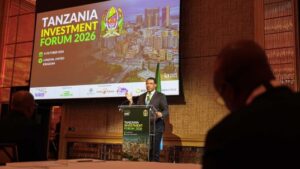
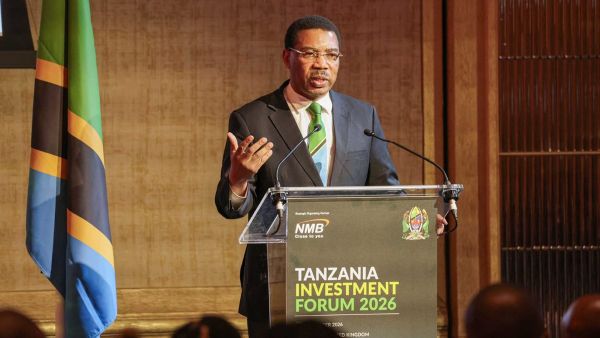
Speaking on the sidelines of the Tanzania Investment Forum 2026 in London on October 8, Dr. Nchemba said empowering the private sector to expand business activities was essential to absorbing the growing number of young people entering the labour market.
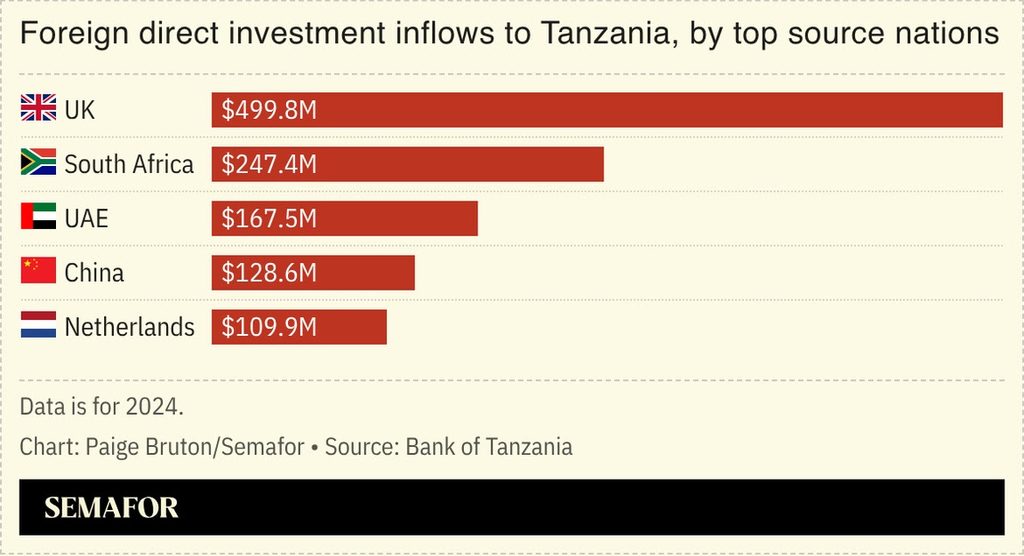
According to a report by Semafor Africa’s Alexis Akwagyiram, the government has set a target of US$15 billion in annual foreign direct investment (FDI), approximately three times the previous year’s figure. The investment drive is intended to support Tanzania’s broader economic ambitions, including infrastructure development, industrial expansion and greater value addition to natural resources.
Dr. Nchemba told reporters that industrialisation would enable Tanzania to process more of its natural resources domestically, creating employment opportunities while retaining a greater share of the economic value generated from its minerals and other commodities.
The employment challenge is particularly significant given Tanzania’s demographic profile. The report cited United Nations estimates indicating that 42 percent of the country’s population is aged 14 or younger, highlighting the need for sustained growth in productive industries as younger generations enter working age.
Dr. Nchemba argued that empowering the private sector to create employment was essential to absorbing school leavers and addressing the country’s job creation challenge.
Infrastructure and industrial investment
The London forum provided a platform for Tanzania to present investment opportunities to international capital providers and businesses as the country seeks to strengthen its industrial capacity and competitiveness.
Convened by the Tanzania High Commission in the United Kingdom, co-organised by NMB Bank and delivered in partnership with Invest Africa, the forum brought together government officials, financial institutions, prospective investors and private-sector representatives to explore opportunities across key economic sectors.
The government’s investment drive is closely linked to infrastructure development, particularly railways, ports and electricity generation. These investments are expected to improve connectivity, reduce logistics constraints and provide the capacity required for industrial expansion.
Reliable and competitively priced electricity is especially important for manufacturing and mineral processing, which require substantial and consistent power supplies.

The Julius Nyerere Hydropower Project, with an installed capacity of 2,115 megawatts, represents a major addition to Tanzania’s electricity infrastructure. Its economic benefits will depend partly on how effectively the additional generating capacity supports productive industries, expands reliable electricity supply and attracts new investment.
Senior officials and financial-sector leaders join investment drive
The forum’s official programme brought together senior government officials responsible for economic policy, investment promotion, mining and digital development, alongside leaders from Tanzania’s financial sector and international investment community.
Participants included Finance Minister Ambassador Khamis Mussa Omar; Planning and Investment Minister Prof. Kitila Mkumbo; Minerals Minister Anthony Mavunde; and Communication and Information Technology Minister Angellah Kairuki.
Also participating were Tanzania Investment and Special Economic Zones Authority (TISEZA) Director General Gilead Teri and Tanzania Trade Development Authority (TanTrade) Director General Ephraim Balozi Mafuru.
The financial-sector delegation included NMB Bank Managing Director and CEO Ruth Zaipuna and CRDB Bank Chief Executive Officer Abdulmajid Nsekela, alongside representatives of development finance institutions and international investors.
Their participation highlighted the importance of connecting government investment priorities with the financing, regulatory support and business partnerships needed to move projects from promotion to implementation.
Investment agencies have a particularly important role in helping prospective investors identify bankable opportunities, understand regulatory requirements and navigate approval processes. Banks and development finance institutions, meanwhile, can help structure financing for projects that require substantial upfront capital and longer investment horizons.
For Tanzania, the effectiveness of the investment drive will depend not only on presenting opportunities to international investors, but also on providing clear project pipelines, predictable regulations, reliable infrastructure and practical pathways for implementation.
Turning natural resources into industrial value
Tanzania possesses significant natural-resource potential, including offshore natural gas, gold, diamonds and minerals used in energy-transition technologies and digital infrastructure.
These resources offer opportunities extending beyond extraction to mineral processing, refining, manufacturing and associated services.
Greater domestic processing could create industrial jobs, develop local suppliers, facilitate technology transfer and diversify exports. It could also strengthen commercial linkages between large investment projects and Tanzanian small and medium-sized enterprises.
However, realising these benefits requires investment in processing facilities, technology, skills, infrastructure and competitive supply chains. Investors also need regulatory certainty, efficient administrative processes and clarity on project implementation.
The challenge is therefore not simply to attract capital, but to ensure that it flows into activities capable of generating sustainable economic value and employment.
Investment opportunities across key sectors
The forum’s wider programme identified opportunities in critical minerals, energy, infrastructure and logistics, agribusiness, manufacturing, information and communication technology, financial services and tourism.
In mining, the priority extends to processing and refining minerals locally rather than relying predominantly on exports of unprocessed resources. In agribusiness, investment in food processing, storage and supply chains could increase the value of agricultural output and expand market access.
Manufacturing could benefit from improved infrastructure and access to domestic raw materials, while digital investment could support technology services, connectivity and more efficient business operations. Tourism also offers opportunities in hospitality and supporting infrastructure. These sectors could contribute to economic diversification and employment creation, although their eventual impact will depend on the projects financed, implemented and brought into operation.
Investment opportunities highlighted by the forum
- The official forum programme identified the following areas for investment and partnership.
| Sector | Potential investment opportunities |
| Critical minerals and mining | Mineral exploration, processing, refining and mineral-based industries |
| Energy | Natural gas, renewable energy, electricity generation and associated infrastructure |
| Infrastructure and logistics | Railways, ports, freight services, transport corridors and logistics facilities |
| Agribusiness | Agricultural production, food processing, storage and export-oriented value chains |
| Manufacturing | Industrial production, domestic value addition and export manufacturing |
| ICT and digital economy | Telecommunications, digital infrastructure and technology services |
| Financial services | Investment finance, trade finance and financing for productive businesses |
| Tourism | Hospitality, tourism infrastructure and related services |