By Correspondent Peter Haule, Dodoma
Tanzania has called for stronger links between universities, industry and communities to ensure that research and innovation move beyond academic institutions and deliver practical solutions to Africa’s economic and social challenges.
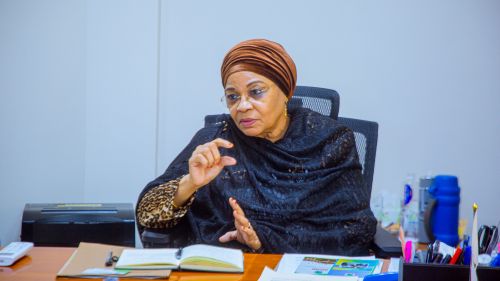
Finance Ministry Permanent Secretary Dr. Natu El-Maamry Mwamba said the African Institute for Capacity Development (AICAD) should intensify the use of research, training and institutional partnerships to address development constraints and support sustainable growth across East Africa and the continent.
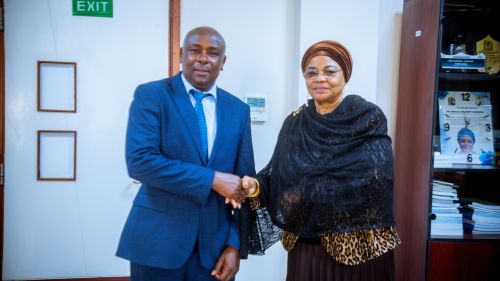
Dr. Mwamba made the remarks during talks with an AICAD delegation led by its Executive Director, Prof. James Njiru, at Treasury Square in Dodoma.
The discussions focused on strengthening cooperation with AICAD, a Nairobi-headquartered institution whose work includes capacity building, research and community outreach.
Dr. Mwamba said one of the institution’s important roles was helping build the capacity of individuals and institutions through innovative research and training, while ensuring knowledge generated by researchers could contribute to poverty-reduction efforts.
She said AICAD’s operations in Tanzania, Kenya and Uganda provide an opportunity to strengthen regional collaboration between academic institutions and communities facing similar economic and development challenges.
The institute works with Sokoine University of Agriculture (SUA) in Tanzania, Makerere University in Uganda and Egerton University in Kenya to promote research, innovation and the application of knowledge to community challenges.
“I commend AICAD for its efforts to promote development in African countries through strong and sustainable strategies that demonstrate its commitment to helping people lift themselves out of poverty through training and capacity building, particularly in agriculture,” Dr. Mwamba said.
Her remarks highlight a broader challenge facing African economies: ensuring that investments in universities and research institutions translate into technologies, skills and practical interventions that can be adopted by businesses and communities.
For sectors such as agriculture, where productivity and household incomes remain closely connected, stronger links between researchers, industry and communities can provide a route through which new knowledge reaches its intended users.
Dr. Mwamba urged AICAD to continue bringing higher education institutions, industry and communities together, saying such collaboration was important in ensuring research responds to real problems and contributes to economic and social development.
Opening research infrastructure
Prof. Njiru said AICAD was working to give researchers, academics and other stakeholders access to research facilities and resources, including computer systems and software, libraries, laboratories and other equipment.
He said expanding access to such infrastructure could strengthen researchers’ ability to undertake productive studies, generate knowledge and develop solutions to development challenges.
The approach also places greater emphasis on connecting academic knowledge with the needs of communities rather than treating research as an end in itself.
According to Prof. Njiru, AICAD continues to pursue that connection through research, training and partnerships with different stakeholders, with the aim of ensuring that research findings generate tangible benefits for communities.
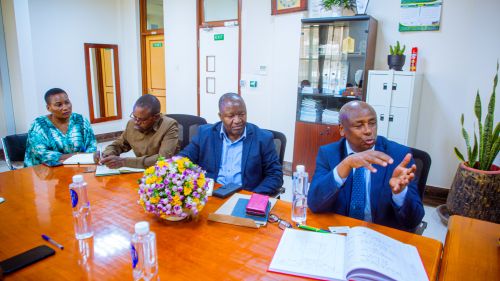
Investment in capacity building, research resources and the practical application of knowledge, he said, could contribute to poverty reduction and sustainable development across Africa.
For East Africa, the model points to the potential benefits of pooling research capacity across national borders. Universities may have specialised researchers and infrastructure, while industry brings practical market experience and communities provide direct knowledge of the problems that research is intended to solve.
Bringing the three together could therefore strengthen the path from identifying a development problem to researching it and eventually applying the resulting knowledge.
The discussions in Dodoma also underscore the growing importance of research capacity as African countries seek sustainable solutions to challenges in agriculture and other productive sectors.
Rather than simply increasing the volume of academic research, the emphasis is increasingly on whether that research can be converted into workable solutions and deliver measurable economic and social benefits. For AICAD, Dr Mwamba said, strengthening the bridge between universities, industry and communities will be central to ensuring that research and innovation play a bigger role in tackling poverty and supporting sustainable development across the region.