By Business Insider Reporter
Tanzania has taken a significant step towards developing a new industrial park within the Bagamoyo Special Economic Zone, as commitments made during President Samia Suluhu Hassan’s 2024 visit to South Korea begin moving from bilateral agreements to project preparation.
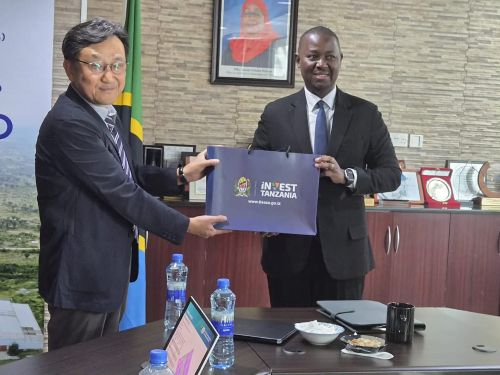
The Tanzania Investment and Special Economic Zones Authority (TISEZA) has held consultations with a consultancy firm engaged by the Export-Import Bank of Korea (KEXIM) to conduct a feasibility study for the development of a 282-hectare industrial park within the Bagamoyo Special Economic Zone (BSEZ).
Statement released by TISEZA says that the study will assess the infrastructure and development framework required to turn the site into an investment-ready industrial park, potentially opening another front in Tanzania’s efforts to attract manufacturing investment, expand exports and deepen domestic value addition.
The project traces its origins to President Samia’s official visit to Seoul in June 2024, when Tanzania and South Korea signed a framework agreement providing access to US$2.5 billion in concessional financing through Korea’s Economic Development Cooperation Fund (EDCF) between 2024 and 2028.
President Samia and then-South Korean President Yoon Suk Yeol witnessed the signing in Seoul.
The two governments also signed agreements covering critical minerals and the blue economy and moved towards an Economic Partnership Agreement aimed at expanding trade and investment relations.
For Tanzania, the latest Bagamoyo engagement provides an early indication of how that high-level economic diplomacy could translate into physical investment infrastructure.
From Seoul to Bagamoyo
The feasibility study is particularly significant because it moves the proposed industrial park beyond broad policy commitments towards the technical preparation necessary before financing, infrastructure construction and investor mobilisation can proceed.
It is expected to determine how the 282-hectare site should be developed and the infrastructure needed to make it commercially viable.
The development comes only days after Tanzania and South Korea agreed to accelerate implementation of projects under the US$2.5 billion EDCF framework.
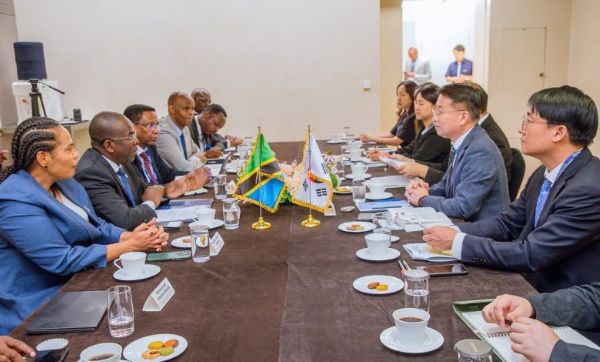
During talks with KEXIM on the sidelines of the Korea-Africa Economic Cooperation Ministerial Conference (KOAFEC) in Seoul this month, Finance Minister Khamis Mussa Omar called for faster implementation of agreed projects, including feasibility studies and detailed engineering designs.
The government said delays at different stages had previously slowed the transition of some agreed projects from financing commitments to implementation.
KEXIM acts as the implementing agency for South Korea’s EDCF programme, making its involvement in the Bagamoyo study an important connection between the financing framework agreed in Seoul and Tanzania’s industrial development programme.
Bagamoyo’s bigger industrial ambition
The proposed park also forms part of a much larger strategy for Bagamoyo.
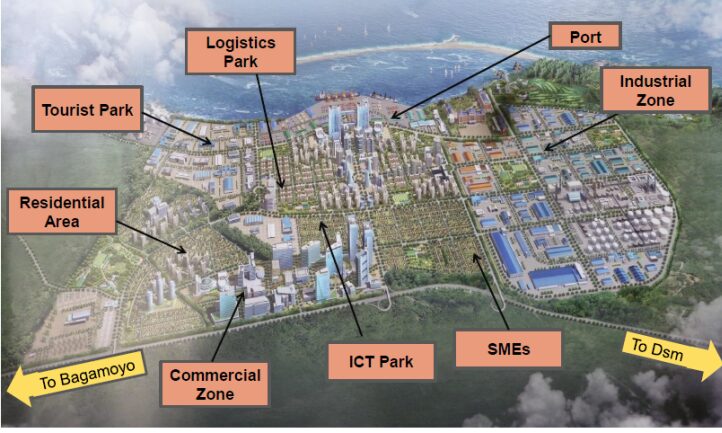
Tanzania is positioning the Bagamoyo Eco Maritime City (BEMC) as an integrated manufacturing, logistics and maritime hub under its long-term industrialisation plans.
TISEZA says the broader master plan envisages integrating a deep-sea port at Mbegani with industrial and technology parks and a special economic zone, supported by roads, railways, logistics facilities, electricity, water, gas and digital infrastructure.
That combination is important to the economics of industrial parks. Allocating land alone is unlikely to attract manufacturers unless investors also have reliable access to energy, transport, water, logistics and export gateways.
TISEZA has already been marketing land at Bagamoyo for industrial investment. An earlier Phase I development covers about 151 hectares with 134 industrial plots, targeting industries including textiles, pharmaceuticals and automotive manufacturing. The site is connected by the Bagamoyo highway and is positioned near the planned Mbegani-Bagamoyo Port and proposed transport and utility infrastructure.
Bagamoyo is one of five strategic economic zones launched by the government in 2025 alongside Kwala, Nala, Buzwagi and the expansion of the Benjamin William Mkapa SEZ. The zones are intended to support manufacturing, exports, import substitution, technology transfer and employment.
Economic diplomacy faces implementation test
The Bagamoyo feasibility study also provides a test of Tanzania’s increasingly investment-focused diplomacy.
President Samia’s 2024 Seoul visit secured the US$2.5 billion EDCF financing framework at government-to-government level. Two years later, Tanzania is seeking to convert that financing window into identifiable infrastructure and industrial projects.
The government has recently acknowledged that implementation speed will be critical. Finance Minister Omar told KEXIM this month that Tanzania valued Korean development cooperation but wanted closer coordination to ensure projects agreed under the EDCF framework did not remain stuck at feasibility and design stages.
The Bagamoyo study therefore represents an important-but preliminary-milestone. A feasibility study does not itself guarantee construction or investment. The commercial impact will depend on the study’s findings, subsequent financing decisions, infrastructure delivery and ultimately the ability to attract manufacturers into the park.
If those stages move forward, however, the project could strengthen Bagamoyo’s role in Tanzania’s attempt to build industrial clusters around strategic transport corridors and export infrastructure.
For Tanzania, the broader objective is to turn the agreements signed in Seoul into factories, infrastructure, jobs and exports. The 282-hectare Bagamoyo project is now beginning the technical work needed to determine whether one of those ambitions can move from economic diplomacy to industrial investment.