
By Peter Haule and Joseph Mahumi
The Tanzanian Government is calling on financial institutions, investors and the private sector to help turn the country’s growing pool of savings into productive investment capital, as it seeks to build a private-sector-led economy under its ambitious Development Vision 2050 (Dira 2050).
Finance Minister Khamis Mussa Omar said Tanzania’s development ambitions could not be financed by government budgets, external borrowing and development assistance alone, making domestic savings and private capital increasingly important to the country’s economic transformation.
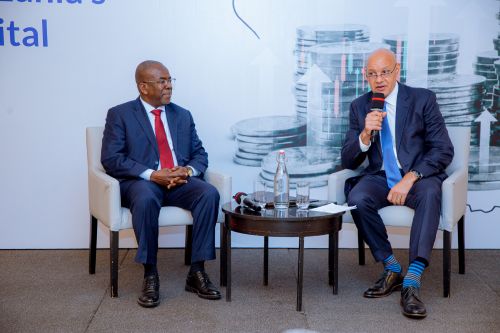
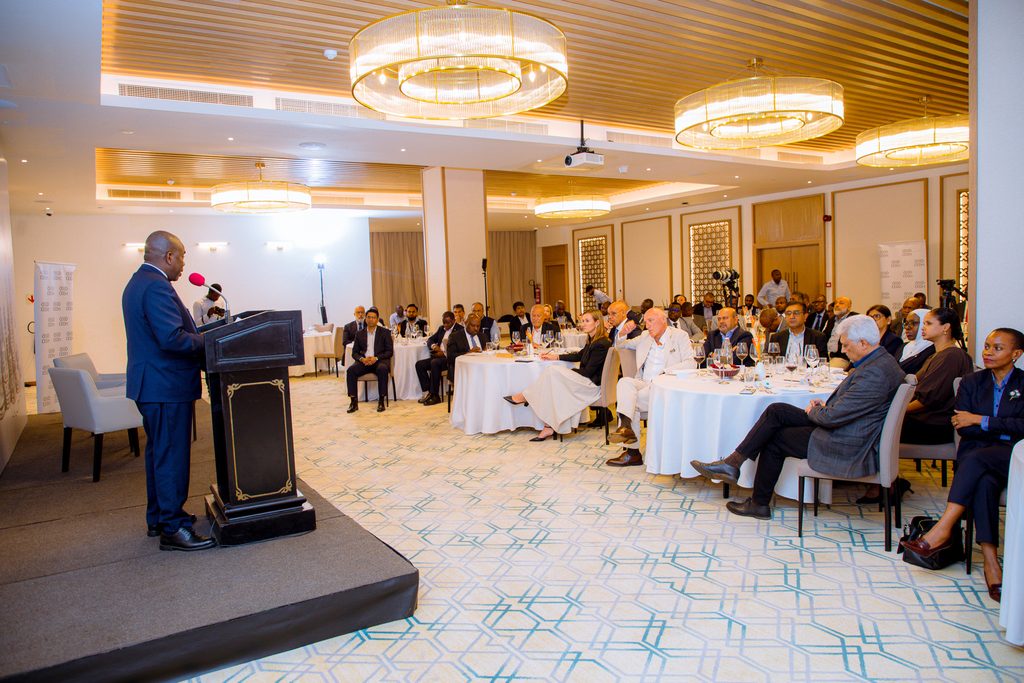
Speaking at the monthly Board of Directors and Members’ Dialogue of the CEO Roundtable of Tanzania (CEOrt) in Dar es Salaam, Mr Omar said the implementation of Vision 2050 had placed the private sector at the centre of Tanzania’s long-term development strategy.
The vision aims to transform Tanzania into a roughly US$1 trillion economy by 2050, with per capita income exceeding US$7,000, while building an industrial, inclusive and private-sector-driven economy.
“Implementation of Dira 2050 through the Long-Term Development Plan and the Fourth Five-Year Development Plan has placed strong emphasis on the private sector, with a 70:30 investment framework positioning the private sector as the main engine of growth and development financing,” Mr. Omar said.
The Fourth Five-Year Development Plan is expected to require investment of about TSh477 trillion, with the private sector projected to finance approximately 70 percent, equivalent to TSh324.49 trillion.
For Tanzania, the figures point to a fundamental shift in the way development must be financed.
The Government, Mr Omar said, must increasingly create the conditions for private capital to flow into productive sectors rather than attempting to finance the country’s development ambitions through public resources alone.
Financial system becomes critical
The Minister said Tanzania’s financial sector had remained resilient despite global economic shocks, supported by macroeconomic stability, sustained economic activity and reforms aimed at strengthening the financial system.
Private-sector lending has been growing at an average rate of more than 20 per cent, while non-performing loans have remained below the recommended five per cent threshold, he said.
The financial sector’s contribution to gross domestic product has also risen to 4.3 percent, while financial inclusion among adults has reached 76 percent.
Mr. Omar said these developments provided a foundation for the financial system to mobilise more savings and channel them into productive investment.
The challenge, however, is no longer simply getting more people into the formal financial system. It is ensuring that savings accumulated through banks, pension funds, investment funds and other institutions are converted into long-term capital for businesses and infrastructure.
That will require deeper capital markets and investment products capable of connecting domestic savings with productive opportunities.
Mr. Omar urged Tanzanians to increase their participation in the country’s capital markets, arguing that deeper and more liquid markets could provide an important source of long-term financing.
The Government, he said, would continue creating a supportive legal and regulatory environment for new capital-market products, while encouraging greater public participation in government securities, investment funds and the stock market.
FDI still important, but domestic capital matters
Foreign investment remains an important part of Tanzania’s development equation.
According to Mr Omar, foreign direct investment increased from US$1.656 billion in 2024 to US$1.718 billion in 2025, representing growth of 3.7 per cent.
FDI brings capital, technology, expertise and access to international markets. But the Minister stressed that Tanzanians must also be given greater opportunities to invest in and benefit from the growth of their own economy.
This means strengthening domestic capital mobilisation alongside efforts to attract foreign investors.
Tanzania already has several components of such a system, including a growing banking sector, pension funds and other financial institutions with expanding assets, wider participation in formal investment products and an increasingly active capital market.
The policy challenge is to connect these pools of money more effectively with businesses seeking expansion capital and with projects capable of generating jobs, exports and higher productivity.
Business sector wants reforms
CEOrt Board Chairman David Tarimo said the dialogue focused on how Tanzania could convert available savings into capital capable of supporting economic expansion.
He said the private sector would be central to delivering the objectives of Vision 2050 and the current development plan, making it necessary to address regulatory and policy barriers that can discourage investment.
The forum also provided an opportunity for business leaders to discuss measures needed to improve the investment environment and increase the ability of domestic companies to participate in Tanzania’s development.

Mr Tarimo said CEOrt would continue working with the Government to identify areas requiring reform and support changes to regulations and procedures that could make doing business easier and less costly, particularly for small businesses.
For Tanzania, the debate over savings and investment is becoming increasingly strategic.
A country seeking to build a US$1 trillion economy cannot afford to leave large pools of domestic savings sitting outside productive investment. Equally, capital must not simply be available; it must reach businesses, infrastructure, technology and industries capable of generating higher productivity and better-paying jobs.
The success of Dira 2050 may therefore depend as much on Tanzania’s ability to mobilise, deepen and efficiently allocate domestic capital as on its ability to attract foreign investment. The task ahead is to turn savings into investment, investment into production, and production into jobs, exports and sustained economic growth.