By Correspondents Joseph Mahumi and Peter Haule
Tanzania is deepening its engagement with global professional services firm KPMG as the government seeks to modernise tax policy, strengthen revenue administration and create a more investment-friendly business environment under its long-term development blueprint.
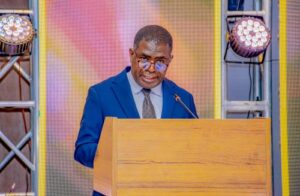
Finance Minister Khamis Mussa Omar (pictured below) said the government would continue working with KPMG, particularly on tax policy, revenue management and tax-system reforms, as Tanzania looks to improve the efficiency of domestic revenue collection and support implementation of the National Development Vision 2050.
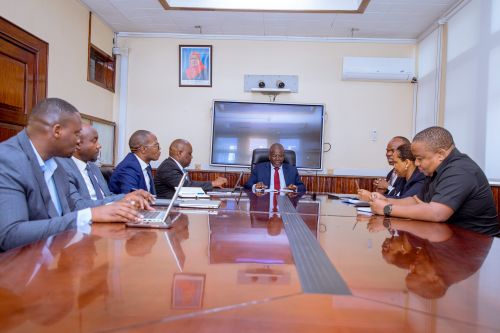
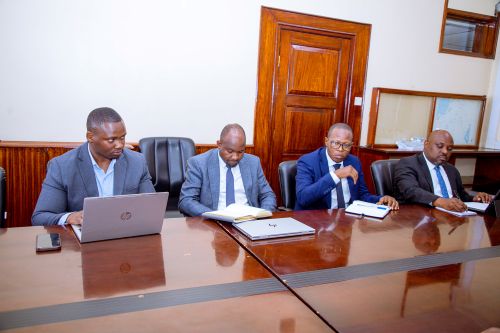
Omar made the remarks after meeting KPMG East Africa’s Managing Director, Alexander Njombe, and other senior executives at the Ministry of Finance’s offices in Dar es Salaam.
The engagement comes as Tanzania faces the twin challenge of raising more domestic revenue while ensuring that tax reforms do not undermine private investment, business expansion and competitiveness.
Evidence over guesswork
Omar said the government valued KPMG’s contribution through professional and policy advisory services, particularly its ability to bring comparative international experience and data into policy discussions.
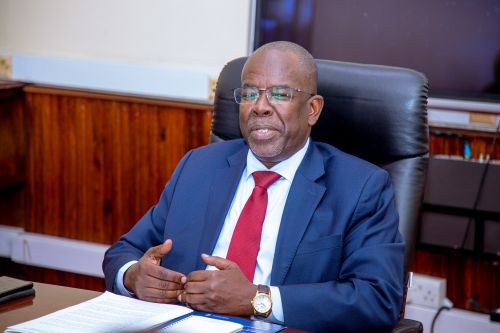
“We value the advice we receive from KPMG, particularly on policy issues, because it gives us a broader perspective and evidence that can help improve our decisions,” he said.
The relationship covers policy discussions, technical advice and reforms to the tax system.
According to Omar, KPMG’s advice is often based on evidence and economic data, allowing policymakers to assess reforms against actual economic conditions rather than relying solely on institutional assumptions.
That approach is increasingly important as Tanzania’s economy becomes more complex and the government seeks to broaden the tax base while improving compliance.
Balancing revenue and competitiveness
For businesses, tax reform is not simply about how much revenue the government collects.
The design of the tax system can influence investment decisions, operating costs, formalisation, business expansion and the competitiveness of Tanzanian companies.
Omar said Tanzania could not successfully reform its tax system by relying solely on internal government institutions.
It also needs input from private-sector specialists and organisations with experience across different economies, he said.
KPMG’s presence across Tanzania and other African markets gives policymakers an opportunity to compare tax systems, identify international best practice and assess what approaches could work in the Tanzanian context.
The objective, however, is not necessarily to replicate systems from elsewhere but to adapt lessons to Tanzania’s economic structure and development priorities.
Tax reform meets Dira 2050
The government sees the private sector as central to achieving the objectives of Tanzania’s National Development Vision 2050.
Omar said the government had identified several areas where it could work with KPMG as Tanzania begins implementing the long-term strategy, which aims to build a more competitive economy, expand opportunities and improve living standards.
“Vision 2050 belongs to everyone. We cannot expect the government to do everything on its own when the private sector carries out a large part of economic activity,” Omar said.
His comments underline a central issue for Tanzania’s development strategy: achieving the country’s long-term ambitions will require substantially greater private-sector investment alongside public spending.
That makes the quality and predictability of the tax environment increasingly important.
Technology enters the tax debate
KPMG East Africa Managing Director Alexander Njombe said the firm was prepared to use its regional and global network, as well as its sector expertise, to support Tanzania’s development and investment ambitions.
He said Tanzania could benefit from international experience in areas including technology, artificial intelligence, data-driven decision-making and operational efficiency.
The firm could also bring specialised expertise in sectors such as energy and natural resources, he said.
The technology dimension could become particularly important as governments worldwide increasingly use digital systems and artificial intelligence to improve tax administration, identify compliance gaps and analyse economic activity.
For Tanzania, better use of data could potentially improve revenue collection without relying solely on higher tax rates.
A more sophisticated system can instead seek to identify businesses and economic activity that remain outside the formal tax net, while making compliance easier for taxpayers already operating within the system.
The private sector’s role
The government’s engagement with KPMG also reflects a broader shift in the relationship between policymakers and professional services firms.
As Tanzania seeks to attract investment into energy, mining, manufacturing, infrastructure, agriculture and digital services, policymakers increasingly need access to specialised technical knowledge.
International advisory firms can provide comparative data, sector expertise and experience from other markets.
But the effectiveness of such partnerships will ultimately depend on how well that expertise is translated into policies that work for Tanzania.
For businesses, the key test will be whether reforms produce a tax environment that is fair, predictable, transparent and efficient.
For the government, the objective is to increase revenue while maintaining incentives for investment and economic formalisation.
Beyond collecting more tax
Tanzania’s tax-reform challenge is therefore moving beyond the traditional question of how to collect more revenue.
The bigger question is how to build a tax system capable of supporting a rapidly changing economy.
That includes expanding the tax base, improving compliance, using technology more effectively, reducing administrative burdens and ensuring that taxpayers have confidence in the system.
It also requires closer dialogue between government and business.
KPMG’s engagement with the Ministry of Finance is one example of that dialogue.
As Tanzania begins implementing Dira 2050, the quality of those public-private policy conversations could have a significant influence on the country’s ability to mobilise domestic resources while attracting the investment needed to finance its ambitions. The end goal is not simply a larger tax take.