By Correspondents Peter Haule and Joseph Mahumi
Tanzania’s finance authorities are calling for stronger professional standards and ethical conduct among accountants, auditors and tax advisers, as the country seeks to build the technical capacity needed to support a more sophisticated and increasingly integrated economy.
Finance Minister Khamis Mussa Omar said professional competence must go hand in hand with ethics if accounting, auditing and tax advisory services are to make a meaningful contribution to Tanzania’s economic development.
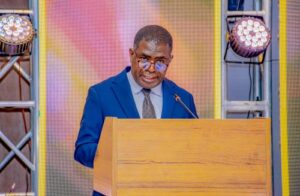
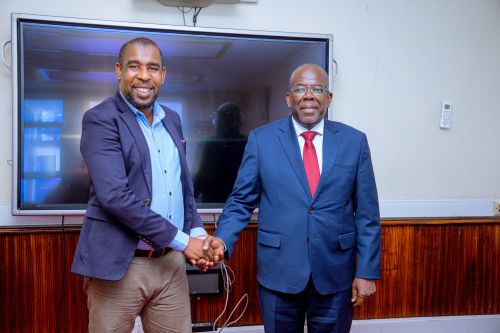
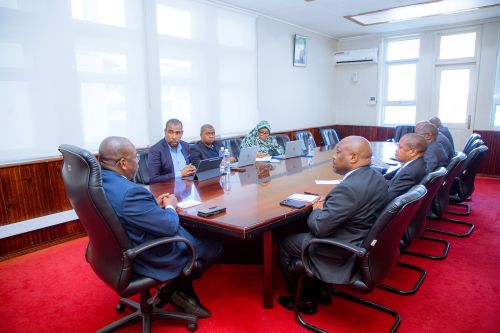
He made the remarks during a meeting with a delegation from the Zanzibar Institute of Accountants, Auditors and Tax Consultants (ZIAAT), led by its Executive Director, CPA Ame Burhan Shadhil, at the Ministry of Finance’s offices in Dar es Salaam.
The minister said Tanzania needed professionals who were not only technically competent but also committed to ethical standards consistent with their education, skills and responsibilities.
“Professional ethics are an important foundation for ensuring that these professions make a positive contribution to national development, both now and for future generations,” Omar said.
Skills and integrity
The call comes as Tanzania’s economy becomes increasingly dependent on professional expertise in areas such as taxation, financial reporting, auditing, procurement and corporate governance.
For businesses, the quality of these professions has direct implications for compliance costs, investor confidence, financial transparency and the credibility of corporate information.
Omar said discussions with ZIAAT had focused on strengthening the profession and expanding cooperation between the Zanzibar institute and the National Board of Accountants and Auditors (NBAA).
He stressed the importance of continued collaboration between professional bodies to enable ZIAAT to obtain accreditation and professional recognition from institutions within and outside Tanzania.
“NBAA has been working with ZIAAT to facilitate registration with some professional institutions on the African continent, and it is important that this cooperation continues,” he said.
The push for greater professional recognition could help improve the mobility of Tanzanian and Zanzibari accounting and tax professionals while creating common standards across the Union.
Building a stronger tax profession
Tax expertise is becoming particularly important as Tanzania’s tax system grows more complex and businesses face increasing demands for compliance, reporting and interpretation of tax regulations.
ZIAAT’s Executive Director, CPA Ame Burhan Shadhil, said the institute was working with NBAA under a memorandum of understanding covering professional education and continuing professional development (CPD).
Although ZIAAT is still a relatively young institution, Shadhil said the partnership with NBAA had enabled the two organisations to jointly deliver professional education and CPD seminars.
The organisations currently conduct two CPD seminars annually, he said.
ZIAAT also offers a Professional Tax course aimed at practitioners from both mainland Tanzania and Zanzibar.
Shadhil urged tax professionals to use the programme to deepen their expertise, arguing that Tanzania has a significant and growing need for specialists in taxation.
For businesses, a stronger pool of tax professionals could help reduce costly compliance errors, improve tax planning and interpretation, and strengthen the relationship between taxpayers and revenue authorities.
Bridging mainland and Zanzibar expertise
Omar also highlighted cooperation between the Accountant General of the United Republic of Tanzania and the Accountant General of the Revolutionary Government of Zanzibar in professional capacity building and strengthening professional systems.
The cooperation is particularly relevant because ZIAAT’s mandate extends across several areas, including accounting, auditing, tax consultancy and procurement.
Greater coordination among professional institutions could help reduce differences in professional standards and improve the consistency of financial and tax expertise across the Union.
For the private sector, that matters as businesses increasingly operate across both sides of the Union, while investors require predictable and credible financial reporting and tax advice.
Professionalism as an investment issue
The debate over accounting and tax professionals is ultimately about more than professional examinations and accreditation.
Strong professional institutions are part of the infrastructure required for a functioning modern economy.
Investors depend on reliable accounts. Banks rely on credible financial statements when assessing borrowers. Companies need competent tax advisers to navigate increasingly complex regulations. Governments need skilled accountants and auditors to safeguard public resources.
Weak professional standards, by contrast, can increase financial risk and undermine confidence in both public and private institutions.
The government’s emphasis on ethics therefore comes at a time when Tanzania is seeking to attract more private investment and integrate its businesses into regional and global markets.
From qualifications to credibility
The challenge for Tanzania is to ensure that professional development produces more than certificates.
It must produce accountants, auditors, tax advisers and procurement specialists who can combine technical competence, ethical judgement and practical business understanding.
That will require continued investment in professional training, stronger accreditation systems, closer cooperation between professional bodies and greater exposure to international standards.
The ZIAAT-NBAA partnership provides one mechanism for achieving that.
As Tanzania’s economy expands, the demand for specialised financial and tax expertise is likely to grow with it.
The quality of that professional workforce could increasingly become a competitive factor for businesses and investors. In that sense, strengthening Tanzania’s accounting and tax professions is not simply an issue for professional bodies.