By Business Insider Reporter
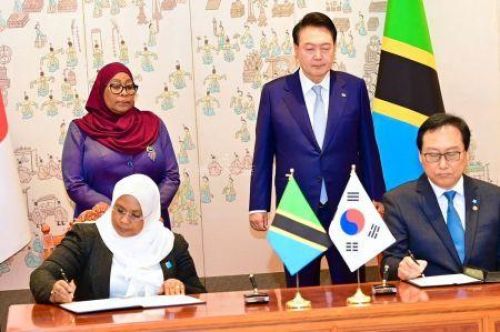
South Korea’s approval of a US$170 million loan for an artificial intelligence and digital technology school in Tanzania is set to strengthen the country’s digital skills base while creating a potential gateway for Korean technology companies into one of Africa’s emerging AI markets.
The financing, approved through South Korea’s Economic Development Cooperation Fund (EDCF), will support the construction and equipping of a specialised institution designed to train Tanzanian professionals in AI and other advanced digital technologies.
But beyond education, the project could become a significant vehicle for technology transfer, investment and commercial expansion, giving South Korean companies an opportunity to supply equipment, systems and expertise to Tanzania’s rapidly developing digital economy.
The loan was approved by South Korea’s Ministry of Economy and Finance following the 159th meeting of the EDCF Management Committee.
Building an AI skills pipeline
The project will include a campus, teaching facilities, AI laboratories and practical training infrastructure.
Planned equipment includes Internet of Things (IoT) devices, robotics systems, drones, 3D printers, AI processors and high-bandwidth memory, supported by high-speed networking infrastructure.
The financing will also cover ICT systems, curriculum development, teacher training, as well as the operation and maintenance of the institution.
For Tanzania, the investment comes as the country seeks to build the human capital needed to support a more technology-driven economy.
Artificial intelligence is already transforming sectors ranging from banking and telecommunications to manufacturing, agriculture, logistics and public services. Tanzania’s ability to participate in that transformation will depend increasingly on the availability of skilled engineers, developers, researchers and digital entrepreneurs.
A strategic investment for Seoul
The commercial significance of the project, however, lies partly in the structure of the financing.
The EDCF facility is a tied loan, meaning South Korean companies can participate in business opportunities associated with the project.
That creates a direct link between development finance and commercial expansion.

Korean companies could potentially supply laboratory equipment, computing systems, networking infrastructure and other technologies required by the institution.
The arrangement reflects a broader South Korean development model that combines concessional financing, technical expertise and skills development with opportunities for Korean businesses to enter emerging markets.
For Seoul, Tanzania offers an attractive platform.
The country is East Africa’s second-largest economy and is investing heavily in digital infrastructure as it seeks to position technology as a driver of productivity, investment and employment.
From classrooms to data centres
The project could also have implications beyond the planned school.
South Korea says Tanzania is considering using the institution as a model for similar AI schools and potentially for the development of large-scale data centres.
That could significantly expand the commercial opportunity for technology companies if Tanzania moves towards building the computing infrastructure required to support AI applications.
Data centres, cloud computing, high-performance processors and secure digital networks are becoming strategic assets as governments and businesses increasingly rely on data-intensive technologies.
For Tanzania, developing such infrastructure locally could reduce dependence on overseas computing capacity while creating opportunities for domestic technology companies.
Dira 2050 test
The project fits into Tanzania’s broader ambitions under Dira 2050, which places digital transformation, innovation and human capital development among the foundations of long-term economic growth.
The government aims to move the economy towards higher productivity and greater value addition, with technology expected to play an increasingly important role.
The AI school could therefore become more than an education project if it succeeds in connecting training with research, entrepreneurship and industry.
The real economic payoff will come if graduates move into Tanzanian companies, establish technology start-ups or develop AI applications tailored to local challenges in areas such as agriculture, financial services, healthcare, transport and manufacturing.
The technology-transfer question
The partnership also raises an important question for Tanzania: how much of the technology and expertise brought into the country will remain after the project is completed?
The long-term value of the investment will depend on Tanzania’s ability to convert imported technology into domestic capabilities.
That means developing local researchers and engineers, strengthening universities and private-sector partnerships, supporting technology start-ups and ensuring that Tanzanian institutions have the capacity to operate and upgrade advanced systems independently.
Issues surrounding data governance, cybersecurity, ownership of intellectual property and the location of data will also become increasingly important as Tanzania expands its AI infrastructure.
A foothold in Africa’s AI economy
South Korea’s move comes as global powers compete for influence over Africa’s rapidly expanding digital economy.
China has established a strong presence in African telecommunications and digital infrastructure, while the United States and Gulf investors are increasing their interest in artificial intelligence, cloud computing and data centres.
South Korea brings a different proposition: the experience of a country that transformed itself from an industrialising economy into a global technology powerhouse.
Its technology companies are now major players in semiconductors, electronics, telecommunications and advanced manufacturing.
The Tanzania project could provide Seoul with a practical platform to combine that technological expertise with development cooperation.
For Tanzania, meanwhile, the US$170 million partnership offers an opportunity to build the skills and infrastructure needed for the next phase of its digital economy. If successfully implemented, the project could ultimately prove to be worth far more than the value of the loan – by helping Tanzania develop an AI ecosystem while giving Korean technology companies an early foothold in a market with ambitions to become a regional digital hub.