By Correspondent Saidina Msangi, Abidjan
African finance, trade and industry ministers have called for a coordinated drive to accelerate industrialisation, arguing that the continent’s long-term prosperity depends on adding value to its vast natural resources rather than exporting them in raw form.
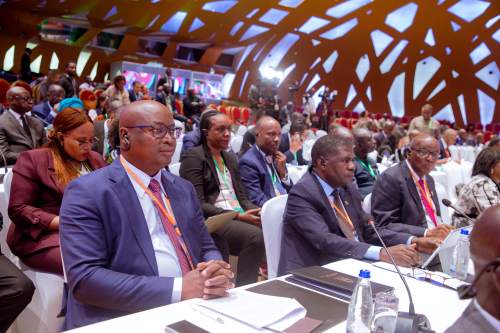
The call emerged during the 9th Joint Meeting of the African Union (AU) Specialised Technical Committee (STC) on Finance, Monetary Affairs, Economic Planning and Integration, alongside the 5th Ordinary Session of the STC on Trade, Tourism, Industry and Minerals, which opened on July 24 in Abidjan, Côte d’Ivoire.
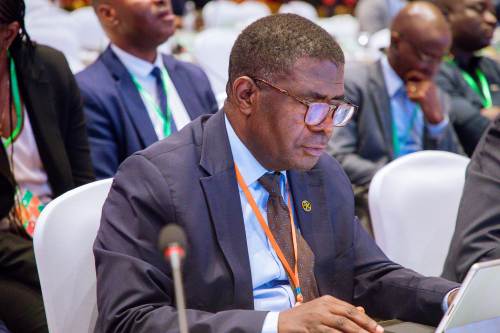
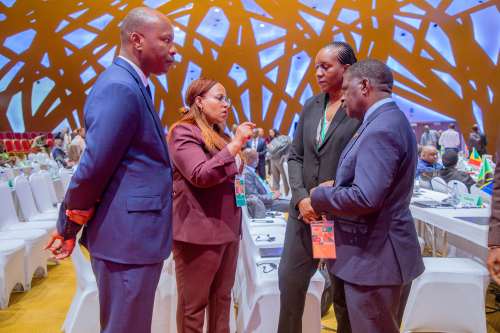
Representing Tanzania, Deputy Minister for Finance Mshamu Ali Munde (pictured above), speaking on behalf of Finance Minister Ambassador Khamis Mussa Omar, led the country’s delegation to the high-level discussions focused on shaping Africa’s industrial and economic future.
The meeting brought together ministers and senior policymakers to explore strategies for transforming Africa into a globally competitive manufacturing and investment destination by strengthening regional value chains, improving access to finance and creating a more attractive environment for private sector investment.
For African economies, the discussions carry major implications.
Despite possessing abundant mineral wealth, fertile agricultural land and one of the world’s fastest-growing labour forces, Africa continues to export much of its raw materials with limited domestic processing. Delegates agreed that reversing this trend is essential to unlocking higher-value exports, creating quality jobs and expanding industrial production.
The ministers stressed that adding value to agricultural commodities, critical minerals and other natural resources would enable African countries to capture a greater share of global manufacturing value while reducing dependence on imported finished products.
They also underscored the importance of building stronger regional value chains that allow industries across the continent to source inputs, manufacture products and access wider markets under the framework of the African Continental Free Trade Area (AfCFTA).
A recurring theme throughout the meeting was the need to mobilise greater domestic resources to finance Africa’s industrial ambitions.
Participants called for stronger domestic revenue collection, more effective management of natural resources and tougher action against tax evasion to narrow the continent’s substantial infrastructure financing gap.
According to the ministers, sustainable industrial development cannot rely solely on external financing. Instead, African governments must strengthen fiscal systems capable of supporting long-term investment in transport, energy, logistics and industrial infrastructure.
The meeting also highlighted the critical role of financial sector reforms in supporting industrial growth.
Delegates agreed that expanding access to long-term capital, reducing borrowing costs and encouraging greater private sector participation will be essential if African economies are to scale manufacturing and industrial production.
Affordable financing remains one of the biggest constraints facing manufacturers across the continent, particularly small and medium-sized enterprises seeking to invest in processing, technology and production capacity.
For Tanzania, the discussions align closely with the government’s broader industrialisation agenda under Vision 2050, which seeks to deepen manufacturing, promote value addition and attract investment into strategic sectors including agriculture, mining and industry.
The country’s participation in the AU meeting also reinforces its commitment to regional economic integration and policies aimed at positioning Africa as a competitive production hub rather than merely a supplier of raw materials.
As Africa seeks to strengthen intra-continental trade and build more resilient economies, ministers agreed that industrialisation must remain at the centre of the continent’s development strategy. Their message from Abidjan was clear: by processing its own resources, strengthening regional supply chains and mobilising investment, Africa can unlock faster economic growth, create millions of jobs and secure a stronger position in the global economy.