By Business Insider Reporter
Tanzania has unveiled one of the most ambitious environmental and climate investment programmes in its history, committing Sh7 trillion to a five-year strategy aimed at restoring ecosystems, expanding clean energy access and positioning the country as a major player in the global carbon economy.
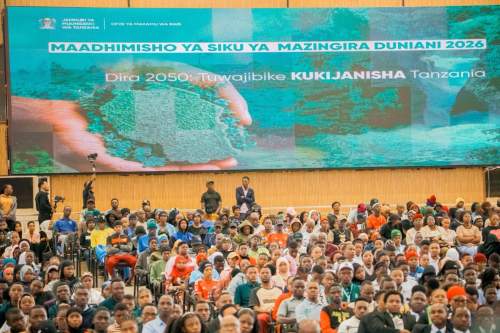
Launched recently by Vice-President Dr Emmanuel Nchimbi during World Environment Day commemorations in Dodoma, the Strategic Environmental Management Transformation Programme seeks to plant and sustainably manage two billion trees annually, restore five million hectares of degraded land, accelerate clean cooking adoption and establish a robust carbon trading ecosystem by 2030.
While the initiative is framed as an environmental intervention, its significance extends far beyond conservation. For policymakers, investors and businesses, the programme signals Tanzania’s growing recognition that climate resilience is no longer just an environmental issue – it is an economic necessity.
Climate change threatens economic growth
The timing of the initiative reflects mounting concerns about the economic consequences of climate change.
Agriculture, which employs the majority of Tanzanians and contributes significantly to GDP, remains highly vulnerable to erratic rainfall, prolonged droughts and land degradation. Water shortages, declining soil fertility and increasing pressure on natural resources are already affecting productivity across farming, livestock and fisheries value chains.
For a country pursuing rapid industrialisation and middle-income growth ambitions, climate risks have become a direct threat to economic performance.

Government officials argue that environmental protection must therefore be viewed as productive investment rather than expenditure.
“Tanzania cannot achieve sustainable economic transformation while its natural capital continues to deteriorate,” one environmental policy analyst noted. “Forests, water resources and healthy ecosystems are economic assets that support agriculture, tourism, energy generation and livelihoods.”
Unlocking a new green investment frontier
At the heart of the programme is a Sh7 trillion financing framework expected to draw resources from government budgets, development partners, climate funds and private-sector investors.
The strategy aligns Tanzania with a growing global investment trend in which environmental sustainability is increasingly influencing capital allocation decisions.
Worldwide, institutional investors, development finance institutions and multinational corporations are directing billions of dollars toward projects that support climate adaptation, carbon reduction and biodiversity conservation.
By establishing clear environmental targets and creating a pipeline of green projects, Tanzania hopes to position itself as an attractive destination for climate finance and sustainability-focused investment.
The programme could also generate opportunities for local businesses involved in forestry, renewable energy, environmental services, carbon verification, sustainable agriculture and ecosystem restoration.
The carbon market opportunity
Perhaps the most commercially significant component of the masterplan is Tanzania’s intention to expand participation in global carbon markets.
Carbon trading allows countries, companies and communities to generate revenue by reducing or absorbing greenhouse gas emissions through activities such as reforestation, conservation and renewable energy development.
With vast forest resources and significant land available for restoration, Tanzania possesses natural advantages that could enable it to become one of Africa’s leading carbon credit suppliers.
If managed effectively, carbon markets could provide new revenue streams for local communities, conservation projects and investors while supporting broader environmental goals.
The government has already taken steps to establish a regulatory framework for carbon trading, attracting growing interest from international developers seeking high-quality carbon offset projects.
For Tanzania, carbon finance represents an opportunity to transform environmental conservation from a cost centre into a revenue-generating economic sector.
Creating jobs through environmental restoration
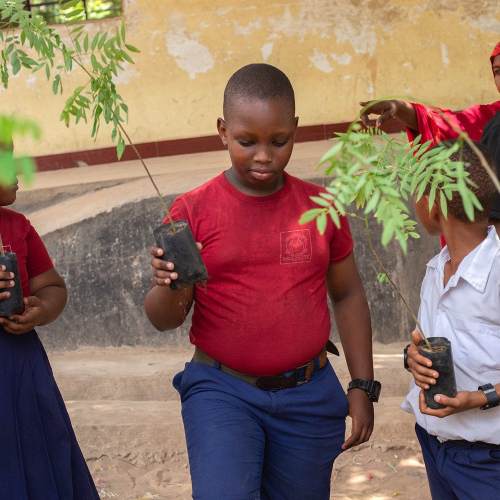
The programme’s target of planting two billion trees annually represents one of the largest ecosystem restoration efforts on the continent.
Beyond environmental benefits, such an undertaking is expected to create substantial employment opportunities.
Tree nursery development, seed collection, forest management, monitoring services and land restoration activities could support thousands of jobs, particularly for young people and women.
The government plans to mobilise communities, local authorities, educational institutions and private-sector stakeholders in implementing the programme.
Environmental economists increasingly argue that nature-based solutions can simultaneously address unemployment, climate adaptation and rural development challenges.
The restoration of five million hectares of degraded land could also improve agricultural productivity, enhance water security and reduce the economic costs associated with land degradation.
Accelerating the clean cooking transition
Another major pillar of the strategy focuses on reducing dependence on charcoal and firewood through expanded access to clean cooking energy.
The economic implications are significant.
Tanzania spends considerable resources dealing with the environmental consequences of charcoal production, including deforestation, biodiversity loss and declining watershed health.
A transition toward cleaner energy sources could create new opportunities for investors in LPG distribution, bioenergy technologies, electric cooking solutions and renewable energy infrastructure.
The shift could also improve public health outcomes while reducing pressure on forest resources.
Implications for tourism and natural capital
The programme also carries important implications for Tanzania’s tourism industry, one of the country’s leading foreign exchange earners.
National parks, wildlife habitats, forests and water ecosystems form the foundation of Tanzania’s tourism competitiveness. Environmental degradation threatens these assets and, by extension, the revenues they generate.
By investing in ecosystem restoration and biodiversity protection, Tanzania is effectively protecting a sector that contributes billions of dollars annually to the economy.
Conservation is increasingly being viewed not merely as environmental stewardship but as an investment in long-term tourism growth.
Turning climate action into economic strategy
The true significance of Tanzania’s TSh7 trillion environmental masterplan lies in its attempt to reposition environmental management as a driver of economic transformation.
For years, environmental protection has often been treated as a secondary policy priority. Today, however, governments across the world are recognising that climate resilience, natural capital and sustainable resource management are becoming central determinants of competitiveness and investment attractiveness.
If successfully implemented, Tanzania’s programme could strengthen agricultural resilience, unlock climate finance, expand green industries, create jobs and generate new revenue streams through carbon markets.
The challenge, however, will be execution.
Mobilising TSh7 trillion, coordinating multiple stakeholders and ensuring transparency in project implementation will require strong governance and sustained political commitment. But if the strategy delivers on its promise, Tanzania could emerge not only as a regional leader in environmental management but also as a compelling example of how climate action can be transformed into an engine of economic growth.