
By Benny Mwaipaja
Tanzania is seeking to deepen its partnership with the World Bank as it pursues an ambitious agenda of economic transformation, infrastructure expansion and private-sector-led growth under the country’s Dira 2050 development blueprint.
Speaking at a farewell reception for outgoing World Bank Country Director Nathan Belete and the official welcome of his successor, Firas Raad, Finance Minister Ambassador Khamis Mussa Omar said the multilateral lender has played a pivotal role in supporting Tanzania’s development priorities through concessional financing and strategic development programmes.
The event, held in Dar es Salaam and attended by diplomats, development partners, business leaders and senior government officials, underscored the growing importance of development finance institutions in supporting Tanzania’s long-term economic ambitions.
“The World Bank has made a significant contribution to Tanzania’s development through strategic programmes and projects financed through grants and concessional loans,” said Omar.
Supporting Tanzania through global shocks
The minister credited Belete’s leadership with helping Tanzania navigate a series of global economic disruptions, including the aftermath of the Covid-19 pandemic, geopolitical tensions, rising borrowing costs and climate-related challenges.
During his tenure, World Bank financing supported major projects in transport, energy, water, education, healthcare, urban development, social protection and climate resilience – investments that have directly impacted millions of Tanzanians.
Development economists note that multilateral financing has become increasingly important for African economies seeking to bridge infrastructure gaps while preserving fiscal sustainability.
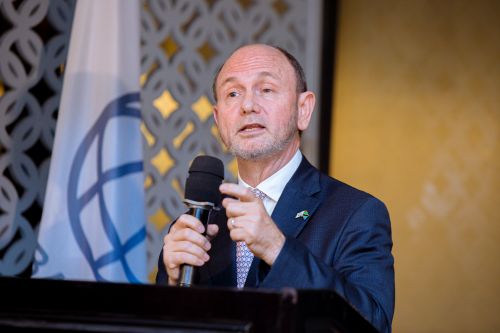
For Tanzania, the World Bank remains one of the country’s largest development partners, supporting projects aimed at boosting productivity, improving service delivery and strengthening economic competitiveness.
A new chapter under Dira 2050
Omar welcomed incoming Country Director Firas Raad at a time when Tanzania is positioning itself for a new phase of growth under the leadership of Samia Suluhu Hassan.
The government is currently implementing reforms designed to strengthen institutions, improve the business environment and attract greater domestic and foreign investment.
According to the minister, Tanzania’s development agenda now requires stronger collaboration between government, development finance institutions and private investors.
He called on the World Bank and its private-sector arm, the International Finance Corporation (IFC), to play a larger role in mobilising capital, expanding public-private partnerships and supporting transformational investments across infrastructure, energy, digital technology, agriculture, education, healthcare and climate adaptation.
“Tanzania is ready to work closely with the World Bank to accelerate economic transformation, strengthen resilience, promote prosperity and create opportunities for future generations,” Omar said.
Tanzania’s untapped potential
Reflecting on his assignment, outgoing Country Director Nathan Belete expressed confidence in Tanzania’s economic future, describing the country as one of Africa’s most promising growth stories.
He said Tanzania possesses an exceptional combination of natural resources, agricultural potential, mineral wealth, tourism assets and strategic geographic advantages capable of driving long-term prosperity.
“Tanzania has all the ingredients required for sustained economic and social transformation,” Belete noted, pointing to opportunities across mining, agriculture, fisheries, tourism and natural resource development.
Analysts increasingly view Tanzania as one of East Africa’s most attractive investment destinations, supported by macroeconomic stability, major infrastructure investments and a growing consumer market of more than 60 million people.
Recent investments in ports, railways, power generation and logistics corridors are expected to further enhance the country’s competitiveness as a regional trade and investment hub.
Strengthening investor confidence
New Country Director Firas Raad pledged to build on the foundation established by his predecessor and further strengthen cooperation between Tanzania and the World Bank Group.
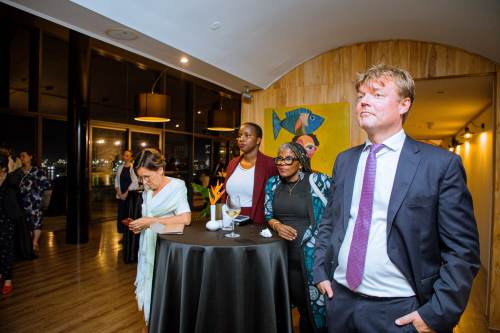
His appointment comes at a critical time as Tanzania seeks greater private-sector participation in financing economic development and implementing large-scale projects.
Business leaders attending the event said stronger collaboration between the World Bank, IFC and the Tanzanian government could help unlock new investment opportunities in strategic sectors while improving access to finance for local enterprises.
With Tanzania pursuing Dira 2050 and positioning itself for higher levels of industrialisation and value-added production, the relationship between the government and international development financiers is expected to remain central to the country’s economic trajectory. The transition from Belete to Raad therefore represents more than a leadership change. It signals the continuation of a strategic partnership that both sides hope will help drive Tanzania’s next phase of economic growth and development.