
By Business Insider Reporter
Doing business in East Africa has always required a keen eye on global headwinds, but the onset of June 2026 demands an entirely new level of strategic forecasting. For enterprise leaders, logistics managers, and manufacturers across Tanzania, the latest pump pricing directives from the Energy and Water Utilities Regulatory Authority (EWURA) signal an era where geopolitical volatility dictates local operational margins.
The message from the regulator is starkly transparent: a protracted, three-month-old conflict in the Middle East has officially hit the Tanzanian balance sheet.
From Hormuz to Dar es Salaam
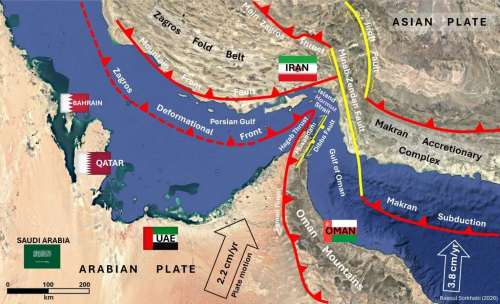
Since hostilities erupted on February 28, 2026, targeted strikes on crude infrastructure and the tactical closure of the Strait of Hormuz have sent shockwaves through global energy hubs. Because Tanzania sources the vast majority of its refined petroleum products directly from the Middle East, local commercial operations are directly tied to these disruptions.
According to EWURA, closure of the Strait of Hormuz – a bottleneck that normally commands approximately 20 percent of global oil trade – has effectively choked availability and triggered a scramble for cargo vessels. For corporate treasurers mapping out June expenditures, the immediate friction lies in the soaring premiums and freight overheads.
Looking back at the structural data moving into June, the disruptions have hit local entry ports unevenly:
- Dar es Salaam port premiums: Hit the hardest by the logistical crunch, experiencing a massive 55.50 percent spike for petrol and a staggering 95.51 percent surge for diesel. Kerosene premiums remained flat.
- Regional gateways: Tanga and Mtwara ports managed to hold the line with no changes to their underlying product premiums.
- Macro adjustments: Exacerbating these premium hikes is a strengthening currency headwind, with the applicable USD exchange rate tracking up by 0.37 percent for the June pricing cycle.
The April-to-June Lag: Navigating FOB distortions
For business analysts trying to reconcile global benchmark reporting with domestic pump prices, EWURA’s insight into the Arab Gulf Free on Board (FOB) market reveals the complex lag in fuel economics.
In April 2026, market benchmarks actually presented a mixed bag relative to their March baselines:
| Fuel product | March 2026 Average FOB Baseline | April 2026 FOB price rend |
| Petrol | US$ 122.36 / barrel | Decreased by 2.63 percent |
| Diesel | US$ 186.58 / barrel | Increased by 0.70 percent |
| Kerosene | US$ 189.51 / barrel | Increased by 1.97 percent |
While international baseline indicators showed modest swings, the compounding realities of inflated maritime insurance, vessel shortages, and skyrocketing local port premiums quickly erased any breathing room that April’s slight drop in petrol costs might have offered.
June cap prices: The commercial reality
Effective Wednesday, June 3, 2026, corporate transport fleets and retail consumers face strict new ceiling prices across principal economic corridors.
Table 1: Official retail cap prices (TSh per Litre)
| Principal supply hubs | Petrol | Diesel | Kerosene |
| Dar es Salaam | 4,086 | 4,333 | 4,685 |
| Tanga | 4,157 | 4,404 | 4,756 |
| Mtwara | 4,193 | 4,440 | 4,792 |
Predictably, the geographic premium widens as supply lines snake further inland. Industrial operators in Geita will see petrol at TSh 4,311 and diesel at TSh 4,558, while agribusinesses in Kagera (Bukoba) must absorb some of the highest operational costs in the nation, with petrol capped at TSh 4,361 and diesel at TSh 4,609.
The sovereign shield: A TSh 534bn lifeline
In a move that underscores just how volatile this crisis is for domestic inflation, the government has stepped in with a massive fiscal intervention. A strategic subsidy of TSh 534.91 per litre has been injected exclusively to depress the price of diesel.
Editor’s Note: This targeted diesel subsidy is a calculated defense mechanism for the macroeconomy. By shielding manufacturing, commercial freight logistics, and public transport networks from bearing the full weight of a near-96 percent premium hike at the port, the state is actively trying to suppress a wider cost-of-living crisis.
While the state shield offers some relief, EWURA’s message to the private and public sector alike is clear: efficient fuel conservation is no longer optional – it is a strategic necessity.
Market dynamics: Rules of engagement for June
For oil marketing companies (OMCs) and independent retailers, navigating June requires strict compliance alongside tactical pricing. Under the Petroleum Act, prices are fundamentally market-driven; however, EWURA has firmly established that these cap figures are absolute legal ceilings.
- Competitive play: Wholesalers and retailers are legally empowered to aggressively discount fuel prices below the cap to capture market share, provided they do not breach the designated floor price.
- Audit readiness: Retailers are legally mandated to display pricing transparently on visible forecourt boards and issue Electronic Fiscal Pump Printer (EFPP) receipts for every transaction. Corporate procurement teams are highly encouraged to demand these receipts to ensure tax compliance and backstop auditing trails.
As Tanzania navigates this period of high energy costs, businesses cannot afford to treat fuel procurement as a static line item. Winning in June will require sharp operational adjustments, route optimization, and leveraging competitive pricing transparency to keep margins intact.