

By Business Insider Reporter
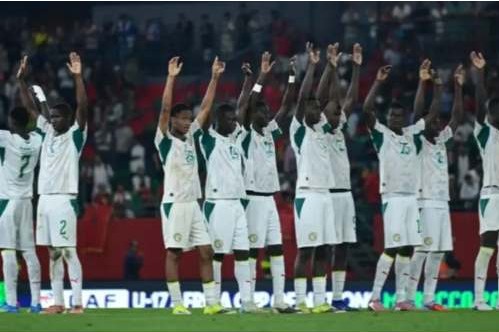
Tanzania’s national Under-17 football team, the Serengeti Boys, ended a remarkable continental campaign with a mixture of pride and disappointment after narrowly losing the TotalEnergies CAF U-17 Africa Cup of Nations final to Senegal on penalties.
Although the young Tanzanian side fell short of lifting the trophy, their achievement represents a historic milestone for the country’s football development. It was the first time Tanzania had reached the final of the African Under-17 Championship, securing a runners-up finish and cementing the nation’s growing reputation in youth football.
The final began brightly for Tanzania, with the Serengeti Boys taking the game to Senegal from the opening whistle. Their aggressive pressing and high-tempo approach unsettled the defending champions and yielded an early breakthrough.
Just seven minutes into the match, Hamis Chenga gave Tanzania the lead after capitalising on possession won near the halfway line before finishing confidently to send Tanzanian supporters into celebration.
The goal reflected the tactical discipline that has characterised Tanzania’s tournament campaign. The Serengeti Boys consistently pressed Senegal’s players whenever they were in possession, limiting their ability to build attacks and allowing Tanzania to dominate large portions of the first half.
While Senegal created several opportunities, Tanzania’s defence remained resolute. The backline, supported by an outstanding performance from the goalkeeper, repelled repeated attacks and carried the East Africans into the interval with a deserved lead.
The momentum shifted after the break as Senegal emerged with greater urgency and attacking intensity. Tanzania found themselves under sustained pressure for much of the second half as the West Africans pushed for an equaliser.
Their persistence paid off in the 64th minute when Ibrahima Diouf levelled the score. After Tanzania’s defence blocked an initial effort, the rebound fell kindly to Diouf, who unleashed a powerful strike into the net.

The equaliser injected new energy into the Senegalese side, who continued to bombard the Tanzanian goal in search of a winner. However, despite the relentless pressure, Tanzania defended courageously and held on to force the match into a penalty shootout.
In the decisive shootout, Senegal proved more clinical. Tanzania missed two spot-kicks, allowing the West African giants to secure a 4-2 victory and claim the continental crown.
Despite the defeat, Tanzania’s campaign will be remembered as one of the country’s greatest youth football achievements.
A tournament that changed perceptions
The Serengeti Boys had already made history before reaching the final. Their dramatic semi-final victory over Egypt announced Tanzania as a rising force in African football.
After a tense goalless draw against the North African giants, Tanzania triumphed 4-3 in a penalty shootout, with the goalkeeper producing two crucial saves to send the team into its first-ever continental final.
Head coach Elieneza Nsanganzelu praised his players throughout the tournament for their discipline, resilience and belief.
The team’s journey was equally impressive in the group stage, where they recorded consecutive 3-0 victories over Mozambique and Angola before narrowly losing 2-1 to Mali. Despite the defeat, Tanzania finished top of Group C.
In the quarter-finals, the Serengeti Boys overcame Algeria in another dramatic penalty shootout to secure qualification for the FIFA U-17 World Cup in Qatar later this year.
Beyond football: A growing sports economy
The success of the Serengeti Boys reflects broader progress within Tanzania’s sporting landscape.
In recent years, increased investment in sports infrastructure, youth development programmes and professional football clubs has strengthened the country’s competitiveness at continental level. Clubs such as Simba SC and Young Africans have raised Tanzania’s football profile internationally, while government-backed sports initiatives continue to support talent development.
Sports analysts argue that the strong performance of youth teams could generate wider economic benefits, including increased sponsorship opportunities, international player transfers, broadcasting revenues and football tourism.
The achievement is also expected to strengthen confidence in grassroots football development and encourage further investment in academies, coaching and talent identification programmes.
For many Tanzanians, however, the significance of this campaign extends beyond economics and football development.
The Serengeti Boys have demonstrated that Tanzania can compete with Africa’s traditional football powers on the biggest stages. While the trophy ultimately went to Senegal, Tanzania leaves Morocco with a historic silver medal, a World Cup ticket and renewed belief in the future of its football. The journey may have ended in heartbreak, but it has also opened a new chapter in Tanzanian football history.