By Business Insider Reporter
Tanzania’s youth have been challenged to position themselves at the forefront of the country’s emerging green economy by embracing innovation, technology and environmentally sustainable enterprises that are increasingly becoming drivers of economic growth and job creation.
Minister of State in the Vice President’s Office (Union and Environment), Engineer Hamad Yussuf Masauni (pictured), made the call during a Youth Forum held in Dar es Salaam on June 2, 2026, as part of activities marking World Environment Day, whose national celebrations will culminate in Dodoma on June 5.
Addressing hundreds of young participants, Mr. Masauni said environmental protection should no longer be viewed solely as a conservation agenda but as a significant economic opportunity capable of creating employment, fostering entrepreneurship and supporting sustainable development.
He urged young people to take advantage of government initiatives designed to support innovation and enterprise development while embracing technology and participating actively in environmentally friendly economic activities.
“Youth are the backbone of our nation and a critical force in the fight against environmental degradation,” said Mr. Masauni. “According to the 2022 Population and Housing Census, young people account for more than 64 per cent of Tanzania’s workforce. This means your contribution is indispensable in protecting the environment, advancing the green economy and ensuring sustainable national development.”
Green economy emerging as a growth frontier
His remarks come at a time when governments, investors and development institutions worldwide are increasingly directing capital towards climate-resilient and environmentally sustainable sectors, including renewable energy, sustainable agriculture, waste management, eco-tourism, circular economy enterprises and green manufacturing.
Mr. Masauni noted that environmental challenges should be viewed as business opportunities rather than obstacles.
He cited global projections indicating that the transition to a green economy could create approximately 8.4 million jobs for young people worldwide by 2030, while the broader sustainable economy is estimated to be worth more than US$12 trillion and capable of generating over 380 million jobs globally.
“These figures demonstrate the enormous economic potential embedded in environmental sustainability,” he said. “Protecting natural resources and promoting sustainable production systems are not only environmental priorities but also pathways to wealth creation and economic transformation.”
For Tanzania, where youth unemployment remains a major development challenge, the growing global demand for green products, climate-smart technologies and sustainable services presents a new frontier for entrepreneurship and investment.
Preparing youth for future industries
Vice President’s Office Permanent Secretary Dr. Richard Muyungi said equipping young people with practical skills through volunteer programmes and environmental initiatives is becoming increasingly important as countries prepare for a future shaped by climate change, sustainability requirements and green industrialisation.
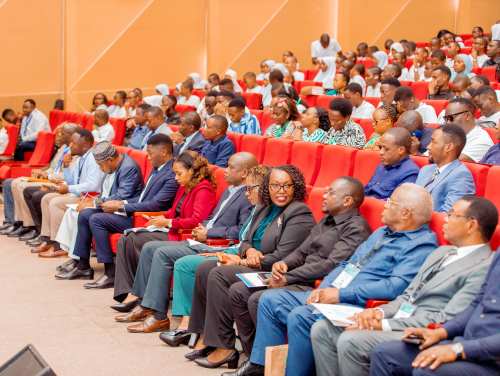
According to Dr. Muyungi, volunteer programmes offer young people valuable workplace experience while helping institutions access a pool of innovative and technologically savvy talent capable of addressing complex development challenges.
“Building youth capacity through volunteer programmes is an important strategy for preparing a generation that will lead sustainable development, environmental conservation and the green economy agenda,” he said.
He added that Africa possesses a significant demographic advantage, with nearly 40 per cent of the world’s youth population residing on the continent.
“This presents a tremendous opportunity to accelerate economic, social and technological transformation if young people are provided with the necessary education, skills and opportunities to participate fully in development activities,” Dr. Muyungi said.
Turning challenges into opportunities
Experts increasingly argue that Africa’s future economic competitiveness will depend largely on how effectively it transforms environmental and climate challenges into investment opportunities.
In Tanzania, sectors such as renewable energy, recycling, sustainable agriculture, carbon markets, ecosystem restoration, green construction and waste-to-value enterprises are attracting growing attention from policymakers and investors.
As the country seeks to diversify its economy and create jobs for its rapidly growing youth population, the green economy is emerging as one of the most promising sectors capable of delivering both environmental and economic returns. The message from this year’s World Environment Day youth forum was clear: Tanzania’s young people must not only participate in environmental protection efforts but also seize the business and employment opportunities that the global shift towards sustainability is creating.