
By Business Insider Reporter
Tanzania and other African economies could be among the biggest beneficiaries of a gradual improvement in access to trade finance across the continent, following new findings by the African Development Bank (AfDB) showing that the continent’s long-standing trade finance gap has narrowed since the Covid-19 pandemic.
However, the Bank has cautioned that fresh geopolitical tensions, foreign exchange shortages and disruptions to global trade routes could reverse years of progress, threatening the growth prospects of African exporters, manufacturers and small businesses.
The findings are contained in the AfDB’s fifth Trade Finance Report, unveiled during the Bank’s 2026 Annual Meetings in Brazzaville, Republic of Congo.
The report paints a picture of resilience among African financial institutions between 2020 and 2024, despite unprecedented economic shocks ranging from the pandemic and supply chain disruptions to rising interest rates and geopolitical conflicts.
According to the report, Africa’s unmet demand for trade finance declined by nearly 10 percent between 2019 and 2024, thanks largely to interventions by multilateral development banks, development finance institutions (DFIs), governments, export credit agencies and international banking partners.
For Tanzania, whose economy depends heavily on international trade through exports of gold, agricultural commodities, manufactured goods and tourism-related services, improved access to trade finance is increasingly becoming a critical pillar of economic growth.
Trade finance refers to financial products such as letters of credit, guarantees and export financing that enable businesses to engage in cross-border trade while managing risks and cash-flow challenges.
Tanzania’s strategic position
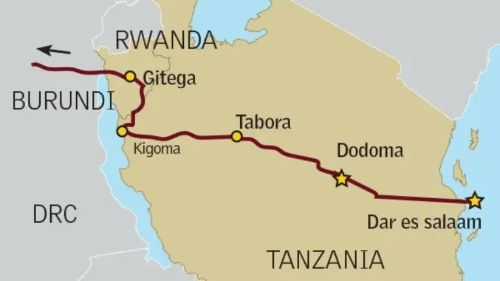
Tanzania is emerging as one of East Africa’s most important trade and logistics hubs, supported by investments in the Port of Dar es Salaam, the Standard Gauge Railway (SGR), regional transport corridors and expanding industrial production.
The country’s ambitions under Dira 2050 and its industrialisation agenda depend heavily on access to affordable financing for exporters, importers and manufacturing firms.
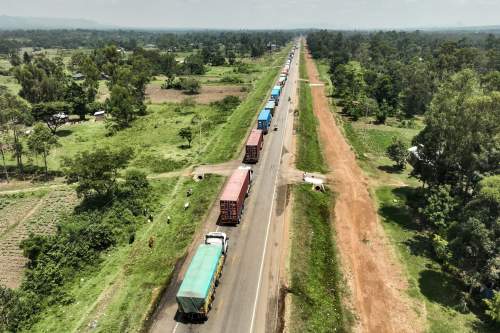
Yet many Tanzanian businesses – particularly small and medium-sized enterprises (SMEs) – continue to face difficulties securing trade finance from commercial banks.
The AfDB report highlights that commercial banks across Africa now intermediate only 23 percent of the continent’s trade, down sharply from 40 percent during the 2011-2019 period.
This suggests a significant financing gap remains, particularly for smaller firms that lack collateral, credit history or access to foreign currency.
“Tanzanian SMEs are among those caught in what experts call the ‘missing middle’—too large for microfinance institutions but too small to attract the attention of corporate banking divisions,” the report notes.
Trade finance gap remains large
Despite recent improvements, Africa’s trade finance gap remains substantial.
The report estimates unmet trade finance demand at between US$74 billion and US$92 billion in 2024, equivalent to about 5.4 percent of the continent’s total merchandise trade.
AfDB Director of Macroeconomic Policy, Forecasting and Research, Anthony Simpasa, warned that current gains remain fragile.
“Renewed geopolitical tensions and disruptions to global supply chains and trade flows could reverse post-pandemic progress in narrowing the trade finance gap,” Simpasa said.
He noted that under moderate to severe scenarios, Africa’s trade finance gap could widen to between US$86.6 billion and US$102.6 billion by 2027, effectively wiping out a decade of progress.
For Tanzania, such a development could increase financing costs for importers and exporters while reducing the competitiveness of local businesses in regional and global markets.
Key constraint
One of the report’s most significant findings is the growing importance of foreign exchange liquidity as a barrier to trade finance.
About 36 percent of African banks surveyed cited limited access to foreign currency as the main obstacle to expanding trade finance activities between 2020 and 2024, double the level recorded during the previous five-year period.
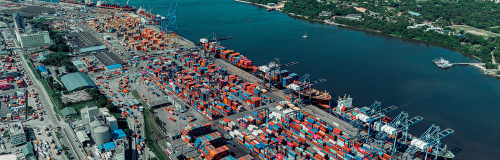
The challenge resonates strongly in Tanzania, where businesses periodically face pressure from fluctuations in foreign exchange markets, particularly in securing US dollars needed to finance imports of machinery, fuel and industrial inputs.
Industry analysts say improving foreign currency availability remains crucial if Tanzania is to achieve its export diversification and industrialisation objectives.
Intra-African trade offers new opportunities
The report also reveals encouraging growth in intra-African trade.
Between 2020 and 2024, intra-African trade accounted for 34 percent of total bank-intermediated trade, representing an 89 percent increase compared to pre-pandemic levels.
This trend presents significant opportunities for Tanzania, particularly under the African Continental Free Trade Area (AfCFTA), which seeks to create the world’s largest free trade zone by number of participating countries.
As regional trade expands, Tanzanian manufacturers and exporters could benefit from easier market access across Africa, provided financing constraints are addressed.
Digital trade finance still underdeveloped
Despite rapid advances in financial technology across Africa, the report found that digitalisation of trade finance remains limited.
Only 28 percent of surveyed banks reported using digital trade finance platforms or tools.
High implementation costs, inadequate technological infrastructure and regulatory challenges continue to slow adoption.
For Tanzania, which has gained international recognition for its leadership in mobile money and digital financial services, the findings suggest an opportunity to extend innovation into trade finance and supply chain financing.
Experts argue that digitising trade documentation and financing processes could significantly reduce costs, shorten transaction times and improve access for SMEs.
New financial architecture potential
Industry leaders attending the report launch highlighted emerging initiatives aimed at addressing Africa’s financing challenges.
Among them is the proposed New African Financial Architecture for Development (NAFAD), which seeks to mobilise greater African and international capital through innovative financing structures, risk-sharing mechanisms and strategic partnerships.
Trade and Development Bank Group President Admassu Tadesse said innovations such as digitalisation, guarantees and asset management initiatives are already helping expand the trade finance market.
Meanwhile, Didier Acouetey, Senior Advisor to AfDB President Sidi Ould Tah for the Private Sector, described NAFAD as a potential game changer.
“NAFAD gives us, for the first time, a coherent continental framework to close the trade finance gap – not project by project, but systematically. That is the shift that changes everything for African SMEs,” he said.
What it means for Tanzania
For Tanzania, the report highlights both opportunity and urgency.
The country is investing heavily in transport infrastructure, industrial parks, energy projects and regional trade corridors. Yet the success of these investments depends on the ability of businesses to access affordable financing to move goods across borders.

As Tanzania seeks to position itself as a regional trade hub serving East, Central and Southern Africa, strengthening trade finance mechanisms could become just as important as building ports, railways and roads.
The AfDB report suggests that while progress has been made, much work remains to ensure Tanzanian businesses – especially SMEs – can fully participate in regional and global trade. The coming years will likely determine whether Tanzania can leverage growing intra-African trade opportunities and emerging financial innovations to accelerate industrialisation, boost exports and create jobs, or whether financing constraints continue to limit the country’s economic potential.