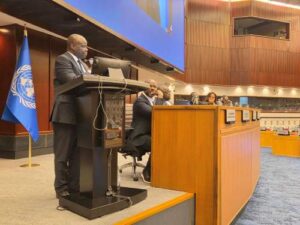
By Business Insider Reporter
The National Housing Corporation (NHC) and Zanzibar Housing Corporation (ZHC) have strengthened their strategic partnership as the two state-owned institutions move to accelerate modern housing development and improve urban land utilisation amid rising demand for residential and commercial property across Tanzania.
The growing collaboration reflects broader national efforts to modernise urban housing systems, expand investment in real estate infrastructure and address increasing pressure caused by rapid population growth and urbanisation.
Leaders from the two institutions say the partnership is evolving into a long-term professional alliance focused on knowledge exchange, architectural innovation, project management and the development of efficient modern housing solutions capable of supporting Tanzania’s long-term urban transformation agenda.
The cooperation has recently intensified through a series of joint meetings, technical visits and project inspections involving senior executives, engineers, architects and property experts from both organisations.
During the engagements, the institutions shared expertise in property management, infrastructure planning, architectural design and strategies aimed at improving efficiency in land and resource utilisation – particularly in densely populated urban centres where land availability continues to shrink.
NHC Director General Hamad Abdallah said the relationship between the two institutions has matured into a mutually beneficial partnership driven by shared experience and common national objectives.
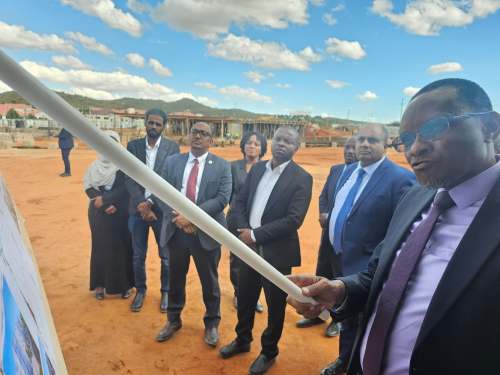
“Previously, many of these visits focused mainly on learning, but today we are exchanging professional expertise and practical experience. This demonstrates the institutional growth both organisations have achieved in advancing the housing sector,” he said.
For his part, ZHC Director General Sultan Said Suleyman described the two housing agencies as institutions with closely aligned mandates and challenges, making collaboration increasingly important as housing demand continues to rise.
“We are like twins. We face similar pressures and opportunities, and by working together we can contribute more effectively toward ensuring citizens access quality and modern housing,” he said.
A key area of focus for both institutions is the transition toward vertical urban development through modern high-rise residential and commercial buildings designed to maximise land efficiency.
The approach is becoming increasingly important in Zanzibar and major mainland cities where population growth, urban migration and land scarcity are intensifying pressure on housing infrastructure.
Officials noted that future housing solutions must move beyond traditional low-density developments toward integrated urban projects that optimise limited space while supporting commercial activity and modern lifestyles.
During project visits in Zanzibar, technical teams from both institutions reviewed innovative building designs and modern space-planning concepts aimed at improving functionality, investment returns and urban sustainability.
“One of the major lessons from these projects is the importance of efficient interior space utilisation. We observed strong architectural innovation and highly productive use of available building space,” Hamad said.
The two institutions also emphasised that housing remains one of Tanzania’s most strategic socio-economic priorities due to its direct connection to urban development, investment growth, employment creation and improved living standards.
Sultan noted that Zanzibar’s growing population and limited land resources are making vertical construction increasingly unavoidable.
“Housing demand continues to grow rapidly. We cannot rely entirely on traditional construction methods. Modern multi-storey developments are becoming essential for efficient urban planning and sustainable land use,” he said.
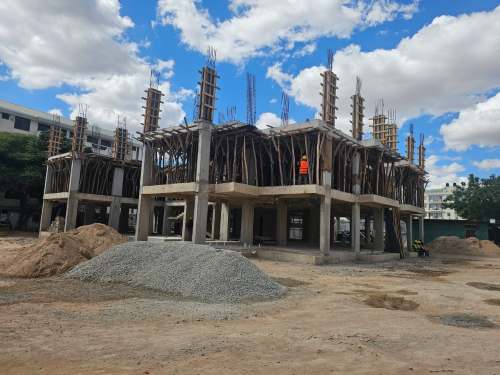
The leaders further commended both the government Union and Zanzibar governments for creating a supportive policy environment for investment and expansion within the housing sector.
Analysts say stronger cooperation between major state housing agencies could help accelerate the implementation of large-scale residential projects while improving institutional capacity in planning, financing and urban infrastructure management. The partnership also aligns with Tanzania’s broader Dira 2050 ambitions, which place increasing emphasis on modern urbanisation, infrastructure development and sustainable cities as drivers of long-term economic growth.