New investment positions East African Community to expand secure cross-border digital services and professional mobility across the region.
By Business Insider Reporter
The East African Community (EAC) has received high-performance ICT infrastructure worth €205,000 (approximately US$230,000) in a move expected to significantly strengthen regional digital integration, cybersecurity and cross-border professional mobility within the bloc.
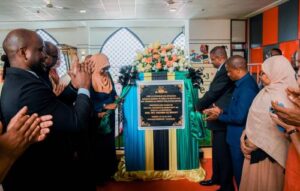
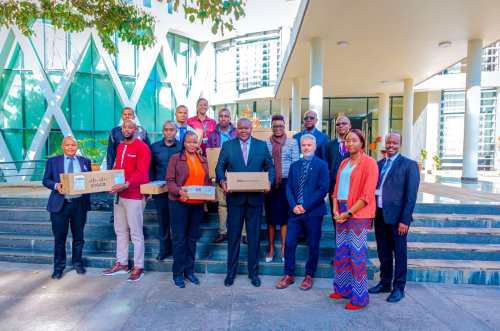
The infrastructure, handed over at the EAC Headquarters in Arusha by the German development agency Deutsche Gesellschaft für Internationale Zusammenarbeit (GIZ), is expected to enhance the Community’s digital capacity as East Africa accelerates efforts toward a more integrated digital economy.
The investment forms part of the Digitalisation for East African Trade and Integration (DIGEAT) Project funded by Germany’s Federal Ministry for Economic Cooperation and Development (BMZ).
According to the EAC Secretariat, the new infrastructure will improve the organisation’s ability to independently host, secure and scale critical digital systems while enhancing reliability, data protection, disaster recovery and cybersecurity capabilities.
The package includes high-performance primary and disaster recovery servers, enterprise-grade storage systems, automated backup appliances, advanced network switches, Web Application Firewall (WAF) cybersecurity technology and Windows Server Datacentre licences.
Analysts say the upgrade comes at a critical time as regional institutions increasingly shift toward digital public infrastructure to facilitate trade, investment and labour mobility across borders.
The infrastructure will primarily support the EAC Mutual Recognition Agreement (MRA) Digital Platform – Africa’s first regional digital mechanism designed to facilitate mutual recognition of professional engineers across member states.

Speaking during the handover ceremony, EAC Secretary General Ambassador Stephen Mbundi described the development as a major milestone in East Africa’s digital transformation journey.
“This handover represents more than a transfer of equipment. It is a transfer of ownership and capability,” said Ambassador Mbundi.
“With this investment, the EAC Secretariat is now positioned as a custodian of regional digital public infrastructure capable of facilitating secure cross-border digital services for East African professionals.”
He added that the Secretariat plans to expand the platform beyond engineering into other professional sectors including accountancy, architecture and veterinary services.
The platform allows professionals to digitally register, verify qualifications and apply for recognition across EAC partner states, reducing bureaucratic barriers that have historically limited labour mobility within the region.
The DIGEAT project is jointly implemented by GIZ and the EAC Secretariat and currently supports the operationalisation of the Mutual Recognition Agreement for Engineers under the EAC Common Market Protocol.
The initiative covers all eight EAC member states – Burundi, Democratic Republic of Congo, Kenya, Rwanda, Somalia, South Sudan, Tanzania and Uganda.
GIZ-EAC Cluster Coordinator Björn Richter said the investment reflects growing cooperation between Germany and the EAC in advancing regional integration through digital innovation.
“This investment is part of our shared agenda to create meaningful impact for East Africans by strengthening professional mobility and regional connectivity,” he said.
The EAC’s growing focus on digital systems mirrors wider continental efforts to modernise trade facilitation, professional services and government systems under the African Continental Free Trade Area (AfCFTA) and broader digital economy strategies.
Regional economists say digital interoperability and mutual recognition systems are increasingly becoming essential for unlocking intra-African trade, reducing transaction costs and enabling skilled labour movement across borders.
The EAC has already concluded mutual recognition agreements in engineering, architecture, accountancy and veterinary services, while negotiations covering legal professionals are now at advanced stages. Observers note that the latest ICT investment could help position the EAC among Africa’s leading regional blocs in digital governance and cross-border professional integration.