By Business Insider Reporter and Agencies
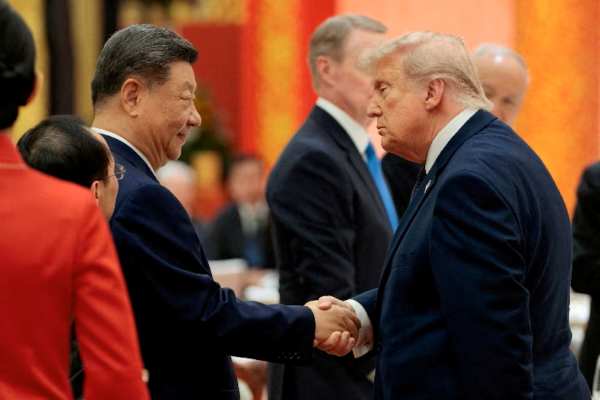
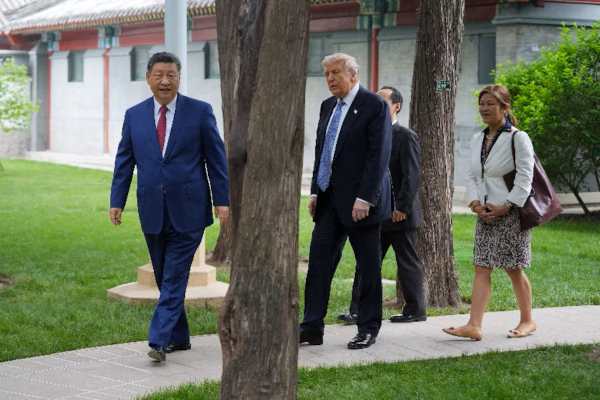
A high-profile summit between US President Donald Trump and Chinese President Xi Jinping ended in Beijing with warm diplomatic messaging but few concrete economic breakthroughs, underscoring the increasingly complex balance between geopolitical rivalry and global trade interdependence.
The two-day visit – Trump’s first trip to China since returning to the White House – had been closely watched by global investors, manufacturers and emerging markets seeking clarity on the future direction of the world’s two largest economies.
While both leaders projected cordial relations and pledged to maintain stable trade ties, analysts noted the absence of major agreements on tariffs, technology access, rare earth exports or broader structural trade reforms.
Instead, the summit largely produced symbolic commitments and cautious diplomatic language, reflecting the growing difficulty of securing sweeping economic deals amid heightened strategic tensions.
Markets disappointed by limited deliverables
One of the most anticipated announcements from the summit involved a potential aircraft purchase agreement between China and Boeing.
Trump announced that China would purchase 200 Boeing aircraft, with the possibility of future expansion. However, investors had expected a significantly larger deal, with reports suggesting discussions had previously centred on roughly 500 aircraft.
The announcement failed to impress markets, with Boeing shares falling sharply after details emerged.
US officials also pointed to agreements involving agricultural exports and discussions on expanding trade in non-sensitive goods worth an estimated US$30 billion. However, few operational details were released, leaving businesses uncertain about implementation timelines and commercial impact.
Notably absent were any breakthroughs regarding access to advanced artificial intelligence semiconductors produced by Nvidia, an issue that remains central to the broader technology rivalry between Washington and Beijing.
Rare earths and supply chains remain unresolved
The summit also failed to produce a lasting solution to tensions surrounding rare earth minerals – critical materials used in electric vehicles, semiconductors, aerospace manufacturing and defence technologies.
China imposed export controls on several rare earth materials in response to US tariff measures introduced in 2025, disrupting supply chains for American chipmakers and aerospace firms.
Although both countries reached a temporary trade truce last year, businesses remain concerned about the long-term stability of industrial supply chains.
The uncertainty is particularly significant for manufacturing-dependent economies and emerging markets, including those in East Africa, where governments are increasingly seeking investment in mineral processing, industrialisation and electric mobility supply chains.
Analysts say prolonged friction between Washington and Beijing could accelerate global competition for strategic minerals – an area where African countries, including Tanzania and the Democratic Republic of Congo, are becoming increasingly important players.
Taiwan and geopolitics overshadow trade
Despite the friendly optics of the summit, geopolitical tensions remained evident behind closed doors.
According to US officials, Xi warned Trump that mishandling the Taiwan issue could trigger broader regional conflict, highlighting one of the most sensitive flashpoints in China-US relations.
Taiwan remains a central source of strategic tension between Beijing and Washington, with China viewing the self-governed island as part of its territory, while the United States continues supporting Taiwan’s self-defence capabilities.
The issue continues to carry major implications for global markets because Taiwan dominates much of the world’s advanced semiconductor production.
Any escalation in tensions could disrupt technology supply chains, international shipping routes and investor confidence across Asia-Pacific markets.
Iran conflict adds energy market pressure
The summit also took place against the backdrop of growing instability linked to the Iran conflict and concerns over global energy security.
While the White House said both leaders discussed the importance of reopening the Strait of Hormuz and stabilising global energy markets, China stopped short of offering direct support for Washington’s efforts regarding Iran.
Chinese officials instead reiterated calls for diplomacy and warned about the broader economic consequences of prolonged conflict.
For emerging economies in Africa, continued instability in the Middle East remains a major concern because of its impact on oil prices, shipping costs and inflationary pressures.
East African economies, many of which rely heavily on imported fuel and maritime trade routes, remain vulnerable to disruptions in global energy supply chains.
Strategic stability replacing “strategic competition”
One of the more notable outcomes from the summit was China’s push for a new framework governing bilateral relations.
Xi described the relationship as one of “constructive strategic stability,” signalling Beijing’s preference for a more predictable and less confrontational approach than the “strategic competition” framework adopted during previous US administrations.
Political analysts say the shift in language reflects China’s attempt to stabilise economic relations while preserving its strategic interests amid slowing global growth and rising geopolitical fragmentation.
Still, many observers argue that the summit highlighted the widening gap between diplomatic symbolism and practical economic outcomes.

Although Trump and Xi agreed to continue engagement, with Xi expected to visit the United States later this year, businesses and investors remain cautious about the durability of future cooperation. For global markets – including fast-growing economies in East Africa seeking stronger trade links with both China and the United States – the summit reinforced one key reality: geopolitical competition between the world’s largest economies is increasingly shaping investment flows, commodity markets and the future of global trade.