
By Business Insider Reporter, Morogoro
Tanzania’s long-term development blueprint, Dira 2050, will place environmental conservation and climate resilience at the centre of the country’s economic transformation agenda, as the government intensifies efforts to promote sustainable growth and green development.
Minister of State in the Vice President’s Office, Hamad Yussuf Masauni (Pictured above planting a tree), said environmental management cannot succeed through policies and declarations alone, but requires visible action at every level of society, including large-scale tree planting and ecosystem restoration initiatives.
Speaking during a tree-planting exercise in Kilosa District, Morogoro Region, on May 15, 2026, Masauni said Tanzania’s Vision 2050 carries ambitious expectations that will require innovation and coordinated action to strengthen environmental protection and climate adaptation strategies.
The event forms part of activities organised by the Vice President’s Office ahead of this year’s World Environment Day commemorations, scheduled for June 5 in Dodoma Region.
Climate change emerging as economic challenge
Masauni said climate change is no longer solely an environmental issue but an increasingly significant economic and development challenge affecting agriculture, infrastructure, water resources and livelihoods across Tanzania.
“The floods, unpredictable weather patterns, droughts and many other challenges we are witnessing today are among the consequences of climate change,” he said. “As a nation, we must prioritise efforts to strengthen resilience against climate-related impacts.”
Vision 2050, Tanzania’s upcoming national development framework expected to succeed Vision 2025, is built around three major pillars, including environmental sustainability and climate resilience.
Government officials increasingly view green growth as essential to protecting long-term productivity, particularly in sectors such as agriculture, energy, tourism and water management, which remain highly vulnerable to climate shocks.
Tree planting linked to future economic stability
Masauni noted that although some citizens may not immediately recognise the economic value of tree planting, environmental restoration remains critical for safeguarding the welfare of future generations and ensuring sustainable economic development over the coming decades.
He praised Kilosa District and the wider Morogoro Region for involving primary and secondary school students in environmental conservation activities, saying youth participation is vital to building long-term ecological awareness and responsibility.
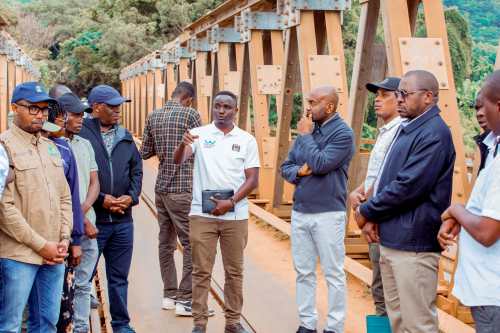
(Photos by the Vice President’s Office).
Environmental economists have repeatedly warned that deforestation, land degradation and water stress could significantly undermine Tanzania’s future growth prospects if climate mitigation measures are not accelerated.
Kilosa targets 1.5 million trees
Speaking on behalf of the Morogoro Regional Commissioner, Kilosa District Commissioner Shaka Hamdu Shaka said the district has set a target of planting 1.5 million trees, with annual tree-planting campaigns continuing consistently over the past five years.
He said Kilosa remains among the districts frequently affected by severe flooding, prompting the government to prioritise construction of water reservoirs and flood control infrastructure along the Mkondoa River.
According to Shaka, the ongoing tree-planting programme will play a key role in protecting future dams and water infrastructure while supporting broader economic development activities dependent on environmental stability. Analysts say Tanzania’s increasing focus on climate resilience reflects a broader continental shift, with African governments seeking to align economic planning with sustainability goals amid growing climate risks and global green financing opportunities.