By Business Insider Reporter, Dodoma
The Government has reaffirmed its commitment to strengthening women’s economic empowerment through expanded access to finance, financial literacy, property ownership and increased participation in leadership and decision-making structures, as Tanzania intensifies efforts to build a more inclusive and climate-resilient economy.
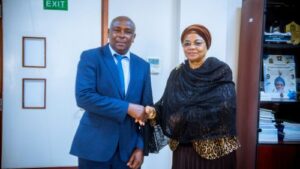
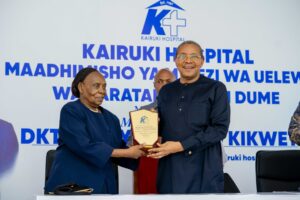
Speaking during the launch of findings from the Women’s Empowerment and Nutrition (WEN) 2023/2024 Survey and the Tanzania Gender and Environment Survey (TGES) 2025, Minister for Community Development, Gender, Women and Special Groups, Dr. Dorothy Gwajima (pictured above) said empowering women remains central to the country’s long-term socio-economic transformation agenda.
The studies were conducted by the National Bureau of Statistics (NBS) in collaboration with the Office of the Chief Government Statistician Zanzibar and launched at the NBS headquarters in Dodoma.
Dr. Gwajima noted that while Tanzania has made progress in advancing gender equality and financial inclusion, significant structural challenges still limit women’s full participation in economic activities, particularly in rural communities where access to land, capital and formal financial systems remains constrained.
“The Government will continue strengthening women’s empowerment through access to loans, financial education, property ownership and increasing their participation in leadership and decision-making positions,” she said.
Women at the centre of economic transformation
The minister said the government is increasingly linking women’s empowerment to broader national development priorities, including food security, nutrition improvement, environmental sustainability and climate resilience.
She stressed that future interventions will focus on promoting proper nutrition, strengthening the use of statistics in development planning and ensuring women are actively involved in environmental conservation and climate-related initiatives.
“We want to build a society that is resilient to climate change, and women must be fully involved in environmental management and sustainable development efforts,” she added.
The launch of the two reports comes at a time when Tanzania is accelerating implementation of economic reforms aimed at achieving inclusive growth under its long-term development framework, including the emerging Dira 2050 agenda.
Economists and development experts have increasingly argued that improving women’s economic participation is essential for sustaining long-term growth, reducing poverty and strengthening household resilience.
According to international development agencies, women account for a large proportion of Tanzania’s agricultural workforce and informal sector economy, yet many continue to face barriers in accessing productive assets such as land, credit, technology and markets.
Importance of data-driven policymaking
Government officials said the findings from the WEN and TGES studies will help policymakers better understand the relationship between gender, nutrition, environmental sustainability and economic development.
The reports are expected to guide future policy interventions, budget allocations and development programmes targeting women, children and vulnerable communities.
In recent years, Tanzania has increased emphasis on evidence-based policymaking, with national statistics increasingly becoming a key tool in shaping social and economic planning.
Officials from the National Bureau of Statistics noted that reliable data is becoming increasingly critical as the country seeks to address complex challenges such as malnutrition, climate change and socio-economic inequality.
The WEN survey, for instance, provides insights into household nutrition patterns, women’s decision-making power and access to economic resources, while the TGES study examines gender dimensions in environmental management and climate adaptation.
Expanding financial inclusion
The Government has in recent years rolled out several empowerment initiatives targeting women and youth, including concessional loan schemes, entrepreneurship support programmes and financial inclusion campaigns supported by both public institutions and commercial banks.
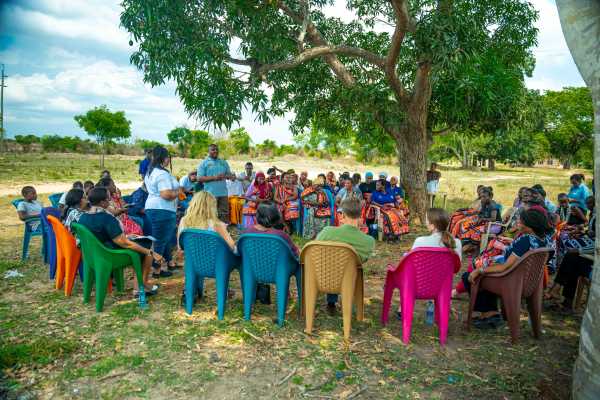
The rapid expansion of mobile money and digital banking services has also helped increase women’s participation in the formal financial system, although experts say financing gaps for women-owned businesses remain substantial.
Development analysts argue that strengthening women’s access to financial services could significantly improve productivity in agriculture, trade and small-scale manufacturing – sectors that employ millions of Tanzanians.
At the same time, climate change continues to disproportionately affect women, especially those dependent on rain-fed agriculture and natural resources for livelihoods.
As Tanzania pursues a more sustainable development path, policymakers are increasingly recognising that women’s empowerment, nutrition security and environmental sustainability are deeply interconnected. The latest studies therefore represent more than statistical reports; they provide a strategic framework for shaping policies aimed at building a more inclusive, resilient and productive economy.