
By Asia Singano and Jordan Mbwambo, Dodoma
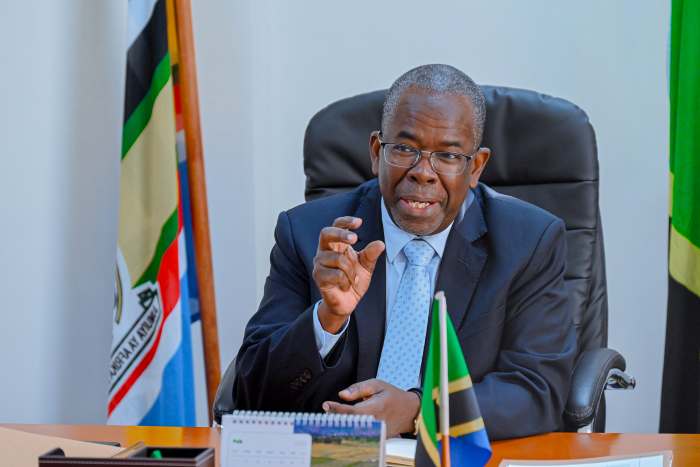
Minister of Finance, Khamis Mussa Omar, has directed the Joint Finance Commission (JFC) to work with the government to analyse and recommend reforms aimed at strengthening public service delivery through improved use of local government revenues and central government transfers.
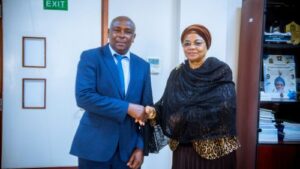
The directive was issued during a meeting in Dodoma between the minister and the commission’s leadership, headed by its secretary, Ernest Mchanga, who had paid a courtesy visit at the Ministry of Finance headquarters, Treasury Square, to introduce themselves following recent administrative changes.
Ambassador Omar said the commission, beyond its constitutional role in managing Union financial matters between mainland Tanzania and Zanzibar, should also provide deeper analysis on broader fiscal issues affecting social and economic services, particularly at the local government level where citizens directly access public services.
“Using international experience, we have instructed them to conduct an analysis. We will later sit together and propose the best approaches the government can adopt to improve services for all Tanzanians,” he said.
Strengthening intergovernmental fiscal coordination
The Joint Finance Commission is mandated under the Union Constitution to advise the two sides of the United Republic on the allocation of revenue between the Union and non-Union matters, as well as on financial arrangements affecting the Consolidated Fund and the Joint Finance Account.
Its recommendations play a critical role in shaping fiscal transfers between the central government and Zanzibar, and indirectly influence the broader intergovernmental financing framework.
However, experts have increasingly argued that Tanzania’s local government financing system faces structural challenges, including limited own-source revenue, heavy dependence on central government transfers, and disparities in service delivery across districts.
These issues have been highlighted in successive public expenditure reviews and parliamentary debates, particularly regarding health, education, and infrastructure provision at municipal and district levels.
Focus on improving local services
Ambassador Omar noted that while the commission has historically focused on Union-specific financial arrangements, its analytical capacity could be leveraged to address wider fiscal questions that affect the efficiency and sustainability of local government operations.
By reviewing how local authorities collect and utilise their revenues – as well as how central government grants are structured and disbursed – the government aims to identify reforms that could enhance accountability, reduce duplication, and ensure that funds are directed to priority social and economic services.
For his part, JFC Secretary Ernest Mchanga reaffirmed the commission’s commitment to advising both governments of the United Republic of Tanzania on fiscal matters, including revenue, expenditure, and the management of funds placed in the Joint Finance Account by the two sides of the Union.
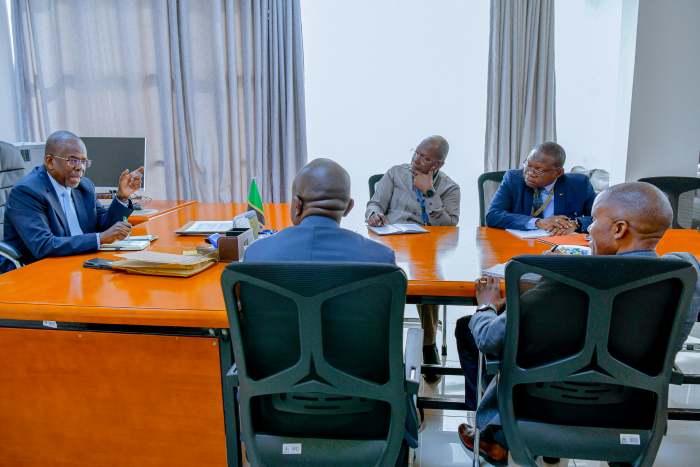
He said the commission would continue to provide technical guidance on financial governance and intergovernmental fiscal relations, in line with its constitutional mandate.
Broader fiscal reform context
The directive comes at a time when Tanzania is pursuing wide-ranging fiscal reforms aimed at strengthening domestic revenue mobilisation, improving public financial management, and enhancing transparency in intergovernmental transfers. Recent policy debates have also focused on the need to expand the local government tax base while balancing the risk of overburdening small businesses and households.
The meeting was also attended by senior officials from the Ministry of Finance, including Assistant Commissioner for Policy Wiliam Mhoja and Assistant Commissioner for Debt Management Omary Khama, reflecting the technical importance of the discussions and their potential implications for Tanzania’s broader fiscal architecture. If implemented, the commission’s forthcoming recommendations could reshape how resources flow between central and local governments, with significant implications for the quality and equity of public services across the country.