
By Peter Nyanje
Israel is seeking to scale up its economic engagement with Tanzania, with a renewed focus on trade, investment and technology transfer as bilateral relations continue to strengthen.
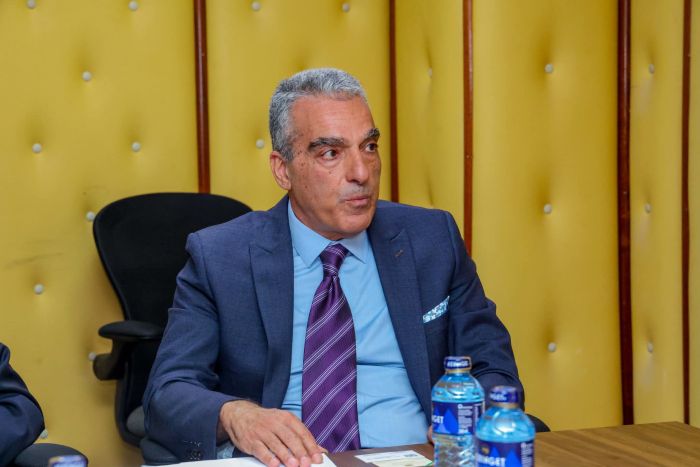
Israel’s Ambassador-designate to Tanzania, Gideon Behar, said there is significant untapped potential between the two countries, particularly in sectors such as agriculture, water management and innovation-driven industries.
Speaking to Business Insider on March 17, 2026, Behar noted that while diplomatic and development cooperation has improved in recent years, economic ties remain below their full potential.
“It is encouraging to see that relations between Israel and Tanzania have been improving. However, there is still a need to deepen cooperation, especially in trade and investment, in ways that will deliver mutual economic benefits,” he said.
Agriculture and skills transfer at the centre
A key pillar of the relationship has been capacity building and knowledge exchange, particularly in agriculture – an area where Israel has globally recognised expertise.
According to Behar, about 50 Tanzanian students are currently in Israel undergoing specialised training in modern agricultural practices, including irrigation technologies, agribusiness management and post-harvest systems.
These programmes are largely facilitated through institutions such as MASHAV, which has historically supported technical training and development cooperation across Africa.
For Tanzania, where agriculture employs the majority of the workforce but remains largely rain-fed and low in productivity, such exchanges are seen as critical in advancing climate-smart farming and food security.
Investment footprint and development partnerships
Beyond training, Israeli entities – particularly civil society organisations and private firms – have established a presence in Tanzania, focusing on agriculture, water solutions and rural development.
Israel’s global leadership in water efficiency technologies, including drip irrigation and desalination, presents opportunities for Tanzania to address persistent challenges in water access and irrigation infrastructure, especially in semi-arid regions.
Although investment volumes remain modest, analysts say targeted Israeli investments tend to be high-impact and technology-driven, often delivering productivity gains in sectors that are critical for Tanzania’s economic transformation.
Trade relations remain underdeveloped
Despite growing cooperation, bilateral trade between Tanzania and Israel remains relatively limited, largely concentrated in niche exports and technology imports.
Tanzania exports agricultural produce and raw materials, while imports from Israel typically include agricultural technologies, medical equipment and water management systems.
Trade experts argue that there is room to expand into higher-value segments, including agro-processing, pharmaceuticals and digital innovation, particularly as Tanzania pushes industrialisation under its development agenda.
Historical ties and diplomatic evolution
Tanzania and Israel share a long but evolving diplomatic history. Relations date back to the early years following Tanzania’s independence, when Israel was among the countries providing technical assistance, particularly in rural development and cooperative farming models.
However, ties were severed in 1973 during the Yom Kippur War, as many African nations aligned with Arab states. Diplomatic relations were later restored in 1995, paving the way for renewed cooperation.
Since then, engagement has gradually expanded, particularly in development cooperation, though economic relations have lagged behind.
Strategic opportunity amid global shifts
The renewed push for stronger ties comes at a time when Tanzania is actively seeking diversified investment partners to support its industrialisation, agricultural modernisation and infrastructure development.
Israel’s strengths in innovation, technology and resource efficiency align closely with Tanzania’s development priorities, particularly in addressing structural challenges such as low agricultural productivity, water scarcity and limited value addition.
Moreover, growing geopolitical and economic shifts are prompting African economies to look beyond traditional partners, creating space for non-traditional partnerships such as Tanzania–Israel cooperation.
Ambassador Behar emphasised that unlocking the full potential of the relationship will require greater private sector engagement, improved trade facilitation and stronger institutional linkages.
For Tanzania, deepening ties with Israel could provide access to advanced technologies, skills development and niche investments, while Israel stands to benefit from opportunities in one of East Africa’s fastest-growing economies. If effectively leveraged, the partnership could evolve from a development-focused relationship into a robust economic alliance anchored in trade, innovation and investment.