
By Business Insider Reporter
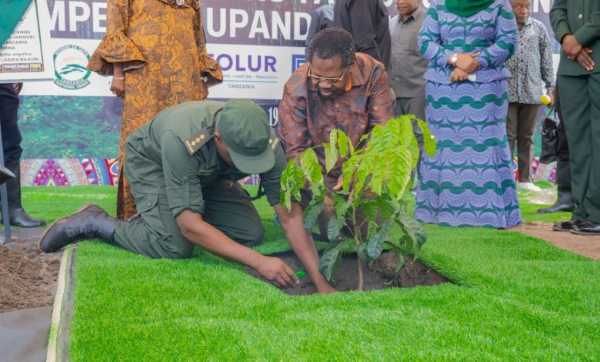
The government has launched a nationwide campaign aimed at repositioning tree planting from a purely environmental activity into a commercially viable pathway for participation in global carbon markets.
In a notable shift in strategy, the initiative is directly targeting Members of Parliament (MPs) and rural communities as key conduits for scaling awareness and adoption.
The programme, spearheaded through the Prime Minister’s Office (Regional Administration and Local Government), reflects a broader policy pivot: embedding climate action within the country’s economic growth framework.
From conservation to commercialisation
Speaking in Parliament, Deputy Minister Festo Dugange emphasised that the campaign is designed to help citizens understand both the environmental and financial returns of tree planting.
For policymakers, the recalibration is significant. Tanzania is increasingly viewing its vast forest resources not only as ecological assets but also as potential revenue streams within the expanding global carbon economy.
Carbon trading – where emissions reductions are quantified and sold as credits – has gained traction globally as countries and corporations seek cost-effective ways to meet climate targets. For Tanzania, this opens a pathway to monetise conservation while advancing national climate commitments.
Multi-agency execution
The campaign is being implemented through a coordinated framework involving the Vice-President’s Office, the Ministry of Natural Resources and Tourism, and the Tanzania Forest Services Agency (TFS).
This multi-agency model underscores the cross-sectoral nature of carbon markets, which intersect forestry, land management, finance and community development. It also signals an attempt to avoid institutional fragmentation – an issue that has historically limited the scalability of environmental programmes.
Public engagement is being driven through national media platforms, including educational broadcasts on Tanzania Broadcasting Corporation, alongside capacity-building initiatives for environmental officers tasked with translating policy into grassroots action.
Why MPs satter
The decision to prioritise MPs is both political and practical. Lawmakers are uniquely positioned to influence local uptake, particularly in rural constituencies where awareness of carbon markets remains limited.
By equipping MPs with technical understanding, the government aims to accelerate knowledge transfer to communities that are central to implementation – smallholder farmers, village authorities and local forest managers.
The strategy also reflects rising political interest in climate-linked economic opportunities. During parliamentary proceedings, Special Seats MP Maryam Azan Mwinyi raised questions about how ordinary Tanzanians could access and benefit from carbon markets, highlighting a growing demand for inclusive frameworks.
Structural bottlenecks
Despite the policy momentum, execution risks remain.
Access to quality tree seedlings, particularly in remote regions, has emerged as a key constraint. Weak distribution networks and limited nursery capacity could undermine large-scale adoption if not addressed alongside awareness efforts.
More broadly, the success of carbon trading participation will depend on the development of supporting infrastructure – ranging from verification systems and regulatory frameworks to market linkages and financing mechanisms.
Without these, there is a risk that awareness outpaces actual participation.
Positioning for a global market
Tanzania’s push comes at a time when carbon markets are expanding rapidly, driven by corporate net-zero commitments and tightening global climate regulations.
For emerging economies, these markets offer a dual dividend: access to climate finance and the ability to convert natural capital into measurable economic value.
Tanzania’s approach reflects a growing continental trend – particularly across sub-Saharan Africa – where governments are aligning conservation strategies with revenue generation models.
A strategic inflection point
The tree planting campaign signals a broader evolution in Tanzania’s development narrative. Environmental stewardship is no longer being framed solely as a public good, but as a market opportunity with tangible returns for communities and the national economy.
For investors and development partners, the initiative points to an emerging policy direction: one that integrates climate resilience, rural development and financial innovation.
The critical test will be execution – ensuring that awareness translates into participation, and that participation delivers measurable economic benefits. If successful, Tanzania could position itself not just as a conservation leader, but as a competitive player in the global carbon economy.