
By Business Insider Reporter
Tanzania’s decision to maintain and reform – rather than suspend – its tourist hunting industry signals a calculated policy direction with far-reaching implications for investment, conservation financing and rural livelihoods.
At a consultative meeting in Arusha between government officials and the Tanzania Hunting Operators Association, authorities reaffirmed their commitment to the sector, positioning it as a strategic economic activity anchored in regulated sustainability.
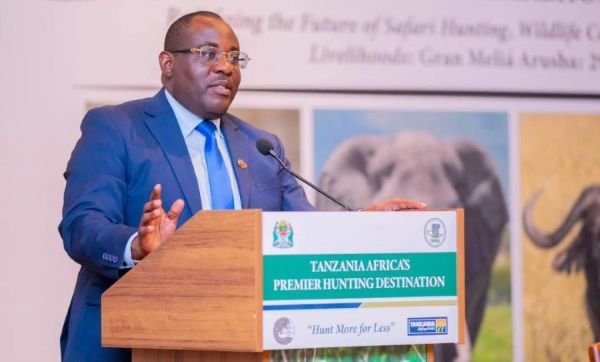
The message from the Ministry of Natural Resources and Tourism, delivered by Permanent Secretary Hassan Abbas (pictured below), was clear: reform – not retreat – will define the future of Tanzania’s trophy hunting industry.
A high-value, high-stakes sector
Tourist hunting remains one of the country’s most lucrative but contested wildlife-based industries. The sector generated approximately TSh 63 billion in 2022, with hunting licences and trophy fees contributing significantly to government revenue.
Individual concessions can command up to US$60,000 annually, while trophy fees – such as US$15,000 for elephants and US$12,000 for lions – underscore the premium nature of the business.
Beyond direct revenue, the industry plays a critical role in financing conservation. Operators reportedly contribute up to 90 percent of funding for the Tanzania Wildlife Management Authority, supporting anti-poaching operations and wildlife management in remote areas where photographic tourism is less viable.
For investors, this underscores a key dynamic: trophy hunting operates within a niche but high-margin segment of Tanzania’s broader tourism economy, complementing mainstream safari tourism while monetising less accessible ecosystems.
Policy certainty as an investment signal
By rejecting calls for a ban, the government has effectively provided policy clarity an essential ingredient for long-term investment. In sectors tied to natural resources, regulatory unpredictability often deters capital. Tanzania’s stance signals continuity, while ongoing reforms suggest an evolving but stable framework.
This is particularly relevant as global scrutiny intensifies. Several Western markets have introduced restrictions on trophy imports, and animal rights campaigns continue to shape public perception. In this context, Tanzania’s approach reflects a strategic balancing act: preserving access to international markets while strengthening domestic governance standards.
Reforms currently under discussion include tighter quota management, improved transparency in concession allocation and enhanced monitoring systems.
These measures are designed not only to address ethical concerns but also to protect the long-term asset base – wildlife populations – upon which the industry depends.
Economic multipliers and rural impact
The implications extend beyond central government revenues. Trophy hunting concessions are typically located in remote regions, where alternative economic opportunities are limited.
As such, the sector functions as a decentralised economic engine – creating employment, supporting community development projects and generating foreign exchange.
Government officials have emphasised the need to ensure more equitable benefit-sharing with local communities, a longstanding concern in wildlife-based industries.
If effectively implemented, such reforms could strengthen social licence to operate, reduce human-wildlife conflict and enhance the sustainability of conservation efforts.
From a business perspective, this points to a gradual shift towards more inclusive value chains, where community engagement becomes integral to operational viability.
Reputational risks and global pressures
However, the sector remains exposed to reputational and market risks. Recent controversies – including widely circulated images of trophy hunts – have amplified ethical debates and could influence demand, particularly from key source markets in Europe and North America.
More critically, concerns over the hunting of rare species, such as “super tusker” elephants, highlight the thin line between regulated utilisation and ecological risk. With fewer than 30 such elephants remaining globally, any perceived mismanagement could trigger international backlash and potential trade restrictions.
This places a premium on governance. For Tanzania, maintaining credibility in conservation science and enforcement will be essential not only for ecological sustainability but also for preserving access to global markets.
A hybrid conservation model
Tanzania’s position ultimately reflects a broader shift towards hybrid conservation financing models. Unlike countries that rely solely on photographic tourism or donor funding, Tanzania is leveraging multiple revenue streams – including hunting – to sustain its vast wildlife estate.
This diversified approach is increasingly relevant as conservation costs rise and public funding remains constrained.
By monetising wildlife assets through controlled utilisation, the country aims to create a self-sustaining system where conservation is financially viable without over-reliance on external support.
Way forward
The government’s reform agenda suggests that the future of trophy hunting in Tanzania will be defined less by expansion and more by optimisation – maximising economic returns while minimising ecological and reputational risks.
For investors and operators, the message is twofold: the sector remains open for business, but expectations are rising. Compliance, transparency and community engagement are no longer optional – they are central to long-term viability.
For policymakers, the challenge lies in execution. Translating reform commitments into measurable outcomes – stronger enforcement, fairer revenue distribution and verifiable conservation gains – will determine whether the sector can withstand both domestic scrutiny and global pressure. In that sense, Tanzania’s stance is not merely a defence of trophy hunting; it is a test case in how emerging economies can reconcile economic ambition with environmental stewardship in an increasingly contested global landscape.