By Business Insider Correspondent
Tanzania has taken another step towards positioning itself in the fast-growing global carbon economy after the government tasked the newly inaugurated board of the National Carbon Monitoring Centre (NCMC) with strengthening the country’s carbon governance systems.
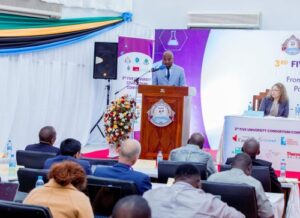
Launching the board in Dar es Salaam on March 6, 2026, the Minister of State in the Vice President’s Office (Union and Environment), Eng. Hamad Yussuf Masauni, issued five key directives aimed at ensuring the country fully benefits from emerging opportunities in the carbon market while safeguarding national interests.
At the heart of the minister’s message was the need to build a credible and internationally recognised system for tracking greenhouse gas emissions and carbon credits.
Mr. Masauni instructed the board to strengthen Tanzania’s Measurement, Reporting and Verification (MRV) systems to ensure that national carbon data is accurate, reliable and globally acceptable.
“The board must ensure that our national carbon data systems are robust so that Tanzania can participate confidently in international carbon markets,” he said.
Strengthening oversight of carbon projects
The Minister also directed the board to ensure that all carbon projects implemented in the country are managed effectively, transparently and in line with both national and international standards.

Carbon projects – such as forest conservation, renewable energy initiatives and climate-smart agriculture – allow countries or companies to generate carbon credits that can be traded in global markets as part of climate mitigation efforts.
According to the Minister, the board must ensure that such projects protect Tanzania’s natural resources while delivering meaningful benefits to citizens.
He further emphasised the need to establish a fair and transparent benefit-sharing mechanism to ensure communities that protect forests and other natural ecosystems directly benefit from carbon projects undertaken in their areas.
Attracting investment into the carbon economy
Another key directive was the creation of an enabling environment capable of attracting both domestic and international investment into Tanzania’s carbon sector.
Global demand for carbon credits has grown rapidly as governments and corporations seek ways to offset emissions in pursuit of climate targets under international agreements such as the Paris Agreement.
Mr. Masauni urged the board to ensure that incoming investment contributes to sustainable development while protecting the country’s environmental assets.
He also called on the board to strengthen Tanzania’s participation in international carbon trading frameworks, particularly those established under Article 6 of the Paris Agreement, which allows countries to cooperate in achieving their climate targets through carbon markets.
Expanding Tanzania’s engagement in these mechanisms, he said, would unlock significant economic opportunities for the country.
A sector with multi-billion-dollar potential
The government believes the carbon market could become a significant contributor to Tanzania’s economy in the coming decades.

He noted that projections outlined in the National Development Vision 2050 and its long-term implementation framework indicate that the carbon sector has the potential to contribute up to US$2 billion annually to the national economy.
Such growth could place Tanzania among Africa’s leading carbon credit producers, given its vast forest reserves, biodiversity resources and potential for nature-based climate solutions.
The National Carbon Monitoring Centre, based in Morogoro, was established to coordinate carbon monitoring, research and policy support in the country. The institution plays a central role in collecting data, verifying carbon credits and supporting Tanzania’s participation in global carbon markets.
“The government expects this centre to become a centre of excellence in carbon monitoring, carbon trading and climate change research in Africa,” Masauni said. “This is an ambitious goal that requires strong institutional leadership, effective monitoring systems and close collaboration among stakeholders.”
Call for collaboration
Speaking during the event, Dr. Albina Chuwa, Chairperson of the newly inaugurated board, underscored the importance of cooperation in achieving the centre’s objectives.
She said the board would prioritise partnerships and seek opportunities that can help strengthen the institution and deliver tangible outcomes for the country.
“Collaboration is essential if we are to realise the ambitions and aspirations of Tanzanians in this sector,” she said. “With strong cooperation from all stakeholders, we will make it easier to ensure that the carbon centre performs effectively.”
Dr Chuwa added that the board’s inauguration comes at a crucial moment when the global carbon market is expanding rapidly, presenting both opportunities and governance challenges for developing countries.

She noted that NCMC carries a critical responsibility to ensure Tanzania’s carbon resources are managed transparently, professionally and in accordance with internationally accepted systems and standards.
Board composition
Members of the newly launched board include Khamis Hamza Khamis, Amne Sued Kagasheki, Farhat Mabrouk, Dr Ladislaus Kyaruzi, Rishad Bade, and Dr Philipina Fenest Shayo.
Their mandate will be to guide the institution’s strategic direction and ensure that Tanzania’s emerging carbon economy contributes meaningfully to environmental protection, community development and national economic growth. As global carbon markets continue to expand, analysts say strong regulatory oversight and credible monitoring systems will be critical for countries like Tanzania seeking to capitalise on climate finance while protecting local communities and ecosystems.