By Business Insider Reporter
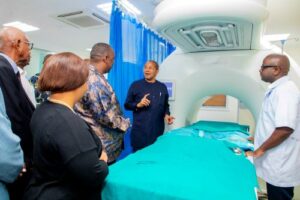
Tanzania stands at a pivotal moment as a new US$972 million regional initiative seeks to reshape the employment landscape across Eastern and Southern Africa.
The Skills for Economic Transformation and Jobs Programme (SET4Jobs), financed by the World Bank’s International Development Association (IDA), aims to equip 18 million young people with market-relevant education and skills by 2034.
For Tanzania, participation in the programme is not merely about training youth – it is about restructuring the country’s growth model to translate demographic expansion into economic strength.
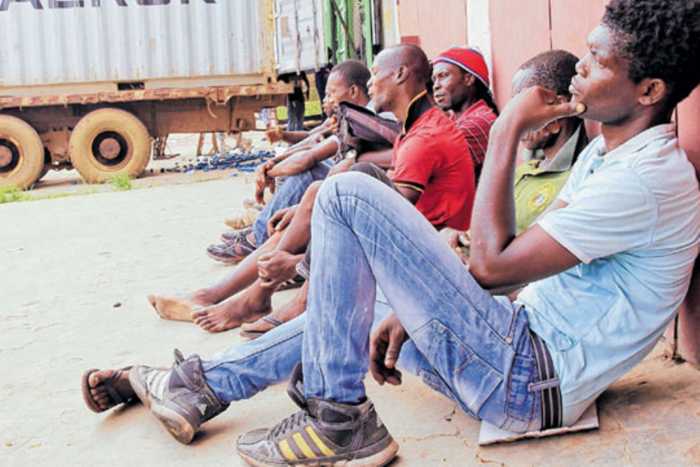
The scale of the challenge is stark. Across the region, roughly eight million young people enter the labour market each year, yet fewer than one million secure waged employment.
Millions more remain outside both school and work. Tanzania, with one of the youngest populations in Africa, faces similar structural pressures.
Without sufficient job creation, youth unemployment and underemployment risk eroding productivity gains and social stability. With the right reforms, however, this same demographic profile could become a powerful driver of industrial expansion and domestic consumption growth.
SET4Jobs is designed to align skills development with value chains that show strong potential for employment growth, including agribusiness, energy, healthcare, tourism and manufacturing. This sector-targeted approach is significant. Historically, skills development programmes in many African economies have operated in isolation from industrial policy, producing graduates whose qualifications do not match employer demand. By tying training investments directly to economic sectors poised for expansion, the programme attempts to correct this mismatch.
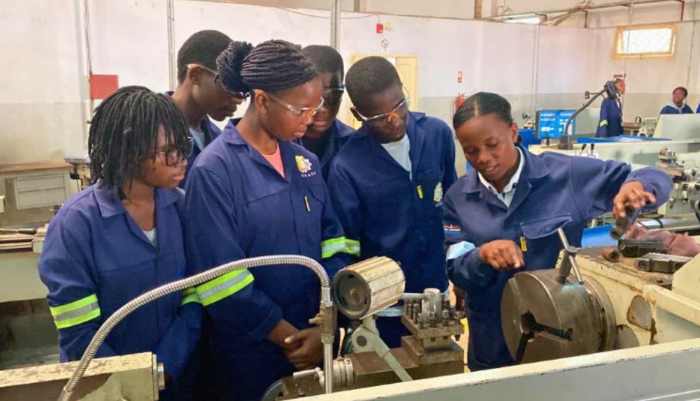
For Tanzania, the opportunity lies in deliberate alignment. The country’s industrialisation agenda, infrastructure expansion and natural resource endowments provide fertile ground for employment-intensive growth.
Agro-processing linked to Tanzania’s agricultural base, gas and renewable energy development, construction and building materials manufacturing, and tourism value chain upgrading all offer realistic pathways for absorbing skilled youth. However, capturing these gains will require more than curriculum updates. It demands institutional coordination between ministries responsible for education, industry, finance and labour.
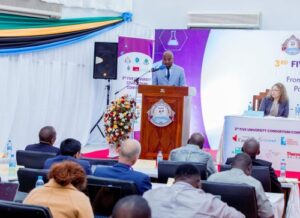
A critical component of the programme is regional coordination through the Inter-University Council for East Africa (IUCEA), which will support harmonisation of tertiary and technical education standards while promoting research, innovation and incubation.
For Tanzania, this opens space to strengthen university–industry linkages that remain underdeveloped. Applied research centres, sector-specific innovation hubs and structured apprenticeship models must become central pillars of implementation.
Without direct employer involvement in curriculum design and training delivery, skills development risks continuing to operate in a vacuum.
Yet skills alignment alone will not generate jobs at scale. Businesses must have incentives to expand. Tanzania’s broader investment climate reforms therefore become inseparable from the success of SET4Jobs.
Predictable taxation, efficient licensing processes, contract enforcement and access to reliable power and transport infrastructure are prerequisites for private capital mobilisation. The programme explicitly aims to crowd in private sector financing and advisory support. If Tanzania can leverage this to strengthen public–private partnerships and industrial park development, skills investments could translate into tangible employment growth rather than simply higher certification rates.
Another dimension that requires careful design is inclusion. Regional data indicates that millions of young women are neither in school nor employed.
Tanzania must ensure that training pathways deliberately address gender disparities, particularly in technical and industrial fields traditionally dominated by men. This is not only a social imperative but an economic one.
Expanding female labour force participation directly contributes to household income growth and productivity gains.
The regional knowledge-exchange platform embedded within SET4Jobs also offers strategic value.
By sharing data on job absorption rates, sector performance and training outcomes, participating countries can refine labour market planning.
For Tanzania, building a real-time labour market intelligence system would reduce the risk of oversupplying graduates in low-demand fields while ensuring that high-growth sectors receive adequate human capital support.
Ultimately, SET4Jobs presents Tanzania with a structural reform opportunity rather than a simple funding mechanism. The country has already made substantial investments in physical infrastructure – ports, railways, roads and energy systems. The next phase of growth requires equivalent attention to human infrastructure.
Productivity gains, wage growth and export competitiveness depend on the quality of skills embedded within the workforce.
If implemented strategically, the programme could reinforce Tanzania’s ambitions to become a regional manufacturing and logistics hub. If approached administratively, without deep coordination and private sector integration, it risks becoming another well-intentioned training initiative with limited labour market impact.
The demographic clock is ticking. As youth cohorts continue to expand, the cost of inaction rises. SET4Jobs offers Tanzania a framework to convert demographic pressure into economic momentum. Whether it becomes a transformative engine for employment or a missed opportunity will depend on policy coherence, institutional discipline and the willingness to integrate skills development into the heart of the country’s growth strategy.