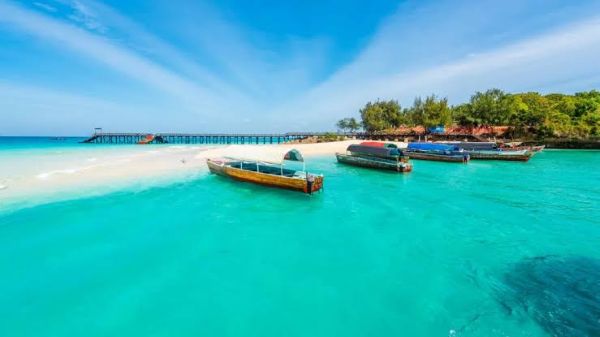
Renewed cooperation with UNESCO could help the islands protect cultural assets while unlocking investment, jobs and local business opportunities – but success will depend on turning policy discussions into funded projects.
By Business Insider Reporter, Zanzibar
Tanzania’s renewed cooperation with UNESCO could give Zanzibar an opportunity to turn its rich cultural heritage into a stronger economic asset, as the islands seek to expand tourism without eroding the history and communities that make the destination distinctive.
The emerging partnership puts heritage conservation and sustainable tourism at the centre of a wider cooperation agenda spanning education, science, culture, communication and access to information.
For Zanzibar, however, the economic stakes are particularly significant.
Its historic sites, traditions and cultural landscapes are not merely conservation assets.
They underpin parts of the tourism economy, supporting accommodation, restaurants, tour operators, guides, transport providers, artisans and other businesses that depend on visitor spending.
That creates a delicate commercial equation: Zanzibar needs tourism growth and investment, but uncontrolled development could weaken the very cultural assets on which part of that growth depends.
The renewed Tanzania-UNESCO cooperation therefore provides an opportunity to pursue a tourism model in which preservation and investment reinforce rather than undermine each other.
A proposed development partners’ roundtable on culture, heritage and sustainable tourism is expected to provide a platform for government institutions, conservation bodies and development partners to explore how heritage protection can contribute to long-term tourism development.
Heritage as economic infrastructure
The shift is important because heritage conservation is increasingly about more than preserving old buildings.
Properly managed historic districts and cultural sites can generate employment, encourage investment in hospitality and related services, support small businesses and create markets for local products.
For Zanzibar, this means cultural heritage can be treated as a form of economic infrastructure.
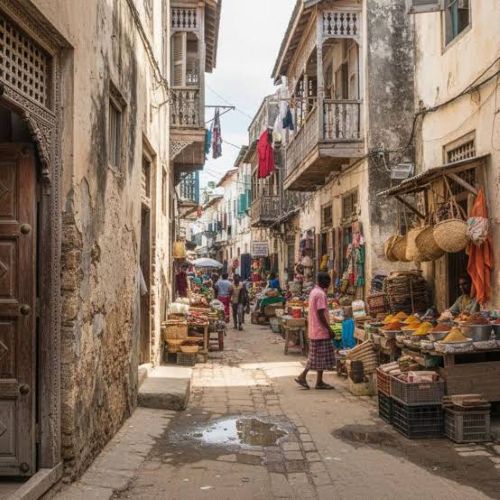
But unlike a road or airport, heritage assets can be permanently degraded by poorly planned development, excessive visitor pressure or inadequate maintenance.
The challenge is therefore to extract greater economic value from tourism while protecting the physical and cultural character that attracts visitors in the first place.
The source material underpinning the renewed cooperation argues that sustainable tourism will require conservation measures, responsible investment and meaningful community participation. It also warns that the benefits will depend on whether discussions result in concrete projects, investment commitments and long-term management strategies.
That distinction is crucial.
International partnerships can provide expertise, technical assistance and access to global knowledge networks, but they do not automatically produce restoration projects, tourism infrastructure or jobs.
The cooperation will therefore require clear targets, financing and implementation responsibilities if its impact is to be visible beyond government and diplomatic meetings.
Keeping tourism money local
There is also a question of who benefits from Zanzibar’s expanding visitor economy.
Historic sites can attract tourists and investment, but sustainable tourism requires surrounding communities to capture a meaningful share of that economic activity.
That can happen through locally owned restaurants and accommodation, cultural tours, handicrafts, creative industries, transport services and other businesses linked to heritage tourism.
Community participation is therefore more than a conservation principle. It is also an economic question.
The stronger the links between tourism expenditure and local enterprises, the greater the potential for heritage tourism to generate income beyond large hotels and established tourism operators.
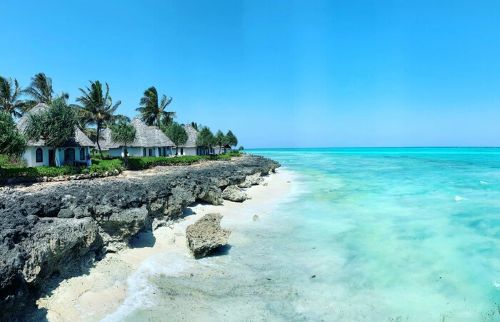
Conversely, if communities bear the costs of congestion, rising property pressure and changes to their neighbourhoods without sharing substantially in the economic benefits, tensions between conservation, tourism and residents can grow.
The central challenge identified in the source material is consequently to develop a tourism model that protects Zanzibar’s heritage while ensuring residents benefit from visitor growth.
Beyond tourism
The UNESCO partnership extends beyond heritage.
Education, scientific development, culture and access to information are also part of the cooperation framework, potentially linking Tanzanian universities, schools, research institutions and cultural organisations with international expertise and knowledge networks.
The National Commission for UNESCO is expected to play a coordinating role between international programmes and Tanzania’s domestic development priorities.
Scientific cooperation could strengthen research capacity and improve access to technical expertise, while education partnerships could support workforce development and institutional capacity.
Those areas also have an economic dimension. A tourism industry moving towards higher-value and more sustainable products requires skilled workers, better research, stronger destination management and professionals capable of balancing commercial development with conservation.
Universities and research institutions could therefore become more important participants in Zanzibar’s tourism transformation, particularly in areas such as heritage management, environmental protection, urban planning and tourism research.
From cooperation to investment
The biggest test, however, will be implementation.
The source material itself cautions that stronger cooperation with UNESCO will require more than regular discussions. Clear objectives, implementation plans and financial commitments will be needed to translate international cooperation into measurable results.
That means the next phase will need to answer practical questions: Which heritage assets require the most urgent investment? How much will conservation cost? Who will finance restoration? What role will private investors play? And how much of the additional tourism value will reach communities living around the protected sites?
Without answers to those questions, the partnership risks remaining concentrated on policy dialogue.
With a clear investment pipeline, however, Zanzibar could use heritage conservation to diversify its tourism product beyond the conventional beach-and-resort model, encourage longer visitor stays and create additional markets for cultural and creative businesses.
The opportunity is therefore not simply to preserve Zanzibar’s past.
It is to determine whether that past can be protected and managed as a productive asset in the islands’ future economy – generating investment and jobs without sacrificing the heritage on which that value depends.
(ADOPTED FROM ARTICLE ORIGINALLY PUBLISHED BY TTW)