

By Peter Nyanje
The passing of veteran politician William Vangimembe Lukuvi at the age of 70 marks more than the loss of a long-serving legislator; it signals the departure of one of the most influential behind-the-scenes actors in Tanzania’s modern political evolution.
For over three decades, Lukuvi occupied a strategic position within both government and the ruling Chama Cha Mapinduzi (CCM), serving as a stabilising force during periods of political transition, policy recalibration, and institutional consolidation.
His influence was less about rhetorical dominance and more about political continuity, elite consensus-building, and disciplined governance.
A bridge across political eras
Lukuvi’s political career, spanning from his election as Member of Parliament for Ismani in 1995 to his role as Senior Presidential Adviser under Samia Suluhu Hassan, uniquely positioned him across Tanzania’s post-single-party transformation.
He operated within successive administrations – from Benjamin Mkapa to Jakaya Kikwete and John Magufuli – adapting to shifting governance styles while maintaining ideological alignment with CCM’s core doctrine.
This continuity made him a critical institutional memory within government, particularly at a time when Tanzania navigated economic liberalisation, public sector reforms, and a reassertion of state-led development.
Political analysts often point to such figures as “system stabilisers” – actors who ensure that transitions in leadership do not disrupt the underlying machinery of governance. Lukuvi embodied this role.
Instrumental in executive–legislative coordination
His tenure as Minister of State in the Prime Minister’s Office responsible for Policy, Coordination and Parliamentary Affairs (2010–2015) placed him at the heart of executive–legislative relations.
In this capacity, Lukuvi was central to managing parliamentary business, ensuring legislative alignment with executive priorities, and diffusing political tensions within the National Assembly.
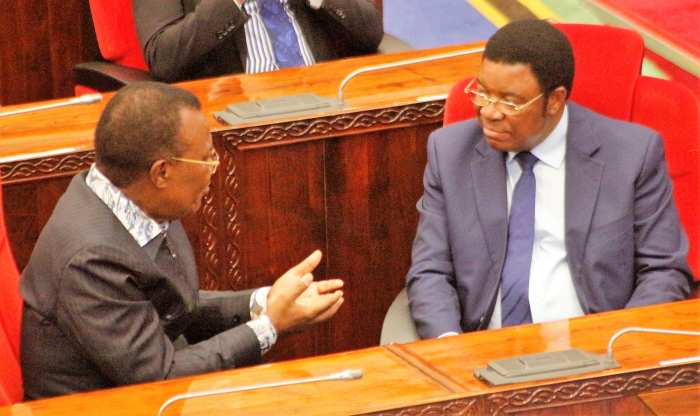
This role is often underestimated in Tanzania’s governance architecture. Yet, during a period marked by expanding parliamentary assertiveness and increasing scrutiny of public expenditure, Lukuvi’s ability to maintain cohesion within CCM’s parliamentary caucus proved critical.
His approach – firm but consultative – helped avoid legislative gridlock and preserved policy momentum.
Colleagues frequently described him as a “political shock absorber,” a figure capable of mediating disputes without escalating them into factional conflicts.
Land reforms and political capital
Perhaps Lukuvi’s most visible policy imprint came during his tenure as Minister for Lands, Housing and Human Settlement Development (2015–2022). Land remains one of Tanzania’s most politically sensitive sectors, intersecting with issues of urbanisation, investment, and social equity.
At a time when disputes over land ownership were intensifying – driven by rapid urban expansion and increased foreign and domestic investment – Lukuvi adopted a hands-on approach.
He decentralised dispute resolution mechanisms, increased field inspections, and pushed for administrative efficiency in land allocation systems.
While not without criticism, these interventions strengthened his political capital at both grassroots and national levels.
His frequent regional visits and direct engagement with citizens reinforced CCM’s image as a responsive governing party, particularly in rural constituencies where land conflicts often translate into political discontent.
The Ismani stronghold: a case study in electoral durability
Lukuvi’s uninterrupted tenure as MP for Ismani since 1995 illustrates another dimension of his political significance: electoral resilience. In a multi-party system where incumbency is increasingly contested, maintaining voter loyalty for nearly three decades signals more than party dominance – it reflects sustained constituency engagement.
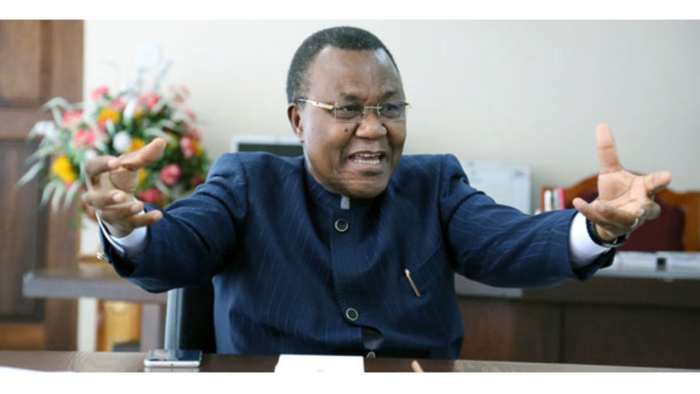
His approach blended traditional CCM grassroots mobilisation with pragmatic responsiveness to local development needs. By maintaining close ties with constituents and addressing everyday governance issues, he effectively insulated his political base from opposition inroads.
For CCM, such constituencies serve as electoral anchors, ensuring stability even as urban areas become more politically competitive.
Adviser and power broker in the Samia era
Following his exit from the Cabinet in 2022, Lukuvi’s appointment as Senior Adviser to President Samia in 2023 underscored his enduring relevance. In this role, he contributed to shaping political and social strategies during a period characterised by policy recalibration and efforts to rebuild political consensus.
Under President Samia’s administration, which has emphasised reconciliation, economic diplomacy, and institutional reforms, experienced figures like Lukuvi played a critical advisory role. His deep understanding of party dynamics and state structures enabled him to act as a bridge between the old guard and emerging leadership within CCM.
A legacy of quiet influence
Lukuvi’s political legacy is unlikely to be defined by landmark speeches or ideological shifts. Instead, it lies in his ability to sustain systems, manage complexity, and reinforce institutional continuity.
In many ways, his career reflects a broader feature of Tanzanian politics: the importance of disciplined party structures and consensus-driven leadership. Unlike more polarising figures, Lukuvi operated within the system, strengthening it incrementally rather than challenging it overtly.
His death leaves a gap not only in Parliament but within the informal networks that underpin governance – networks that rely on trust, experience, and long-standing relationships.
Implications for Tanzania’s political landscape
The immediate question following Lukuvi’s passing is not merely succession in Ismani, but the broader issue of institutional memory within CCM and government. As Tanzania continues to navigate economic transformation and political reform, the departure of seasoned figures raises concerns about continuity and mentorship.
For younger politicians, Lukuvi’s career offers a template: longevity built on loyalty, adaptability, and grassroots connection. For the state, it underscores the need to cultivate a new generation of leaders capable of balancing political pragmatism with policy effectiveness.
The other side of Lukuvi
During his tenure as Minister for Lands, Housing and Human Settlement Development (2015–2022), Lukuvi was widely recognised for his hands-on approach to dispute resolution. However, critics argue that his interventions were largely administrative rather than structural.
Land governance in Tanzania remains characterised by overlapping legal frameworks, slow titling processes, and persistent conflicts between investors, pastoralists, and local communities.
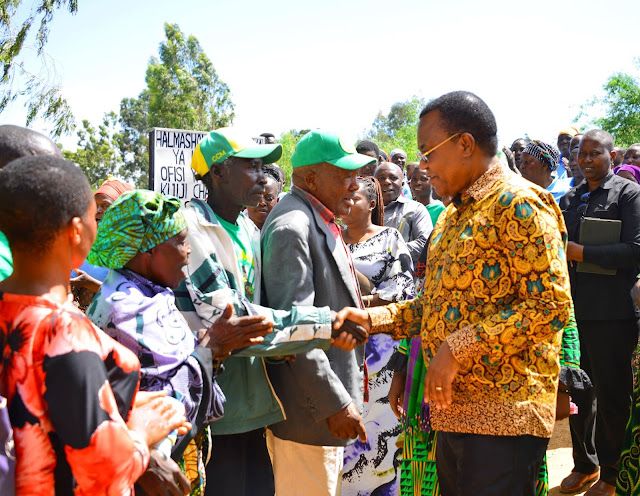
While Lukuvi improved responsiveness – often travelling to resolve disputes in person – he did not fundamentally overhaul the institutional inefficiencies underpinning the sector.
As a result, many of the systemic challenges, including informal settlements and weak land registries, persisted beyond his tenure.
Centralised, personality-driven governance style
Lukuvi’s leadership style, particularly in the lands ministry, leaned heavily on personal intervention. While effective in the short term, this approach raised concerns about sustainability.
By positioning himself as the primary problem-solver, institutional capacity at lower administrative levels was not always sufficiently strengthened. This created a governance model dependent on individual authority rather than robust systems – an issue frequently cited in public sector reform debates.
Conservative political posture within CCM
As a long-standing member of Chama Cha Mapinduzi (CCM), Lukuvi was often seen as a defender of party orthodoxy rather than a reformist voice.
While this strengthened party cohesion, it also meant he was not at the forefront of pushing internal political reforms, particularly in areas such as intra-party democracy, youth inclusion, and political pluralism.
His approach prioritised stability over transformation, which, in a changing political environment, can be viewed as both a strength and a limitation.
Limited national policy innovation
Compared to some of his contemporaries, Lukuvi was not strongly associated with landmark policy innovations or transformative legislative agendas.
His influence was more operational – focused on implementation, coordination, and mediation – rather than conceptual policy design. This limited his imprint on long-term national policy frameworks, particularly in comparison to reform-driven figures in Tanzania’s economic and governance landscape.
Overall assessment
Lukuvi’s shortcomings were less about failure and more about the limits of a governance style rooted in continuity, control, and pragmatism. He excelled as a stabiliser and implementer but was less prominent as a structural reformer or policy innovator. In the context of Tanzania’s evolving political economy, his career highlights a broader tension: the trade-off between maintaining institutional stability and pursuing transformative change.