By Business Insider Reporter
Tanzania is stepping up the use of digital technology, modern port and trade management systems, and scientific data to unlock the economic potential of its oceans, lakes, rivers and coastal resources, the government has said.
The government says a modern Blue Economy requires not only access to natural resources, but also skilled professionals capable of applying new technologies, innovation and scientific knowledge to turn those resources into sustainable economic opportunities.
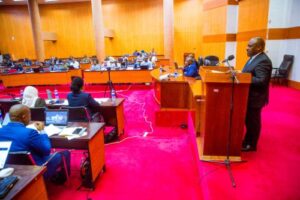
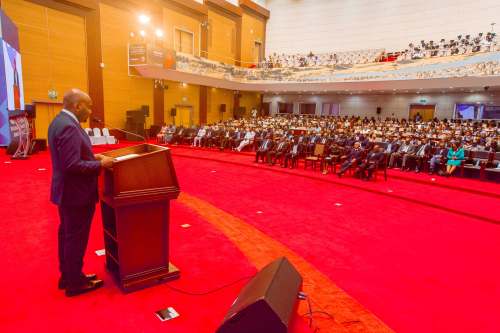
Minister of State in the Vice-President’s Office (Union and Environment), Hamad Yussuf Masauni, made the remarks on behalf of Vice-President Deogratius Ndejembi while opening the fifth International Blue Economy Conference (IBEC) in Dar es Salaam on Monday.
The three-day conference, running from September 7 to 9 at the Julius Nyerere International Convention Centre, brings together policymakers, researchers, investors and other stakeholders to discuss ways of accelerating Africa’s Blue Economy.
Masauni said Tanzania and its partners must deepen cooperation in scientific research, environmentally friendly technology transfer, investment, human capital development, management of shared resources and protection of marine ecosystems.
“Modern Blue Economy development requires more than natural resources. It requires the ability to enable and transform those resources into real economic opportunities through science, technology, innovation, investment and collaboration,” he said.
Turning water resources into economic value
The conference is being held as African countries increasingly view oceans, lakes, rivers, groundwater and coastal areas not simply as environmental assets, but as strategic economic resources.
These resources have implications for food security, trade, investment, employment and community livelihoods, while their sustainable management is becoming increasingly important amid environmental pressures.
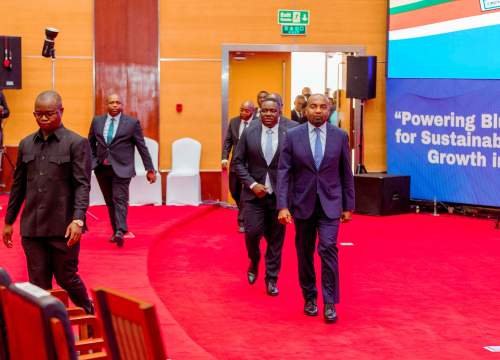
The conference theme, “Powering Blue Initiatives for Sustainable Economic Growth in Africa,” reflects the growing focus on converting Africa’s vast aquatic resources into productive economic activity without undermining the ecosystems on which those activities depend.
For Tanzania, the opportunity cuts across several sectors, including fisheries and aquaculture, maritime transport, ports and logistics, tourism, marine research, coastal development and other water-based economic activities.
Government pushes sustainable investment
Deputy Minister for Transport David Kihenzile said the Blue Economy represented a critical area for national development because of the resources and opportunities found in the sea, lakes, rivers, coastal areas and other water bodies.
He said the government’s approach was centred on sustainable resource use, environmental management and value addition, while seeking to expand employment, incomes, trade and investment.
Regional and international cooperation would also be important in developing the sector, Kihenzile said.
The emphasis on value addition is particularly significant for Tanzania, where much of the economic potential of marine and freshwater resources remains underdeveloped.
Rather than simply extracting or harvesting resources, the government wants greater economic value to be generated through processing, technology, logistics, research and investment.
Skills and research at the centre
Prof. Tumaini Gurumo, Principal of the Dar es Salaam Maritime Institute (DMI), said Tanzania was continuing to implement its 2024 National Blue Economy Policy, which provides a national framework for managing, coordinating and sustainably exploiting opportunities arising from aquatic resources.
He said successful implementation would depend on building the country’s knowledge and technological capacity.
“We need knowledge and skills; we need research and innovation; we need implementable policies and laws; we need technology; we need investment; and we need national, regional and international cooperation,” Gurumo said.
The emphasis on skills is increasingly important as maritime industries become more technology-intensive, with digital systems transforming port operations, logistics, shipping, fisheries monitoring and resource management.
For Tanzania, developing a competitive Blue Economy could therefore depend as much on its ability to build technological and human capacity as on the size of its natural resource base.

PHOTOS BY THE VICE-PRESIDENT’S OFFICE
The IBEC conference provides a platform for Tanzania and other African countries to examine how investment, innovation and technology can help close that gap while ensuring that economic expansion does not come at the expense of the marine and freshwater ecosystems that underpin the continent’s Blue Economy. If you want, I can also make this more analytical and business-focused, adding Tanzania’s Blue Economy contribution to GDP, investment opportunities, fisheries, ports, tourism and maritime transport, so it reads more like a premium Business Insider magazine story rather than a straight conference report.