
By Correspondents Farida Radhaman and Josephine Majura, Dodoma
Tanzania is stepping up efforts to plug revenue leakages and strengthen the collection of non-tax revenue, with the government urging public institutions to ensure every shilling due is recorded in official systems.
The initiative comes as non-tax revenue collections exceeded their target during the first two months of the 2026/27 financial year, highlighting the sector’s growing importance in financing public services and development projects.
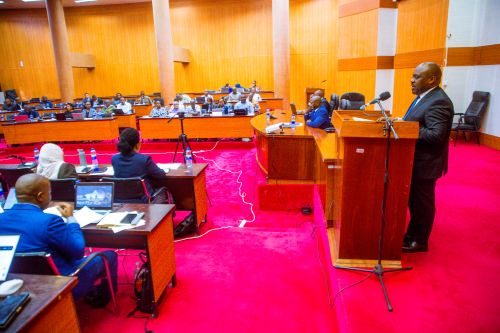
Deputy Permanent Secretary in the Ministry of Finance, Elijah Mwandumbya, issued the directive in Dodoma while opening a technical meeting of government votes responsible for collecting non-tax revenue.
He said increasing fees or identifying new revenue sources would not be enough without stronger collection systems, effective monitoring and measures to prevent the loss of public funds.
“Every shilling due to the government must enter official systems. We must strengthen revenue oversight and monitoring to prevent the loss of funds that are essential for implementing government plans and delivering services to citizens,” Mwandumbya said.
He called on institutions to adopt practical strategies with clearly assigned responsibilities and effective mechanisms for tracking implementation.
Collections exceed target
Non-tax revenue collections reached Sh1.06 trillion between July and August of the 2026/27 financial year, equivalent to 114.7 percent of the target for the period, according to figures presented by Mwandumbya.
The collections represented a 34.4 per cent increase compared with the corresponding period in 2025.
For the full 2025/26 financial year, the government collected TSh4.3175 trillion against a target of TSh4.682 trillion, achieving 92.2 per cent of the target.
Despite the improvement in recent collections, Mwandumbya said performance varied considerably among government institutions, with some contributing substantially more than others.
Institutions recording relatively low collections were urged to review their strategies and learn from better-performing agencies.
He said opportunities remained to improve revenue mobilisation through stronger management of existing sources and identification of collection opportunities that had not been fully exploited.
Mwandumbya also cautioned that revenue measures should reflect prevailing economic conditions and protect the environment in which citizens conduct legitimate business activities.
Digital systems under scrutiny
The Ministry of Finance is also seeking to improve the effectiveness of digital payment systems, including the government Control Number system used to facilitate payments for public services.
Director of Financial Management Systems and Information and Communication Technology Services, Dr. John Sausi, said digital systems were helping improve efficiency and simplify government payments, but operational challenges continued to affect performance.
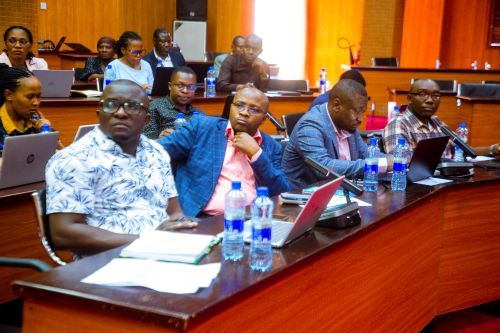
These included delays by public institutions in reconciling transactions and technical problems that could arise within banking systems.
Sausi urged government institutions to verify transactions and account information promptly, while strengthening cooperation between public agencies, banks and system operators.
Effective reconciliation is essential to ensure payments are correctly recorded, discrepancies are resolved and revenue due to the government is accounted for.
For public finance management, better integration between collection, banking and accounting systems could improve transparency, strengthen accountability and reduce the risk of unrecorded revenue.
Institutions urged to improve accountability
The technical meeting also reviewed implementation of resolutions from previous meetings, trends in non-tax revenue collections and the registration of revenue sources.
Ministry of Finance Director of Planning Amoury Amoury, speaking on behalf of the Commissioner for Policy Analysis, Dr. Remidius Ruhinduka, said the discussions were intended to produce technical recommendations for improving revenue management and broadening the collection base.
He said stronger oversight of existing revenue sources, identification of new opportunities and greater awareness of registration procedures were important to increasing non-tax revenue’s contribution to government financing.
The meeting forms part of preparations for a forthcoming working session involving accounting officers responsible for government votes that collect non-tax revenue. The session is expected to assess 2025/26 performance and review strategies for meeting revenue targets in 2026/27. For Tanzania, the challenge is to turn improving collections into a sustained revenue performance through stronger institutional accountability, reliable digital systems and more effective management of public revenue.