
By A Correspondent, Zanzibar
Tanzania is stepping up efforts to move households and public institutions away from traditional cooking fuels, as the Government targets universal access to clean cooking energy by 2050.
Currently, 28.5 percent of households and institutions use clean cooking energy, according to the Government. The target is to raise this share to 80 percent by 2034 and 100 percent by 2050.
The transition is being driven by a combination of health, environmental and economic concerns, with the Government seeking to reduce reliance on firewood and charcoal while making cleaner cooking technologies more accessible and affordable.
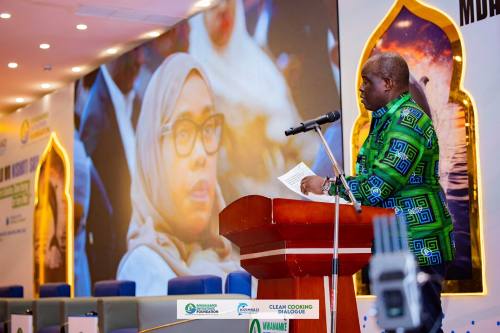
Speaking at a Clean Cooking Energy Conference and Dialogue organised by Mwanamke Initiatives Foundation (MIF) in Zanzibar, Deputy Vice-President’s Office Permanent Secretary Dr Richard Muyungi said the Government was placing greater emphasis on accelerating the adoption of clean cooking solutions.
Dr Muyungi, who chaired the discussions, said achieving the national targets would require closer cooperation between the Government, private sector, civil society organisations and other stakeholders.
The transition, he stressed, would only succeed if clean cooking technologies and appliances were available to households at prices they could afford.
Public institutions offer a major opportunity
The Government is placing particular emphasis on institutions that prepare large volumes of food every day, including schools, prisons, colleges, training camps and other public facilities.
Such institutions consume substantial quantities of cooking fuel, meaning a switch to cleaner alternatives could significantly reduce their dependence on firewood and charcoal while lowering environmental impacts and, potentially, operating costs.
Dr Muyungi singled out the Tanzania Prisons Service for praise, saying all prisons across the country had transitioned to clean cooking energy.
The move is expected to reduce demand for firewood and ease pressure on forests around prison facilities.
The health argument is equally important.
Cooking with firewood, charcoal and other polluting fuels produces household air pollution, exposing cooks and others nearby to smoke. Women and children can be particularly exposed because they often spend considerable time around cooking areas.
A wider shift to cleaner fuels could therefore bring significant public health benefits while reducing the environmental damage associated with traditional cooking fuels.
LPG and electricity expand the options
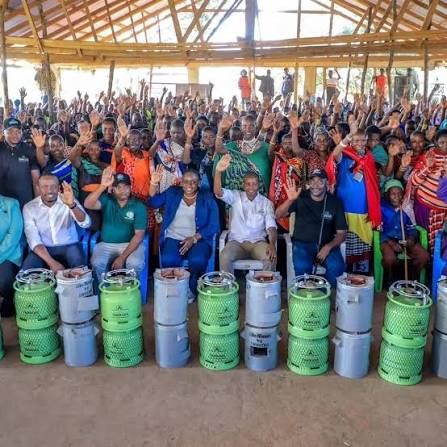
The Rural Energy Agency (REA) has also been recognised for programmes aimed at distributing improved cooking stoves and LPG cylinders to rural communities.
The initiative is designed to extend access to cleaner cooking technologies beyond urban areas, where affordability and availability remain major barriers.
TANESCO, meanwhile, is implementing a programme that allows consumers to access energy-efficient electric cooking appliances through financing arrangements.
Such schemes could help households adopt modern cooking technologies without having to meet the full upfront cost of purchasing appliances.
The emerging approach reflects a recognition that Tanzania’s clean cooking transition will not depend on a single fuel or technology.
LPG, electricity and other clean technologies will need to complement each other, depending on household incomes, location, energy infrastructure and cooking needs.
Affordability remains the critical test
For all the progress, stakeholders at the Zanzibar forum highlighted a fundamental challenge: access to clean cooking technology means little if households cannot afford to buy or operate it.
The cost of appliances, fuel and electricity can be particularly difficult for low-income households.
That makes consumer financing, innovative payment models and other forms of financial support increasingly important to the country’s clean cooking strategy.
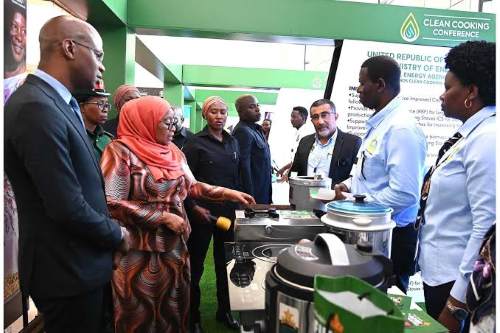
The private sector is also expected to play a bigger role in manufacturing, distributing and selling clean cooking appliances and fuels.
Greater competition could expand consumer choice, improve availability and help bring down prices.
An environmental and economic transition
Reducing dependence on charcoal and firewood is also central to Tanzania’s environmental agenda.
Lower demand for wood fuel could ease pressure on forests, reduce deforestation and support broader efforts to address climate change.
But reaching 80 per cent clean cooking access by 2034 and universal access by 2050 will require more than policy targets.
It will depend on whether clean cooking solutions can reach households and institutions across the country at prices they can sustain.
The Zanzibar conference brought together stakeholders to assess progress, identify opportunities and discuss ways of accelerating the transition. For Tanzania, the clean cooking agenda is increasingly becoming more than an environmental campaign. It is also a public health, business and development opportunity — one that could create new markets for energy companies and appliance manufacturers while improving living conditions for millions of households.