Six decades of cooperation have supported infrastructure, skills development and public services, as both countries seek to deepen collaboration in technology, industrialisation and climate-resilient growth.
By Correspondent Peter Haule
Tanzania has recognised the contribution of Japan’s development partnership to its social and economic transformation over the past 60 years, with more than ¥147.3 billion in concessional loans, grants exceeding ¥176.76 billion and professional training opportunities benefiting over 22,000 Tanzanians.
The figures highlight the scale of development cooperation between the two countries, which has supported investment in transport, energy, water, agriculture, health, education and human resource development.
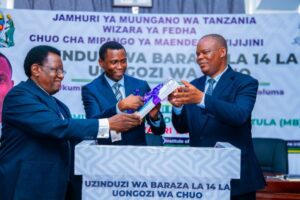
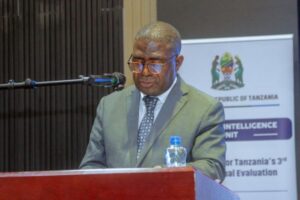
Deputy Permanent Secretary in the Ministry of Finance, Elijah Mwandumbya, said the partnership, implemented through the Japan International Cooperation Agency (JICA) and the Japan Overseas Cooperation Volunteers (JOCV) programme, had played an important role in strengthening Tanzania’s development capacity.
Speaking at an event in Dar es Salaam to mark 60 years of Japan’s volunteer cooperation with Tanzania, Mr Mwandumbya said the anniversary provided an opportunity to recognise the longstanding friendship and solidarity between the two countries.
He said Japanese volunteers had contributed to several sectors, including education, healthcare, agriculture, technical training and community development, mainly through the transfer of knowledge, technology and professional experience.
Beyond providing technical services, their involvement had helped strengthen local institutions and develop the skills of Tanzanian professionals, creating capacity that could support economic and social development over the long term.
“The contribution of Japanese experts goes beyond the provision of professional services. It has also strengthened relations between the people of Tanzania and Japan through the exchange of cultures, knowledge and experience, helping to build lasting friendship between the two nations,” he said.
The financial and technical dimensions of the relationship have also been significant.
According to Mr. Mwandumbya, Tanzania has received more than ¥147.3 billion in concessional loans and grants exceeding ¥176.76 billion from Japan. In addition, more than 22,000 Tanzanians have benefited from professional training opportunities in Tanzania and Japan.

Such support has helped finance infrastructure and public service investments while strengthening the country’s human resource base.
For an economy seeking to expand production, improve connectivity and attract investment, these areas are particularly important. Transport infrastructure reduces the cost of moving goods and connecting markets, while reliable energy and water services support industrial and agricultural activities.
Similarly, investment in education, health and technical skills helps build the workforce required to sustain productivity and economic competitiveness.
Mr. Mwandumbya said the government intended to maintain and deepen cooperation with Japan and JICA, particularly in transport infrastructure, human capital development, technology transfer, innovation, climate-resilient development, industrialisation and institutional capacity-building.
The priorities reflect Tanzania’s broader ambition to accelerate economic transformation under its long-term development agenda, Dira 2050, which requires stronger productive capacity, improved infrastructure and closer cooperation between government, development partners and the private sector.
Human capital at the centre
Japan’s contribution has not been limited to financing large development projects. The JOCV programme has provided a mechanism for transferring practical skills and professional knowledge directly to communities and institutions.
Japanese volunteers have worked alongside Tanzanians in different parts of the country, sharing technical expertise while learning local languages, customs and working practices.
This community-level engagement has helped build relationships that extend beyond formal government agreements.
Japan’s Ambassador to Tanzania, Yoichi Mikami, said the volunteers remained an important pillar of friendship between the people of the two countries.
He said he was proud that Japanese volunteers continued to serve in Tanzania, working closely with local communities, building social relationships and promoting mutual understanding through cultural and professional exchanges.
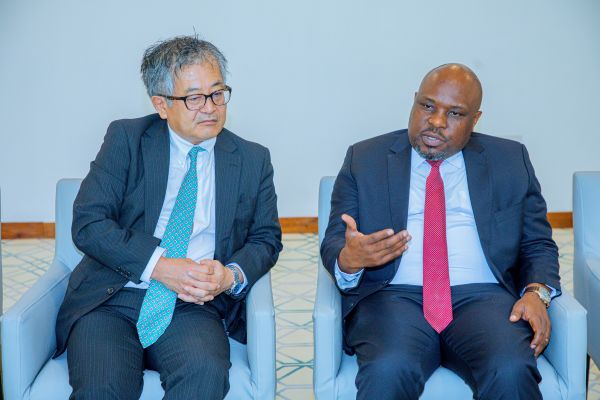
JICA Vice-President Hiroyuki Kobayashi and the agency’s Chief Representative in Tanzania, Katsuya Kuge, reaffirmed the organisation’s commitment to strengthening cooperation, particularly in human resource development through programmes such as JOCV.
They said JICA was also working with Tanzania in various sectors, including transport and freight logistics, while supporting projects aligned with the country’s Dira 2050 development ambitions.
The emphasis on transport and logistics is economically significant for a country seeking to strengthen its position as a regional trade and transport hub. Efficient infrastructure can improve the movement of agricultural produce, industrial inputs and manufactured goods, while reducing delays and business costs.
Community impact and the next phase
The benefits of the partnership have also been felt at regional and community levels.
Speaking on behalf of regional administrative authorities benefiting from JICA-supported projects, Coast Region Administrative Secretary Richard Kayombo said Japanese cooperation had delivered substantial benefits through the direct involvement of volunteers in local communities.
He said Japanese experts had lived and worked alongside Tanzanians, learned Kiswahili and familiarised themselves with local cultures and living conditions.
That interaction had facilitated the exchange of skills and experience while strengthening understanding and friendship between the two populations.
The JOCV partnership dates back to 1966, when Tanzania and Japan signed an agreement establishing the volunteer cooperation programme. The first group of Japanese volunteers arrived in Tanzania in 1967.

As the partnership enters its next phase, its economic value will increasingly depend on how effectively financial assistance, technical cooperation and skills transfer translate into measurable improvements in productivity, institutional performance and private sector opportunities.
For Tanzania, the challenge is to ensure that knowledge and technology introduced through development cooperation become embedded in local institutions and industries, enabling the country to build its own capacity to sustain growth. The 60-year milestone therefore represents not only a record of diplomatic friendship, but also an opportunity to deepen a development partnership around the skills, infrastructure, technology and productive investments needed to support Tanzania’s long-term economic ambitions.