By Business Insider Reporter
The Government has reaffirmed its commitment to strengthening collaboration with the International Finance Corporation (IFC) as part of a broader strategy to accelerate private sector-led growth, expand infrastructure, and advance the country’s long-term development agenda under Dira 2050.
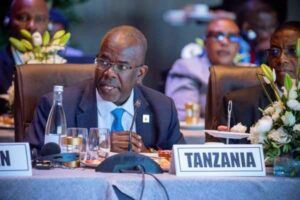
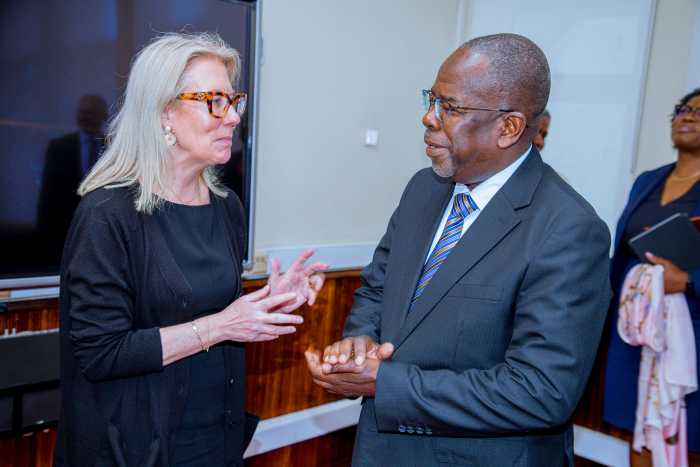
The renewed commitment was underscored during high-level talks between the Minister of Finance, Ambassador Khamis Mussa Omar, and IFC’s East Africa Regional Director, Mary Porter Peschka.
Speaking after the meeting, Omar highlighted IFC’s longstanding role in supporting Tanzania’s economic transformation, particularly through financing, innovation, and institutional capacity-building initiatives aimed at strengthening the private sector.
He noted that implementation of Tanzania’s Dira 2050 – estimated to cost approximately US$1 trillion – will rely heavily on private sector participation, expected to contribute more than 70 percent of total financing.
“Continued collaboration with IFC is critical to mobilising resources, catalysing private sector participation, and ensuring Tanzania achieves its socio-economic transformation goals,” Omar said.
Energy transition and infrastructure priorities
A key area of focus in the discussions was Tanzania’s energy transition agenda, particularly under the Mission 300 Tanzania Energy Compact, which aims to expand access to electricity and clean energy by 2030.
Recent progress indicates steady gains. Between January 2025 and January 2026, electricity access rose from 78.4 percent to 85.5 percent, while household grid connectivity increased from 46 percent to 52.1 percent. The share of renewable energy in the national mix also climbed from 61.8 percent to 69 percent.

Despite these improvements, the government acknowledged the need for increased investment to extend services to rural areas and promote clean cooking solutions – an area still facing significant gaps.
Omar called on IFC to leverage its global expertise to support strategic energy projects, including hydropower developments such as Kikonge, Ruhudji and Rumakali, alongside solar, wind, and geothermal initiatives.
PPP pipeline gains momentum
The talks also placed strong emphasis on scaling up Public–Private Partnerships (PPPs) as a vehicle for infrastructure financing. Through the Public Private Partnership Centre (PPPC), Tanzania has developed a national pipeline of 113 PPP projects at various stages of preparation and implementation across sectors including transport, trade, labour, and agriculture.
At least 10 priority projects are expected to advance in the 2026/27 fiscal year, although many require preparatory financing and technical support to reach bankability.
Omar urged IFC to provide advisory and institutional support to ensure these projects meet international standards, thereby enhancing investor confidence and accelerating execution.
“Strengthening institutional capacity and aligning PPP projects with global best practices will be key to unlocking investment flows,” he added.
IFC signals continued support
For her part, Peschka reaffirmed IFC’s commitment to deepening its engagement in Tanzania, particularly in sectors such as energy, agribusiness, finance, and investment promotion.
As part of the World Bank Group, IFC plays a central role in mobilising private capital in emerging markets. According to its 2025 assessment, IFC invested approximately US$197.4 million in Tanzania during the first half of the 2026 financial year, primarily through short-term financing instruments aimed at stimulating private sector activity.
Cumulatively, IFC’s investment portfolio in Tanzania has reached US$315.9 million, with 74 percent allocated to financial services and 26 percent directed toward manufacturing, agribusiness, and other sectors.
Beyond financing, IFC has also been instrumental in advisory services. It is currently supporting the Dar es Salaam Bus Rapid Transit (BRT) system through PPP advisory, and implementing a US$6.3 million Gender Program aimed at increasing women’s participation in business by 2028.
Strategic implications
The renewed Tanzania–IFC partnership reflects a broader shift across East Africa toward leveraging private capital to bridge infrastructure gaps and accelerate economic transformation. With fiscal pressures limiting public spending, PPPs and blended finance models are increasingly central to development strategies.
For Tanzania, success will hinge on its ability to translate policy commitments into bankable projects, strengthen institutional frameworks, and maintain investor confidence in a competitive regional landscape. The meeting was attended by senior officials from the Ministries of Finance and Energy, the PPP Centre, and IFC representatives, underscoring the multi-sectoral importance of the partnership.