
By Business Insider Reporter
Energy sector in the country is entering a new phase of local participation following a landmark transaction involving Taifa Gas Tanzania Limited, owned by businessman Rostam Aziz (pictured below), which is acquiring a significant stake in the country’s flagship gas operations.
Under an agreement announced on April 13, 2026, Taifa Gas will acquire a 49 percent stake in PanAfrican Energy Corporation (PAEM), while Amber Energy Investment L.L.C-FZ will take the remaining 51 percent. The deal effectively represents the full exit of Orca Energy Group Inc. from its Tanzanian operations.
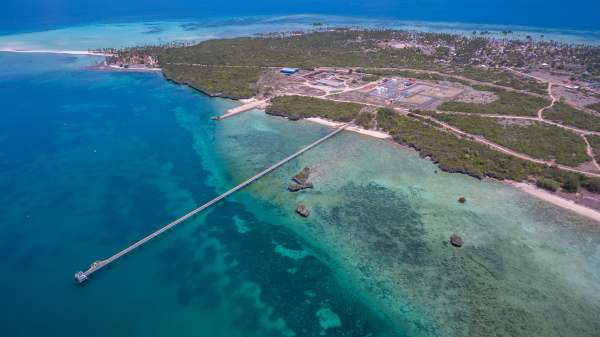
At the centre of the transaction is the strategically important Songo Songo gas field, a cornerstone of Tanzania’s domestic energy supply that fuels power generation and industrial activity.
A turning point for local ownership
The deal signals a broader structural shift in Tanzania’s extractive sector, where domestic investors are increasingly taking up positions in high-value, strategic assets traditionally dominated by foreign capital.
Rostam Aziz described the transaction as the culmination of a long-term strategy to deepen local participation in the country’s natural resource economy.
The increased domestic stake, he noted, is expected to strengthen the local economy by boosting reinvestment, enhancing industrial linkages and expanding opportunities for Tanzanian firms within the gas value chain.

For Tanzania, the implications go beyond ownership. Greater local control could translate into more responsive investment decisions, faster project execution and stronger alignment with national industrialisation goals – particularly in energy-intensive sectors such as manufacturing, fertiliser production and mining.
Why Songo Songo matters
The Songo Songo project remains one of Tanzania’s most critical energy assets. Gas from the field supplies a significant share of electricity generation capacity and supports a growing base of industrial users.
Over the years, the project has contributed substantially to government revenues, job creation and skills development, while underpinning energy security in a country seeking to transition towards cleaner and more reliable fuel sources.
The entry of Taifa Gas into this space therefore represents not just a corporate acquisition, but a strategic repositioning within Tanzania’s broader energy architecture.
Orca’s exit reflects operating pressures
For Orca Energy, the decision to divest follows a comprehensive review of operational risks in Tanzania. The company cited regulatory uncertainty, particularly around the extension of gas production licences, as well as ongoing legal and tax-related disputes.
According to the company, maintaining its position in Tanzania would have required substantial long-term capital investment under conditions of elevated financial and regulatory risk.
Rising project development costs, arbitration exposure and contractual obligations further weighed on the decision, prompting Orca to prioritise shareholder value through an exit.
Following completion of the transaction, Orca will have no remaining ownership or operational obligations in Tanzania.
Regulatory approvals key to completion
The transaction remains subject to regulatory clearance, including approval from the Fair Competition Commission and the Minister responsible for energy.
Given the strategic nature of the asset, regulatory scrutiny is expected to focus on competition, national interest and long-term sector stability.
What this means for Tanzania’s energy sector
Energy analysts view the deal as a potential inflection point for Tanzania’s gas industry. Increased local participation could:
- Strengthen domestic investment capacity
- Improve value retention within the economy
- Enhance competition and operational efficiency
- Accelerate downstream industrial development
At the same time, the transition raises important questions around governance, financing capacity and technical expertise – factors that will determine how effectively local players can manage large-scale energy assets.
A broader trend taking shape
The Taifa Gas transaction reflects a wider continental trend in which African economies are seeking to rebalance ownership of natural resources in favour of domestic investors, while still leveraging foreign capital and expertise.
For Tanzania, the success of this model will depend on maintaining a delicate balance: ensuring an attractive environment for international investors while empowering local firms to take on greater roles in strategic sectors.
If successfully completed, the deal could open a new chapter in Tanzania’s energy sector – one defined by stronger local participation, deeper industrial linkages and a more integrated approach to resource-driven growth.
For businesses, particularly those reliant on gas as an input, the shift could signal greater stability in supply and new opportunities for partnership within an evolving energy ecosystem. In that sense, the acquisition is not just a transaction – it is a statement about where Tanzania’s energy future is headed.