By Peter Nyanje
The State Mining Corporation (STAMICO) has unveiled a new strategy dubbed MASTASHA — Make STAMICO Shine Again — aimed at strengthening the state-owned mining company’s commercial performance, expanding its mining investments and increasing Tanzania’s participation across the mineral value chain.
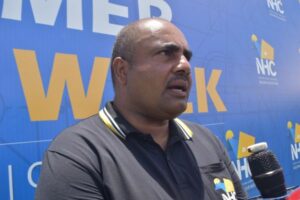
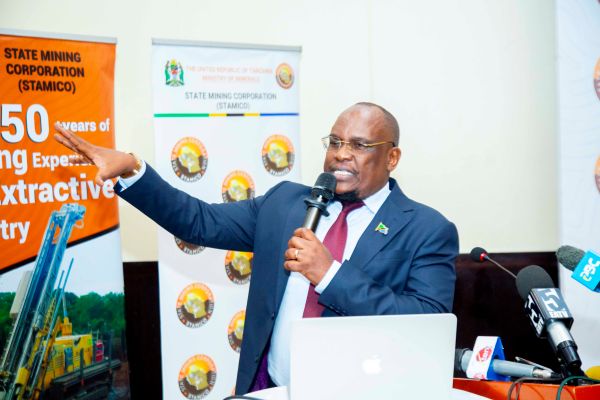
STAMICO Executive Director Dr. Venance Mwasse (pictured) outlined the strategy while briefing editors on the corporation’s operations, performance and investment priorities at a meeting organised by the Office of the Treasury Registrar (OTR) in Dar es Salaam on October 16, 2026.
The strategy places renewed emphasis on developing large-scale mining projects, with STAMICO identifying two major gold mines and one graphite mine among its investment priorities. The corporation is also pursuing strategic mineral projects involving gold, nickel, graphite and copper as it seeks to strengthen its commercial position in Tanzania’s growing mining industry.
Presenting the corporation’s performance, Dr. Mwasse said STAMICO had recorded a significant increase in internally generated revenue, which rose from Sh1.3 billion in the 2018/19 financial year to TSh147.8 billion in 2025/26.
The growth reflects the corporation’s efforts to transform its operations, expand commercial activities and reduce dependence on government funding for recurrent expenditure.
According to the presentation, STAMICO has financed its operating costs from internally generated revenue for four consecutive years and has paid staff salaries from its own revenue for three years. The corporation also reported paying TSh11 billion in dividends to the government and receiving clean audit opinions.
The MASTASHA strategy builds on these operational changes, with the corporation seeking to turn its mineral assets, technical capabilities and partnerships into stronger commercial returns and a greater contribution to the national economy.
Expanding mining operations and strategic partnerships
STAMICO’s investment portfolio covers coal mining and trading, commercial drilling services, briquette production, aggregates, small-scale miner development and joint ventures in mineral exploration and production.
One of its notable operational changes has been the turnaround of its coal mining business.
The corporation reported that its coal mine, which operated as a cost centre between 2014 and 2020, became a revenue-generating centre from 2021. Coal production reached 302,090 tonnes in the 2025/26 financial year.
The corporation has invested in processing equipment, excavators, wheel loaders and coal transportation trucks. It is also installing a coal washing plant with a stated processing capacity of 60,000 tonnes per month, an investment intended to strengthen processing and commercial operations.
STAMICO is also expanding its drilling business, which serves mining companies operating in Tanzania. It has 18 commercial drilling rigs, with capabilities ranging from 400 metres to 3,000 metres underground, and has secured contracts with mining companies including Geita Gold Mining, Shanta Mining and other operators.
The corporation’s joint ventures form another important part of its investment strategy. Its gold portfolio includes the Buckreef Gold Mine, operated through a partnership with TRX Gold Corporation.
The mine began trial production in July 2020, and its processing capacity had increased to 90 tonnes of ore per hour by June 2024, according to the presentation.
In the nickel subsector, STAMICO is partnering with Coast Nickel Industry Limited on the Ntaka project in Lindi Region. Initial production began in December 2025, while construction of a nickel smelter in Mlandizi, Coast Region, had reached its final stages, according to the corporation.
Other strategic investments include the Kigosi gold project, the Mirerani graphite project and the Changube copper project, which are being advanced through partnerships with private-sector investors.
These projects are expected to broaden STAMICO’s exposure to strategic minerals and position it to participate more actively in future mining and processing opportunities.
Supporting small-scale miners
Beyond its direct investments, STAMICO is strengthening its role in developing Tanzania’s small-scale mining sector.
Dr. Mwasse’s presentation identified inadequate geological information, limited access to modern technology, insufficient capital, gaps in technical knowledge and difficulties accessing markets among the challenges facing small-scale miners.
To address these constraints, the corporation has deployed 15 drilling rigs for small-scale miners, which began operating in December 2025. It has also acquired geophysical equipment and entered into a memorandum of understanding with the Geological Survey of Tanzania to support geological investigations in small-scale mining areas.
STAMICO is further promoting training programmes, demonstration centres for improved mining technologies and partnerships with financial institutions to facilitate access to capital.
The corporation has signed memoranda of understanding with CRDB Bank, NMB Bank, Azania Bank and KCB to support financing for small-scale miners. It is also working to connect miners with mineral buyers and suppliers of mining equipment.
Diversification and value addition
STAMICO’s diversification efforts also include the production of Rafiki Briquettes, made from coal residues, as part of efforts to promote alternative energy products. Developed in collaboration with the Tanzania Commission for Science and Technology (COSTECH) and the Tanzania Industrial Research and Development Organisation (TIRDO), the product received certification from the Tanzania Bureau of Standards in the 2022/23 financial year.
Large-scale production began in August 2024, with four production plants established in Kiwira, Kisarawe, Dodoma and Tabora. The corporation is also working with the Rural Energy Agency to establish another plant in Geita.
In the construction materials segment, STAMICO’s Chigongwe aggregates project in Dodoma began operations in July 2024. The project has 10 mining licences in the area and a processing plant with a capacity of 150 to 200 tonnes per hour.
The corporation also has a stake in a gold refinery in Mwanza, established through a partnership with Goodfield DMCC of the United Arab Emirates. The refinery has a stated capacity of processing 480 kilogrammes of gold per day to a purity of 99.99 percent.
Together, these businesses demonstrate STAMICO’s intention to participate in more stages of the mineral value chain, from exploration and extraction to processing and marketing.
From revenue growth to sustained performance
Despite the reported increase in revenue, the MASTASHA strategy places the corporation’s next phase of development against the challenge of sustaining commercial growth while advancing capital-intensive mining projects.
STAMICO’s presentation reported that its assets had increased to Sh360.04 billion in 2025/26, while employment rose from 205 workers in 2018/19 to 872 in 2025/26. The corporation also secured four joint-venture agreements covering gold, nickel, graphite and copper and obtained 20 new licences for strategic minerals.
The next stage will require effective project execution, continued investment and productive partnerships capable of moving exploration assets towards commercial production. For STAMICO, MASTASHA represents a renewed push to translate its expanding portfolio and improved financial performance into a stronger role for the state in Tanzania’s mineral economy.