By Peter Nyanje
The State Mining Corporation (STAMICO) will not rush to list on the Dar es Salaam Stock Exchange (DSE), opting instead to strengthen its mining operations, advance strategic projects and improve its commercial performance before considering a public listing.
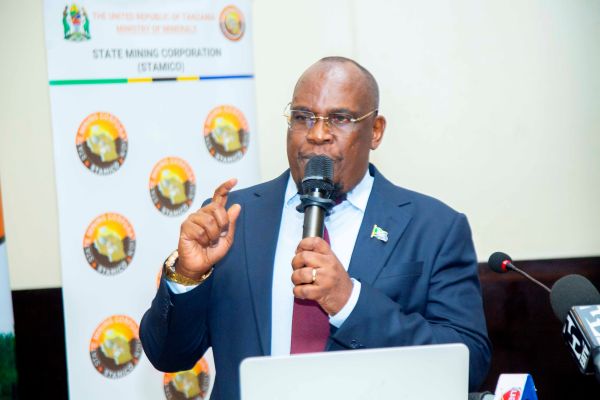
STAMICO Executive Director Dr Venance Mwasse (pictured) said the potential listing remained part of the corporation’s long-term agenda under its new MASTASHA (Make STAMICO Shine Again) strategy, but the immediate priority was to build a stronger business capable of delivering sustainable returns.
Speaking to editors at a meeting organised by the Office of the Treasury Registrar in Dar es Salaam on Friday, October 16, 2026, Dr Mwasse said STAMICO was already demonstrating its investment commitment through operational projects and a pipeline of new mining ventures.
“If the question is whether we have the intention to invest, we have demonstrated that through the many projects we have presented, some of which are operational while others are in the pipeline,” he said.
He clarified that investing in mining projects and listing on the stock exchange were separate matters, with the latter requiring careful consideration rather than being treated as an immediate objective.
Listing on the DSE would potentially offer STAMICO an additional avenue for raising capital and broadening public participation in its ownership. However, the corporation’s current focus is on developing its assets, expanding production and improving its capacity to generate revenue from mining activities.
The approach is consistent with the wider objectives of MASTASHA, which seeks to strengthen STAMICO’s commercial position and increase its participation across Tanzania’s mineral value chain.
Moving beyond joint ventures
A central element of the strategy is STAMICO’s ambition to develop mines that it can own and operate independently, rather than relying predominantly on joint ventures with private investors.
Dr Mwasse explained that STAMICO’s established partnership model involves identifying mineral deposits, conducting preliminary exploration and securing licences before seeking partners with the capital and technology needed to develop the projects.
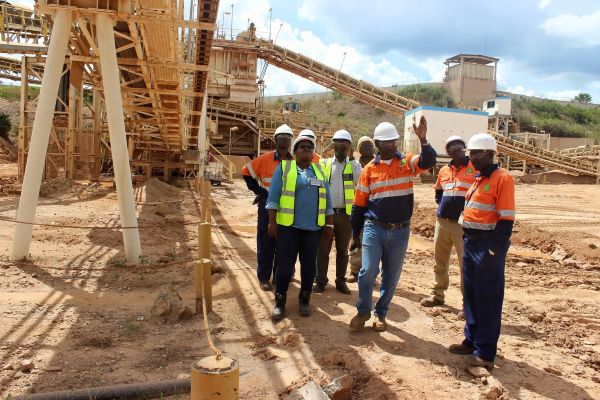
“We do not provide the capital in our joint ventures,” he told editors, explaining that STAMICO contributes its licences and preliminary exploration work, while the incoming partner provides financing and technology for joint development.
The arrangement enables the state-owned corporation to participate in projects without shouldering the entire investment burden. However, MASTASHA is intended to create opportunities for STAMICO to take a more direct role in mining where its financial and technical capabilities permit.
Dr Mwasse said the corporation had already identified three licences that had undergone preliminary exploration as part of preparations to establish its own mines.
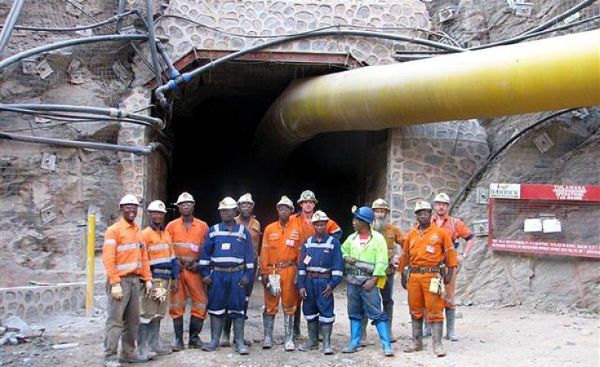
One of the proposed developments is an underground graphite mine. Graphite is considered a strategic mineral, and the project could potentially be developed under full STAMICO ownership, according to the executive director.
The move would represent a significant shift in the corporation’s investment approach, giving it the opportunity to retain greater control over project operations and a larger share of the returns generated.
Nevertheless, independent ownership would require STAMICO to mobilise sufficient capital, secure the necessary technical capabilities and demonstrate that the projects are commercially viable.
Gold refinery demonstrates value of state investment
Dr Mwasse also highlighted STAMICO’s contribution to Tanzania’s gold value-addition efforts, pointing to the gold refinery established in Mwanza through a partnership with Goodfield DMCC of the United Arab Emirates.
The refinery was the first of its kind in Tanzania, according to the executive director, and has contributed to the development of domestic gold refining capacity.
He said gold production associated with the initiative had reached 6.3 tonnes, with a significant quantity delivered to the Bank of Tanzania as part of the country’s gold reserve-building efforts.
The project illustrates how state participation in mining can extend beyond extraction to processing and the retention of more value within the domestic economy.
For STAMICO, such investments provide a foundation for expanding its commercial activities while supporting the government’s broader objectives for the minerals sector.
Clarifying STAMICO’s role in the mining sector
During the discussion, Dr Mwasse also sought to distinguish STAMICO’s responsibilities from those of the Geological Survey of Tanzania (GST) and the Mining Commission.
He explained that GST conducts geological research across the country to build a national database of mineral information, helping prospective investors identify areas with mineral potential.
STAMICO, by contrast, conducts exploration in areas where mining licences have already been issued, either for its own projects or to support licensed small-scale miners.
On regulatory matters, including mineral trading, mining activities in restricted areas and conditions affecting particular mining locations, Dr Mwasse said the Mining Commission was the appropriate authority to provide clarification.
He emphasised that STAMICO operates as an investor in the mining sector and is regulated by the same commission as other mining investors, although its owner is the government.
This distinction, he said, is important in understanding the corporation’s mandate and its relationship with other public institutions involved in managing Tanzania’s mineral resources.
Building a stronger corporation first
STAMICO’s decision not to rush into a DSE listing reflects a strategy of consolidating its operations before pursuing another major corporate milestone.
Under MASTASHA, the corporation intends to build on its existing mining and processing investments, advance new projects and explore opportunities to own strategic mineral assets outright.
The immediate test will be whether the three identified projects can progress from preliminary exploration to commercially viable mines, while existing businesses continue to generate sufficient returns to support further investment.
For STAMICO, the priority is therefore not simply to access the capital market, but to strengthen the underlying business that would eventually make such a move worthwhile. A future listing remains on the agenda, but the corporation is signalling that operational growth, project development and commercial sustainability must come first.