

By Business Insider Reporter
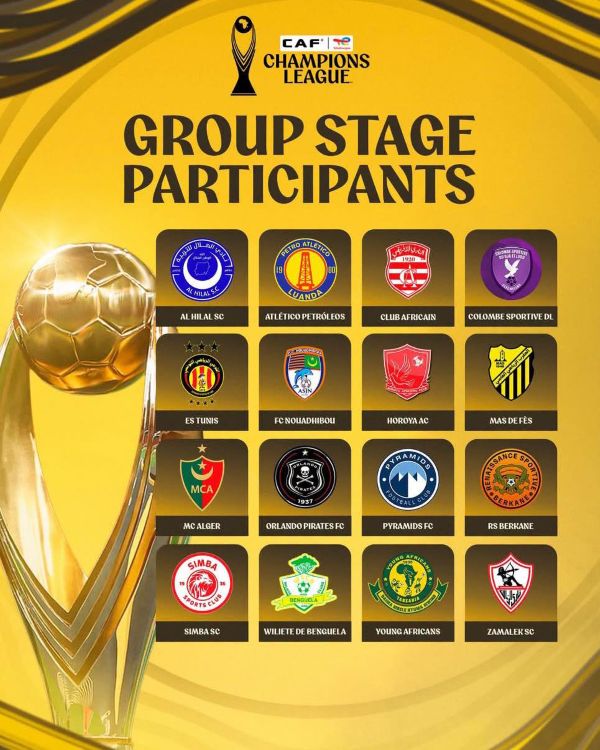
Tanzania has secured a strong position in African club football after Simba SC and Young Africans (Yanga SC) qualified for the 2026/27 CAF Champions League group stage, joining four other countries with two representatives in the continent’s premier club competition.
The achievement places Tanzania alongside Egypt, Tunisia, Morocco and Angola, each of which has two clubs among the 16 qualifiers. It also provides an opportunity for Tanzanian football to build on its growing continental profile as the competition enters its decisive phase.
The qualification of both Dar es Salaam rivals is particularly significant because the preliminary rounds have eliminated several established African clubs, including defending champions Mamelodi Sundowns of South Africa and five-time winners TP Mazembe of the Democratic Republic of Congo.
The final 16-team line-up combines traditional continental heavyweights with ambitious challengers, setting the stage for a potentially unpredictable campaign.
Simba and Yanga deliver for Tanzania
Simba booked their place in the group stage with an emphatic 9–1 aggregate victory over Equatorial Guinea’s 15 de Agosto.
After winning the first leg 6–1 away from home, the Msimbazi Reds completed the job with a 3–0 victory in Dar es Salaam on October 25. Goals from Anicet Oura, Elie Mpanzu and Matlala Makgalwa sealed qualification and demonstrated Simba’s attacking strength.
The result followed another commanding performance in the previous qualifying round, when Simba eliminated Malawi’s Mighty Wanderers 7–1 on aggregate.
Yanga had secured their place earlier, defeating Madagascar’s CFFA 8–1 on aggregate. Their qualification extends their run of consecutive Champions League group-stage to four consecutive appearances and reinforces their status as one of East Africa’s leading clubs.

For Tanzania, having both rivals in the group stage offers more than bragging rights. It increases the country’s visibility across Africa, creates opportunities for players to compete against stronger opposition and gives local clubs another chance to demonstrate their commercial and competitive value.
However, qualification is only the beginning.
Five countries lead with two clubs
The distribution of the 16 places highlights the concentration of competitive strength in several African football markets.
Egypt will be represented by Zamalek SC and Pyramids FC. Zamalek bring a rich continental history, while Pyramids have emerged as a formidable force after breaking into the elite of African club football.
Tunisia’s representatives are Espérance de Tunis and Club Africain. Their presence reflects the country’s established football infrastructure and the experience its leading clubs bring to continental competition.
Morocco has RS Berkane and MAS de Fès. Berkane have built a reputation through their success in the CAF Confederation Cup, while MAS de Fès have demonstrated their ability to compete against more established opponents.
Angola’s two representatives are Petro de Luanda and Wiliete SC. Petro are familiar faces in continental competition, but Wiliete’s qualification is particularly noteworthy after their elimination of defending champions Sundowns.
Tanzania completes this group of five countries with two clubs apiece. The achievement puts Simba and Yanga in the company of teams from countries with considerable continental pedigree.
Beyond these five nations, the group-stage line-up includes Algeria’s MC Alger, South Africa’s Orlando Pirates, Guinea’s Horoya AC, Sudan’s Al Hilal Omdurman, Mauritania’s FC Nouadhibou and Cameroon’s Colombe Sportive.
The mix suggests that the competition will not be determined by reputation alone. Clubs from less traditionally dominant football markets have shown they can exploit weaknesses in established sides and earn their place among Africa’s elite.
Established giants suffer costly exits
The most striking result of the qualifying campaign was the elimination of Mamelodi Sundowns.
The South African club entered the competition as defending champions and had reached the group stage in each of the previous 11 editions. Their campaign ended against Angola’s Wiliete SC after a 0–0 first-leg draw followed by a 1–1 result in Pretoria.
Wiliete progressed on the away-goals rule, securing a historic group-stage appearance while bringing Sundowns’ continental title defence to an abrupt end.
The defeat is a reminder that even clubs with greater financial resources, deeper squads and extensive continental experience can be vulnerable in two-legged ties. For Wiliete, the result provides a platform to establish themselves among Africa’s leading clubs.
Five-time champions TP Mazembe also failed to progress, losing to Tunisia’s Club Africain. Their elimination is another setback for one of the Democratic Republic of Congo’s most successful football institutions.
Côte d’Ivoire also suffered disappointment, with ASEC Mimosas and FC San Pedro missing out on the group stage after losing their respective ties against Morocco’s MAS de Fès and Mauritania’s FC Nouadhibou.
These results underline the increasingly competitive nature of African club football. Historical achievements remain important, but qualification increasingly depends on current form, tactical preparation and the ability to manage pressure over two legs.

Tanzania must seize the opportunity
For Simba and Yanga, the elimination of established giants offers encouragement, but it should not create complacency. Both Tanzanian clubs will need disciplined defending, clinical finishing and consistent performances if they are to progress beyond the group stage. Their preliminary-round results demonstrate attacking potential, but the quality of opposition will rise considerably.
The group-stage draw, scheduled for October 28 in Cairo, will provide the first indication of the challenges awaiting them.