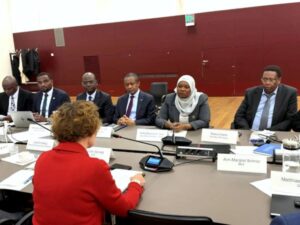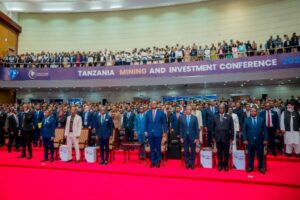


TMIC 2026 brings together more than 1,700 delegates in Dar es Salaam, with discussions centred on investment, value addition, job creation and greater participation by local businesses.
By Business Insider Reporter
Tanzania is using its seventh International Mining Investment Conference (TMIC 2026) to push for greater investment in mineral processing, as the country seeks to turn its growing mineral resources into a stronger industrial base, more jobs and increased national revenue.
Vice-President Deogratius Ndejembi is representing President Samia Suluhu Hassan at the opening of the three-day conference, which runs from 19 to 21 November 2026 at the Julius Nyerere International Convention Centre (JNICC) in Dar es Salaam.
The meeting has attracted more than 1,700 participants from Tanzania and abroad, including government leaders, representatives of African countries, mining companies, investors, financial institutions and technology service providers.
Organised by the Ministry of Minerals in collaboration with the Tanzania Chamber of Mines, TMIC 2026 provides a platform for investors and industry stakeholders to examine opportunities across the country’s mineral sector, with particular emphasis on moving beyond the extraction and export of raw minerals.
The conference is being held under the theme “Value-Added Minerals: The Engine of Industrialisation and Economic Growth”. Its central message is that Tanzania wants to capture a larger share of the value generated from its mineral resources by encouraging local refining, processing and manufacturing rather than relying mainly on the export of unprocessed minerals.
The investment drive comes at a time when mining is becoming an increasingly important contributor to the economy. Mining and quarrying accounted for 10.3 percent of mainland Tanzania’s GDP in 2025, compared with 7.8 percent in 2024. Mineral exports rose to US$5.4 billion in 2025, representing 52.57 percent of the country’s total exports, according to figures cited by the Ministry of Minerals.
These figures underline the commercial importance of the sector, but they also highlight the opportunity to generate more economic activity within the country. Local processing can create demand for engineering, transport, construction, equipment, financial and other support services, while opening opportunities for Tanzanian businesses to supply mining operations.
The conference will examine investment opportunities in gold, graphite, nickel, copper, rare earth minerals and niobium.
These resources have applications in established industries as well as emerging technologies, including energy storage and advanced manufacturing. The discussions are also expected to consider how Tanzania can attract capital and technology to develop processing facilities and strengthen links between mining and other industries.
A key issue is the participation of small-scale miners and locally owned companies. The government has previously identified small-scale mining as an important part of domestic mineral production. At a briefing ahead of the conference, Minerals Minister Anthony Mavunde said small-scale miners account for about 40 percent of national mineral production.
Their integration into the wider value chain could expand business opportunities for local suppliers, processors and service providers. However, this will depend on access to finance, modern equipment, technical expertise, reliable markets and the ability to meet industry standards.
TMIC was first held in 2019 and has developed into a platform for government, investors and mining companies to discuss policy, investment opportunities and partnerships in the sector.
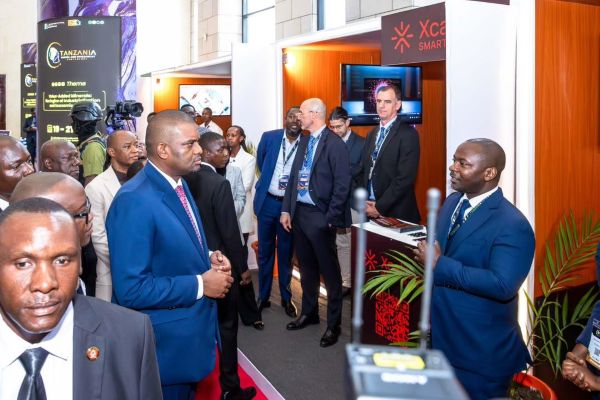
This seventh edition is expected to combine high-level discussions with business meetings, technical sessions and exhibitions showcasing mining and processing technologies. For Tanzania, the test will be whether the discussions translate into bankable projects, new processing capacity and stronger participation by domestic businesses. The country’s mineral wealth offers considerable investment potential, but its long-term economic value will depend increasingly on how much of the work, expertise and production can be retained within its borders.