By Business Insider Reporter, Arusha
The Jakaya Kikwete Heart Institute (JKCI) has intensified its campaign against cardiovascular diseases by offering free specialised heart screening services at a major medical outreach camp in Arusha, as Tanzania continues to grapple with the growing burden of non-communicable diseases (NCDs).
The week-long camp, being held at Sheikh Amri Abeid Stadium, brings together specialist doctors from JKCI headquarters in Dar es Salaam and its Arusha Lutheran Medical Centre (ALMC) branch to provide comprehensive cardiac screening, diagnosis, treatment and public education for both adults and children.
Speaking after visiting the JKCI pavilion, Arusha Urban Member of Parliament Paul Makonda, who also serves as Minister for Information, Culture, Arts and Sports, urged residents of Arusha and neighbouring regions to seize the opportunity to undergo early heart screening before symptoms become life-threatening.
“Many heart diseases develop silently and are only discovered when complications have already occurred,” Makonda said. “People should take advantage of this free service because early diagnosis not only saves lives but also spares families from the high cost of advanced treatment.”
His remarks come as cardiovascular diseases increasingly emerge as one of Tanzania’s fastest-growing health challenges. According to the World Health Organization (WHO), non-communicable diseases account for an increasing share of deaths across sub-Saharan Africa, with heart disease, hypertension and stroke becoming major contributors alongside diabetes and cancer.
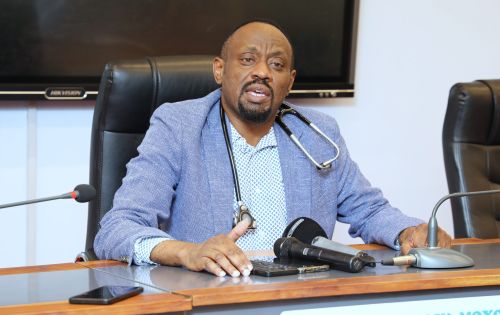
JKCI Executive Director Dr. Peter Kisenge (pictured above) said the institute had deployed a team of consultant cardiologists, cardiac surgeons, nurses and specialised technicians to ensure patients receive quality diagnostic and treatment services.

“The objective is not only to diagnose and treat heart conditions but also to educate the public on prevention, healthy lifestyles and the early warning signs of cardiovascular disease,” Dr Kisenge said.
He noted that both paediatric and adult cardiology specialists are participating in the exercise, reflecting the growing recognition that heart disease affects people of all ages, including children born with congenital heart defects.
Over the past decade, JKCI has transformed into one of East and Central Africa’s leading specialised cardiac centres, significantly reducing the number of Tanzanians seeking expensive treatment abroad. The institute now performs complex heart surgeries, catheter-based interventions, pacemaker implantation and advanced cardiac imaging that were previously unavailable within the country.
Dr Kisenge also revealed that JKCI’s Arusha Lutheran Medical Centre branch is preparing to introduce DOZEE, an artificial intelligence-powered remote patient monitoring system designed to enable continuous home-based observation of cardiac patients.
Placed discreetly beneath a patient’s mattress, the device continuously monitors heart rate, heart rhythm, blood oxygen saturation, respiratory rate and other vital signs without requiring the patient to wear any sensors. The technology allows clinicians to detect early signs of deterioration and intervene before complications become critical.

The initiative represents another step in JKCI’s strategy of decentralising specialised cardiac services and expanding access to advanced healthcare beyond Dar es Salaam. By strengthening regional cardiac centres and deploying digital health technologies, the institute aims to bring life-saving services closer to patients while reducing treatment delays and travel costs. Health experts believe such outreach programmes will play an increasingly important role as Tanzania seeks to curb the rising prevalence of cardiovascular diseases through early detection, preventive healthcare and wider access to specialised treatment.