
By Correspondents Josephine Majura and Abdul Madenge, Dodoma
Tanzania is stepping up efforts to unlock untapped sources of non-tax revenue as the government seeks to strengthen domestic financing and meet the rising cost of public services and development projects.
The move comes amid concerns over uneven revenue collection across government ministries, institutions and public corporations, with only five of the 26 revenue-collecting votes performing well against their targets in the 2025/26 financial year.
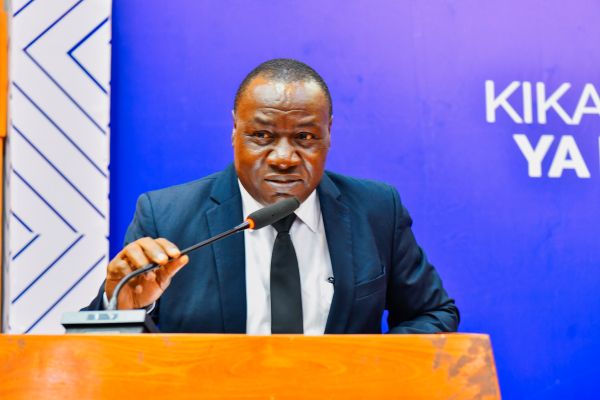
Deputy Permanent Secretary in the Ministry of Finance, Nsubili Joshua, said public institutions needed to identify overlooked revenue opportunities, address collection bottlenecks and adopt more effective strategies to improve performance.
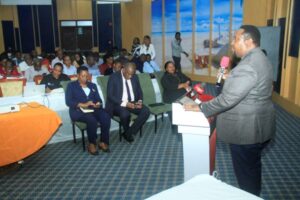
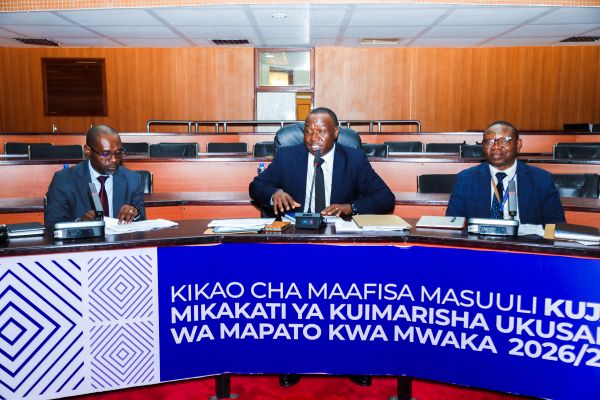
Speaking on behalf of Permanent Secretary Natu El-Maamry Mwamba at a meeting of accounting officers responsible for non-tax revenue collection at Treasury Square in Dodoma, Joshua said there was considerable scope to increase collections without relying solely on conventional taxation.
“Each vote needs to assess its own performance, identify the challenges hindering revenue collection and put in place effective strategies to ensure its targets are achieved,” he said.
The government is looking to strengthen non-tax revenue as expenditure pressures increase, with funding needed for infrastructure, healthcare, education, water supply, roads and other public services.
Collections exceed quarterly target
Despite the uneven performance among institutions, non-tax revenue collections have shown encouraging growth.
Between July and September in the 2026/27 financial year, the government collected more than TSh1 trillion in non-tax revenue, equivalent to 114.1 percent of the target and an increase of 32.7 percent compared with the corresponding period in 2025.
The performance suggests that non-tax revenue can make a growing contribution to the government’s financing needs. However, the challenge is to ensure that strong collections in a limited number of institutions are matched by improvements across the wider public sector.
Joshua called on institutions collecting less than 50 percent of their targets to identify the specific causes of underperformance and take corrective action.
“Institutions performing below 50 percent should identify the specific challenges and develop strategies to address them, improve collections and achieve their targets for the 2026/27 financial year,” he said.
The figures highlight the importance of looking beyond aggregate revenue growth when assessing the effectiveness of public revenue administration. While the overall collection rate may exceed expectations, persistent weaknesses in individual institutions could leave significant potential revenue untapped.
Rising budget puts pressure on domestic revenue
The drive to improve non-tax revenue comes as Tanzania’s national budget continues to expand.
According to Joshua, the government budget increased by 50.3 percent over five years, from TSh41.5 trillion in 2022/23 to TSh62.3 trillion in 2026/27.
The expansion reflects growing financing requirements for infrastructure, social services and other government priorities. It also underscores the importance of mobilising domestic resources to support spending commitments.
Non-tax revenue includes money collected through government services and institutional activities, such as fees, charges and other authorised payments. Depending on the institution and the applicable legal framework, these collections can provide an additional source of funding alongside tax revenue.
Improving such collections could strengthen the government’s capacity to finance public investment and essential services. However, the economic benefits will depend on how revenue measures are implemented and whether they improve efficiency rather than simply increase the cost of accessing public services.
Focus shifts to institutional accountability
Joshua urged the responsible ministries, institutions and public corporations to implement resolutions adopted at a technical working session held on October 21–22, 2026.
He said the Ministry of Finance would continue providing support to address systemic and operational challenges affecting revenue collection.
The technical meeting was intended to identify obstacles and develop measures to improve institutional performance before the meeting of accounting officers responsible for revenue collection.
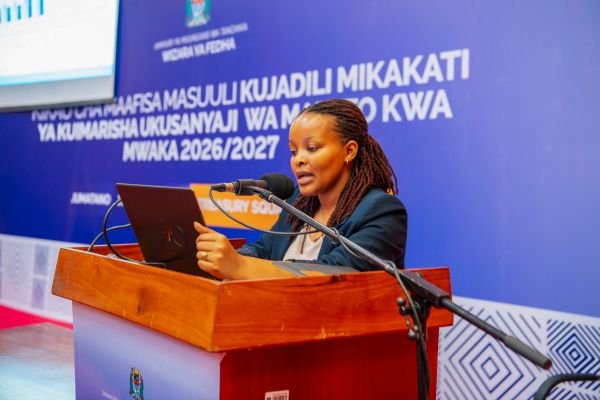
Opening the meeting, William Mhoja, Assistant Commissioner in the Ministry of Finance’s Policy Analysis Department, said the discussions were important for reviewing performance in 2025/26 and establishing practical, measurable and coordinated strategies for the current financial year.
The emphasis on measurable targets points to a broader need for stronger accountability in the management of public revenue. Institutions must not only set collection targets but also monitor results, explain shortfalls and demonstrate how corrective measures are improving performance.
Better data, stronger administrative systems and more consistent enforcement of authorised charges could help institutions identify revenue leakages and improve compliance.
At the same time, the government will need to distinguish between underperformance caused by administrative weaknesses and shortfalls arising from wider economic or operational constraints.
Revenue growth must deliver public value
Tanzania’s efforts to increase non-tax revenue reflect a wider policy priority: strengthening domestic financing as the cost of development rises.
The latest quarterly figures provide an encouraging starting point, with collections exceeding the target. But the disparity between the performance of different revenue-collecting institutions suggests that the gains are not yet evenly distributed.
Closing that gap could improve the government’s ability to finance development priorities and reduce pressure on other sources of public funding. Ultimately, the success of the strategy will depend not simply on how much money the government collects, but also on the efficiency, transparency and fairness of the collection process.