New regional platform seeks to turn fragmented environmental research into practical intelligence for governments, investors and conservation organisations as Africa races to meet its 2030 biodiversity targets.
By Business Insider Correspondent, Nairobi
Eastern and Southern African countries have launched a new regional biodiversity resource covering 24 countries in an effort to turn scientific data into practical information that can guide conservation policy, sustainable development and decisions affecting the region’s natural resources.
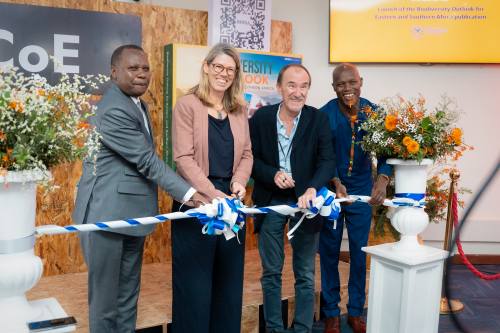
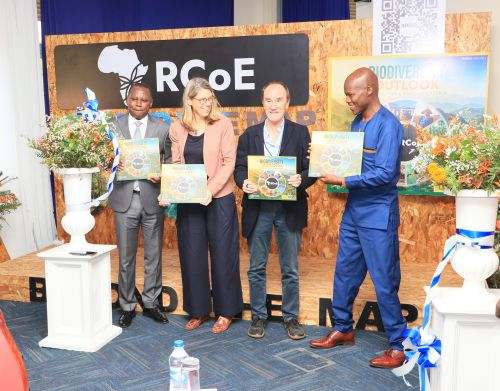
The Biodiversity Outlook for Eastern & Southern Africa (BOESA) was launched in Nairobi on September 22 by the Regional Centre for Mapping of Resources for Development (RCMRD), in collaboration with the European Union.
The initiative is designed to improve access to biodiversity knowledge and strengthen evidence-based conservation and policymaking across a region where natural resources underpin sectors ranging from agriculture and tourism to forestry and fisheries.
BOESA combines biodiversity information, regional perspectives and practical experiences to provide a clearer picture of the state of biodiversity and the measures required to conserve it.
Covering 24 countries in Eastern and Southern Africa, the resource is intended to make credible and locally relevant information more accessible for conservation planning and decision-making.
For governments and development institutions, the initiative also attempts to address a longstanding problem: Africa has generated considerable environmental research, but translating scientific findings into policies and practical interventions remains a challenge.
“We have seen many programmes over the years conduct incredibly valuable research, but we often lack the next step of translating it into policy and, therefore, into action,” said Sanne Willems, Regional Partnerships at the Delegation of the European Union to Kenya.
“Collecting data is not enough. This programme is translating that data into very accessible information for young people as well as decision-makers, while also building the capacities of different countries to take action based on the information collected.”
Turning environmental data into decisions
The launch comes as biodiversity loss increasingly becomes a development issue rather than solely an environmental concern.
BOESA is intended to give policymakers, researchers, conservation practitioners, development partners and communities access to information that can support decisions on protecting ecosystems and managing natural resources.
“BOESA reflects the importance of bringing together data, knowledge and regional experiences to support informed decisions for biodiversity conservation,” said Dr. Emmanuel Nkurunziza, Director General of RCMRD.
“By making this information more accessible, we aim to support policymakers, conservation practitioners, researchers, development partners and communities in advancing nature-positive action across the region.”
The initiative also highlights the expanding role of technology in managing Africa’s environmental resources.
Developed under the RCoE-ESA initiative, BOESA forms part of RCMRD’s broader work involving geospatial information, Earth observation and knowledge-sharing to address environmental challenges and support sustainable development.
Such information can help countries build a more comprehensive understanding of environmental conditions and provide a common knowledge base for regional cooperation.
2030 deadline adds urgency
The timing is significant.
Countries are working towards the 2030 targets of the Kunming-Montreal Global Biodiversity Framework (KMGBF), increasing the need for information that can help governments understand progress and identify gaps in biodiversity conservation.
BOESA has also been launched ahead of the 17th Conference of the Parties to the Convention on Biological Diversity (COP17), scheduled for Yerevan, Armenia, from October 19 to 30, 2026.
COP17 is expected to conduct the first global review of collective progress in implementing the biodiversity framework. That places greater importance on regional information resources capable of showing where progress is being made and where additional action is required.
RCMRD says BOESA will provide a platform for shared learning, stronger regional visibility and collaboration as countries intensify efforts to meet the 2030 targets.
Regional cooperation
The launch took place during the Regional Workshop on Integrated Landscape-Seascape Modelling for Climate Resilience Development in East Africa, being held in Nairobi from September 22 to 24.
RCMRD itself is an intergovernmental organisation promoting the application of geospatial information and Earth observation technologies in sustainable development and natural-resource management.
It currently has 20 contracting member states across Eastern and Southern Africa, including Tanzania, Kenya, Uganda, Rwanda, Ethiopia, Zambia, Zimbabwe and South Africa.
BOESA was developed under a wider initiative linked to the Africa Regional Centres of Excellence programme, launched in 2023 to strengthen collaboration between African and European institutions.
The programme focuses on science, technology and innovation in areas including agroecology, biodiversity and forests, water, oceans and climate-change resilience.
For Eastern and Southern Africa, the significance of the new biodiversity outlook will ultimately depend on whether the information it provides moves beyond research and becomes part of actual policy and conservation decisions. That is also the central message behind its launch: gathering environmental data is only the first step. The bigger task is ensuring that governments, communities and other stakeholders can use that knowledge to make better decisions about the natural resources on which sustainable development depends.