

By Correspondents Farida Ramadhani and Abdul Iddy, Dodoma
The government has challenged the 14th Governing Council of the Institute of Rural Development Planning (IRDP) to transform the institution into a leading centre of knowledge, research and professional expertise to support economic growth and the implementation of Tanzania’s Development Vision 2050.
The directive places the Dodoma-based institution at the centre of efforts to build a skilled workforce capable of addressing the country’s development challenges, improving productivity and supporting the transition towards a competitive, knowledge-driven economy.
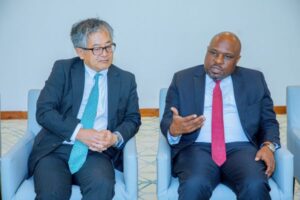
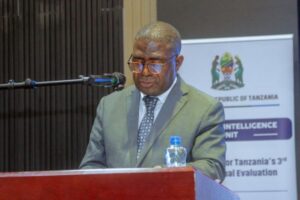
Deputy Minister for Finance Laurent Luswetula issued the challenge in Dodoma while officially inaugurating the council on behalf of Finance Minister Ambassador Khamis Mussa Omar.
He said IRDP had an important responsibility to train professionals equipped with the skills required to plan, manage and implement development programmes, particularly at a time when Tanzania was preparing to pursue the ambitious economic and social transformation targets outlined in Dira 2050.
He urged the council to ensure that the institute’s academic programmes, research activities and innovation initiatives reflected the changing needs of the economy and the labour market.
Dira 2050 identifies education and skills development as essential foundations for building a knowledgeable, competent and adaptable workforce capable of responding to social, economic and technological changes.
Mr. Luswetula said the council should therefore ensure that the national development vision was fully integrated into the institute’s strategic plans, training programmes, research priorities and partnerships with stakeholders.
Research investment key to economic transformation
The deputy minister placed particular emphasis on research and development (R&D), urging the council to push management to increase investment in research and ensure that findings translated into practical economic and social benefits.
He said research should go beyond academic publications to generate technologies, improve products and services, raise productivity and provide solutions to development challenges.

“The council has a responsibility to provide strategic direction and supervise management in increasing investment in research and development, strengthening the institute’s research capacity and ensuring that research findings are translated into technologies, improved products and services, higher productivity and solutions to socio-economic challenges,” he said.
The emphasis on applied research reflects the growing importance of knowledge institutions in supporting evidence-based policymaking, innovation and economic competitiveness.
Public sector efficiency and private sector partnerships
Mr. Luswetula also directed the council to ensure that instructions issued by President Samia Suluhu Hassan were translated into practical institutional plans, strategies, budgets and performance measurement systems.
The directives were communicated through the Vice-President during the 2026 Chairpersons and Chief Executive Officers of Public Institutions and Corporations Forum (C-CEOs Forum), held in Arusha from September 28 to 30, 2026.
They include accelerating the implementation of Vision 2050, strengthening efficiency and accountability in the management of public resources, investing in young people through market-relevant skills and expanding collaboration between the public and private sectors.
The deputy minister called on the council to ensure that management adopted measurable performance targets, improved resource utilisation, expanded the application of technology and innovation, and strengthened partnerships with private sector players.
He further stressed that investment in education and skills development should respond to actual economic requirements and labour market demand.
The message underscores the need for public training institutions to move beyond traditional academic models and become more responsive to employers, investors and emerging economic opportunities.
For institutions such as IRDP, stronger private sector engagement could help bridge the gap between academic training and practical development needs while creating opportunities for graduates to participate in entrepreneurship and employment.
Financial discipline and institutional accountability
The deputy minister also highlighted the importance of sound financial management, urging the council to strengthen budget discipline, improve expenditure efficiency and eliminate unnecessary costs.
He said the institution should ensure value for money in its operations while improving the collection and management of internally generated revenue.
These measures, he noted, were essential to strengthening institutional sustainability and ensuring that public resources delivered measurable results.
The new council is therefore expected to provide oversight not only on academic performance but also on financial management, institutional efficiency and the effective implementation of development priorities.
Governing Council Chairman Prof Joseph Kuzilwa pledged that the council would provide effective oversight to ensure the institute achieved its mandate.
He attributed the institution’s progress to cooperation among the governing council, management, employees and students, saying continued collaboration would be important in delivering its future objectives.
Entrepreneurship and research partnerships
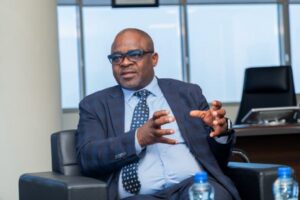
Meanwhile, IRDP Principal Prof Hozen Mayaya highlighted progress made during the tenure of the 13th Governing Council, particularly in improving the quality of education, research and innovation.
He said the institute had also strengthened youth entrepreneurship and employment through its Business and Innovation Incubation Centre.
Through the initiative, some young beneficiaries had established their own businesses and started employing other young people, demonstrating the potential of institutional innovation programmes to create employment beyond conventional salaried jobs.

Prof Mayaya said IRDP had also expanded partnerships with local and international institutions through memoranda of understanding aimed at strengthening its academic and research capacity.
Among these collaborations is its partnership with the Ministry of Finance on research supporting improvements in government budget policies and national development planning. The partnership provides an opportunity to connect academic research with public policy, helping government institutions access evidence and technical expertise in addressing economic planning challenges.