
By Correspondent Josephine Majura
Tanzania is stepping up efforts to strengthen its financial crime prevention framework ahead of a major international assessment in 2028, with the government calling for closer cooperation among regulatory, investigative and law enforcement institutions to protect the country’s financial system and maintain investor confidence.
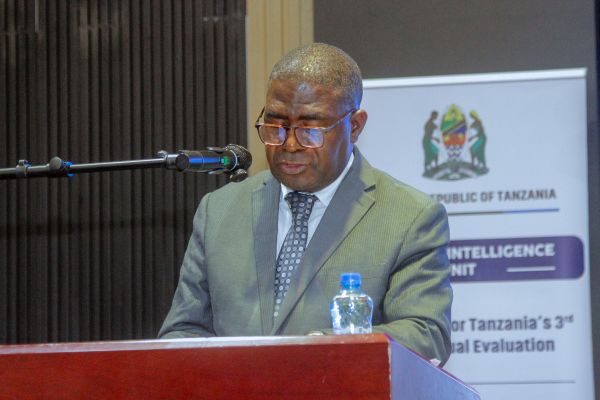
Deputy Minister for Finance, Eng Mshamu Ali Munde (pictured above), said effective action against money laundering, terrorism financing and the proliferation financing of weapons of mass destruction required coordinated efforts across government institutions rather than relying on the Financial Intelligence Unit (FIU) alone.
He made the remarks in Morogoro while officially opening a training programme to prepare government institutions and other stakeholders for Tanzania’s Third Mutual Evaluation of its Anti-Money Laundering, Counter-Terrorism Financing and Counter-Proliferation Financing (AML/CFT/CPF) framework, scheduled for 2028.
The training was organised under the Eastern and Southern Africa Anti-Money Laundering Group (ESAAMLG).
Speaking on behalf of Finance Minister Ambassador Khamis Mussa Omar, Mr. Munde said the government was committed to strengthening the country’s legal, regulatory and institutional frameworks to ensure effective implementation of international standards.
He said institutions including the Police Force, the Prevention and Combating of Corruption Bureau (PCCB), the Tanzania Intelligence and Security Service (TISS) and the FIU had complementary responsibilities that were critical to the success of the national strategy.
“Combating these crimes cannot be achieved by relying on the Financial Intelligence Unit alone. It requires the collective participation of all institutions mandated to fight financial crime,” he said.
Effectiveness matters beyond compliance
Mr. Munde said Tanzania had made progress in previous assessments, but preparations for the 2028 evaluation required greater emphasis on demonstrating measurable results rather than simply having laws, regulations and policies in place.
This distinction is important because international AML/CFT assessments examine not only whether countries have adopted recommended standards but also whether their institutions can effectively detect, investigate and prosecute financial crimes.
The deputy minister said the training was designed to improve officials’ understanding of international requirements, clarify institutional responsibilities and strengthen coordination and information-sharing.
It would also provide a platform for participating institutions to exchange experiences, identify operational challenges and develop joint strategies to address weaknesses.
He warned that shortcomings at any stage of the criminal justice process, from investigation and prosecution to the delivery of court judgments, could undermine the effectiveness of the entire financial crime prevention system.
For Tanzania, the implications extend beyond law enforcement.
A credible financial integrity framework is important for protecting public resources, safeguarding financial institutions and sustaining confidence among international business partners, investors and development institutions.
Weak controls against illicit financial flows can expose banks and other financial service providers to financial, operational and reputational risks, potentially affecting their relationships with international correspondent banks and access to cross-border financial services.
ESAAMLG recognises Tanzania’s commitment
ESAAMLG representative Joseph Jagada commended Tanzania for demonstrating political commitment and determination to strengthen its systems for combating money laundering and terrorism financing.
He said the participation of senior government officials in the preparatory programme reflected the importance attached to the 2028 assessment and the country’s willingness to address financial crime risks.
Mr. Jagada described Tanzania’s commitment as an example for other ESAAMLG member countries, urging technical experts and officials to discharge their responsibilities professionally and collaboratively.
He emphasised that successful preparations would require sustained engagement across institutions rather than isolated efforts by individual agencies.

The assessment is also expected to provide an opportunity for Tanzania to identify gaps in its existing systems and strengthen institutional capacity to respond to increasingly sophisticated financial crime methods.
FIU highlights importance of international assessments
Financial Intelligence Unit Commissioner Majaba Magana said international evaluations were essential in measuring how effectively countries implemented global standards against money laundering and terrorism financing.
He explained that the assessments also took into account changing methods used by criminals, making continuous improvements to laws, regulations and supervisory systems necessary. According to Mr. Magana, the evaluations help countries identify achievements and weaknesses, strengthen the capacity of relevant institutions and protect their financial systems from criminal exploitation.