By Saidina Msangi and Abdul Madenge, Mbeya
TIA Mbeya graduates 1,736 as government steps up investment in practical skills, technology and higher education to support the Dira 2050 transformation agenda.
The government is intensifying reforms in Tanzania’s education sector, with a growing emphasis on practical skills, innovation, technology and professional training as part of efforts to prepare the country for its ambitious economic transformation agenda under the National Development Vision 2050.
The strategy is intended to build a competitive, knowledge-driven economy capable of achieving upper-middle-income status, with a targeted Gross Domestic Product (GDP) of US$1 trillion and per capita income of at least US$7,000 by 2050.
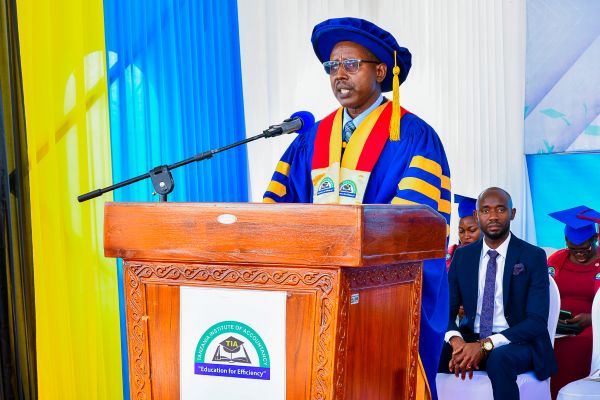
Deputy Minister for Finance, Mshamu Ali Munde, said the transformation would require an education system that produces graduates equipped to respond to changing labour market demands, support productivity and create employment opportunities.
Speaking at the 24th graduation ceremony of the Tanzania Institute of Accountancy (TIA), Mbeya Campus, Munde said Dira 2050, whose implementation began in July this year, prioritises productive sectors with strong potential for job creation, export growth and domestic value addition.
He said investment in education and skills development was central to achieving these objectives, particularly as the economy increasingly embraces science, technology, research and digital systems.
“Dira 2050 also places emphasis on science, technology, research and digital systems. Practical education, skills and innovation are therefore the driving forces of this vision. This is why education policy reforms, student financing and investment in institutions such as TIA must move together,” he said.
His remarks underline the growing recognition that Tanzania’s economic ambitions will depend not only on investment in physical infrastructure but also on the quality and relevance of its human capital.
Education financing and skills development
Munde said the Sixth Phase Government had continued to prioritise education through policy reforms, increased financing and investment in training institutions.
He cited the revised Education and Training Policy, launched by President Samia Suluhu Hassan in February this year, as an important step towards creating a more practical and employment-oriented education system.
The policy provides for vocational and general education pathways, with the objective of equipping young people with skills that can enable them to secure employment or establish their own businesses.
Higher education financing is another important component of the government’s strategy.
Through the Higher Education Students’ Loans Board (HESLB), established in 2005, the government continues to provide financial support to eligible students to widen access to university and professional education.
At TIA’s Mbeya Campus, 2,158 students have benefited from government-funded loans amounting to Sh1.734 billion, according to Munde.
Addressing the graduates, the Deputy Minister challenged them to translate their academic qualifications into practical solutions to economic and social challenges.
He urged them to embrace entrepreneurship, use technology responsibly and remain committed to professional ethics in an increasingly competitive working environment.
He also encouraged graduates to explore opportunities presented by artificial intelligence (AI), particularly in improving efficiency, research, learning and innovation.
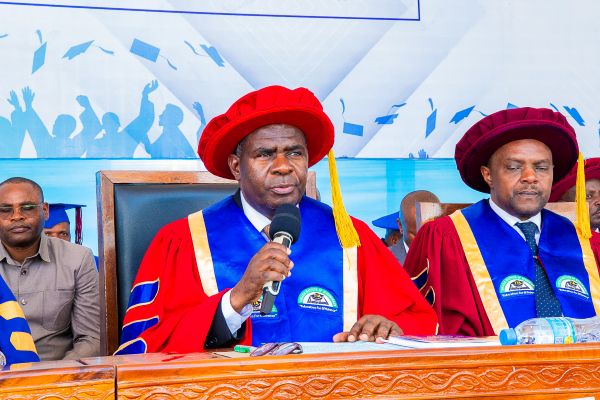
“Do not wait until everything is in place before taking action. Start with what you have, set goals and use technology, including AI, to improve efficiency, learn and innovate. However, do not allow it to think on your behalf,” he said.
He further emphasised the importance of accuracy in handling information, protecting confidential client and employer data, and upholding professional standards.
TIA expands training and research capacity
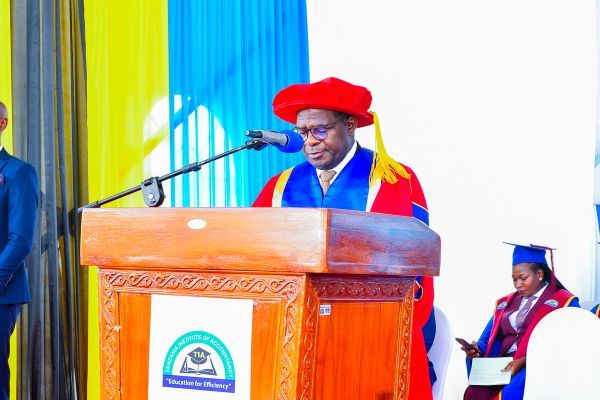
Meanwhile, TIA Chief Executive Officer, Professor William Amos Pallangyo, said the Mbeya Campus had graduated 1,736 students across different qualification levels, comprising 881 women, equivalent to 50.6 percent, and 855 men, representing 49.4 percent.
The number represents a 17.3 per cent increase compared with the 1,480 graduates recorded in the 2024/25 academic year.
The growth reflects the institution’s expanding contribution to professional skills development, particularly in disciplines that support business operations, financial management and public administration.
Pallangyo said the campus had also recorded encouraging growth in student enrolment, admitting 1,953 students in the 2026/27 academic year. The figure is expected to reach 2,500 when the admission exercise is completed.
He attributed the expected growth partly to the introduction of new postgraduate degree programmes in accounting, procurement, business administration, human resource management and marketing.
The programmes are expected to widen access to advanced professional training for people in Tanzania’s Southern Highlands and neighbouring countries, particularly Malawi, Zambia and Mozambique.
This regional dimension could strengthen Mbeya’s position as an emerging centre for higher education and professional development, serving both domestic and cross-border demand for specialised skills.
The expansion also presents opportunities for businesses and employers seeking professionals with advanced qualifications in financial management, procurement systems, corporate administration and market development.
Research and infrastructure investment
Beyond teaching and enrolment, Pallangyo said TIA Mbeya was strengthening its research and innovation capacity to respond more effectively to labour market requirements.
Academic publications increased from 20 to 22, representing 10 per cent growth, with research activities being undertaken in collaboration with government institutions and the private sector.
He said the partnerships were intended to ensure that academic research addressed practical challenges facing employers and the wider economy.
For a country seeking to build a knowledge-based economy, stronger collaboration between training institutions, government and businesses is essential in bridging the gap between academic qualifications and workplace requirements.
Infrastructure development has also been part of the campus expansion programme.
Pallangyo said government investment had enabled the completion of renovations to nine classrooms and construction of a modern main entrance gate, while renovation of the administrative building was ongoing.
The improvements are expected to enhance the learning environment and strengthen the institution’s capacity to accommodate a growing student population.
Meanwhile, Chairman of the Ministry of Finance Advisory Board, Professor Johaveness Aikaeli, commended the government, through the Ministry of Finance, for its continued support and oversight of TIA.
He pledged that the board would continue advising the institution’s management to ensure its programmes and operations remained aligned with national development priorities.
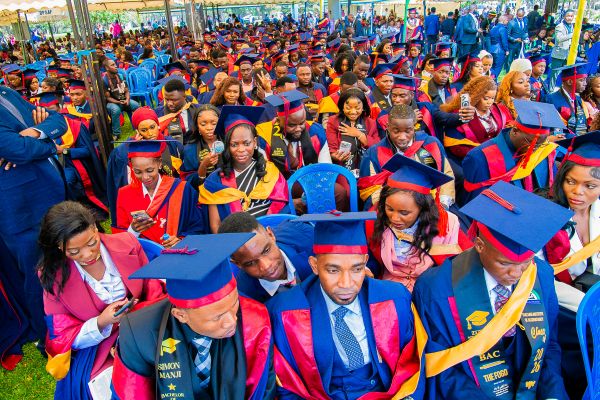
Aikaeli also urged graduates to develop teamwork, respect differing opinions and build professional relationships that encourage knowledge-sharing and collective problem-solving.
Turning qualifications into economic value
The expansion of TIA Mbeya comes at a time when Tanzania is seeking to strengthen the link between education, employment and economic productivity.
The increase in graduates, introduction of postgraduate programmes and investment in research demonstrate the role professional training institutions can play in supplying skills required by a modernising economy. However, the broader challenge will be ensuring that the growing number of qualified graduates translates into higher productivity, business growth and sustainable employment.