
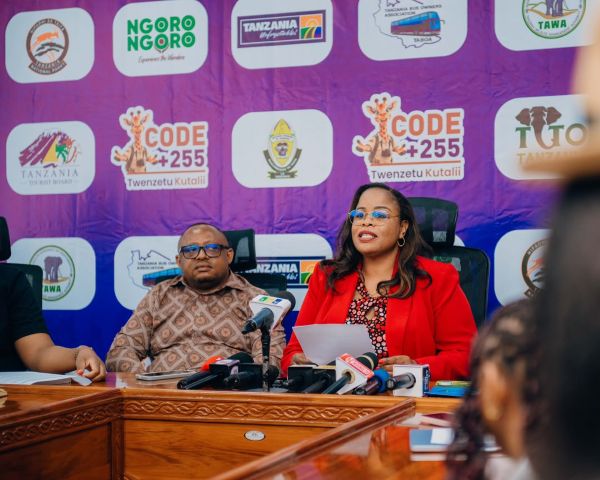
CODE +255 initiative seeks to turn festive-season travel into business opportunities for tourism operators, transport companies and hospitality enterprises.
By Business Insider Reporter
The Tanzania Tourist Board (TTB) has launched a three-month domestic tourism campaign aimed at encouraging Tanzanians to explore their country while creating new business opportunities for private-sector players across the tourism value chain.
Dubbed CODE +255 – TWENZETU KUTALII, the campaign will run from October 27, 2026, to January 15, 2027, capitalising on increased travel during the end-of-year and New Year festive season.
The initiative seeks to expand the domestic tourism market by encouraging more Tanzanians to visit the country’s attractions, participate in cultural events and use locally provided tourism services.
For businesses, the campaign presents an opportunity to reach a wider customer base, develop affordable travel packages and generate additional revenue from domestic visitors.
Speaking at the launch, TTB Director General Dr. Thereza Mugobi said the campaign reflects a deliberate effort to strengthen domestic tourism by encouraging Tanzanians to appreciate their country’s natural resources, history and cultural heritage.

“We believe in the saying, ‘Mcheza kwao hutunzwa.’ As Tanzanians, we must start at home. We must know Tanzania, visit it, enjoy it and take pride in our natural wealth, history and culture before inviting guests from all over the world to come and see the beauty of our country,” she said.
Dr. Mugobi credited President Samia Suluhu Hassan’s international tourism promotion initiatives, including Tanzania: The Royal Tour and Amazing Tanzania, with helping to strengthen the country’s profile in the global tourism market.
She also acknowledged the leadership of the Minister for Natural Resources and Tourism, Dr. Ashatu Kijaji, in advancing the sector.
TTB, she said, would continue working with the ministry and tourism stakeholders to increase Tanzanians’ participation in domestic travel and broaden the sector’s economic contribution.
Tourism extends beyond wildlife
A central feature of the campaign is the promotion of tourism beyond national parks, game reserves and other established attractions.
TTB wants Tanzanians to recognise the commercial and cultural value of the country’s wider tourism offering, including food, music, arts, exhibitions, festivals, sports and historical sites.
Dr. Mugobi said these activities could stimulate travel, increase demand for services and generate economic benefits for communities across the country.
“Tourism does not end with visiting natural attractions alone. Our foods, culture, music, arts, exhibitions, festivals and sports events, including marathons, are an important part of tourism. Events are tourism too, as they attract people to travel, use various services and contribute to the economy of respective areas,” she said.
This broader approach could create opportunities for businesses that do not traditionally identify themselves as tourism operators.
Restaurants, food vendors, artists, cultural performers, event organisers and local traders could benefit as visitors spend money on accommodation, transport, entertainment and locally produced goods.
For small and medium-sized enterprises, greater domestic travel could also provide an entry point into the tourism economy without necessarily requiring substantial investment in major tourist facilities.
Private sector takes centre stage
The campaign will rely on partnerships with private-sector businesses, transport operators, tourism associations, celebrities, social media influencers and content creators to expand its reach.
One of the planned distribution channels is the Tanzania Bus Owners Association (TABOA), through which more than 400 buses are expected to carry tourism promotional content.
The campaign will also engage stakeholders associated with the Standard Gauge Railway (SGR) and institutions operating under the Ministry of Natural Resources and Tourism.
These include the Tanzania National Parks Authority (TANAPA), the Ngorongoro Conservation Area Authority (NCAA), the Tanzania Wildlife Management Authority (TAWA), the Tanzania Forest Services Agency (TFS) and the National Museum.
The involvement of transport operators is particularly significant because domestic tourism depends partly on the affordability, accessibility and convenience of travel.
By using buses and railway services to promote destinations, TTB aims to reach potential travellers along established transport networks while bringing tourism information closer to the public.
For participating companies, the campaign offers an opportunity to connect transport services with tourism products, potentially encouraging customers to combine travel with visits to attractions and other destinations.
However, the extent of the commercial benefits will depend on how effectively participating businesses translate the promotional drive into affordable, accessible and attractive offers.
Affordable packages to drive demand
TTB says participating stakeholders will provide special tourism offers and packages across the country to make travel more affordable for Tanzanians.
According to Dr. Mugobi, the campaign will encourage citizens to follow official information channels and use QR codes to access details about available offers and opportunities.
The approach could help connect travellers with businesses offering transport, accommodation, guided tours and other tourism-related services.
For operators, competitively priced packages could help attract customers who might otherwise consider tourism too expensive or beyond their budgets.
The festive-season timing also offers businesses an opportunity to develop products suited to families, groups of friends and domestic travellers seeking short breaks.
Nevertheless, converting increased awareness into sustained business growth will require more than promotional messages. Operators will need to provide reliable services, transparent pricing and packages that match the purchasing power and travel preferences of different customer groups.

The campaign’s longer-term value will therefore depend partly on whether businesses can retain newly attracted customers beyond the festive season.
Building a stronger domestic market
Dr. Mugobi called on Tanzanians to participate in promoting the country’s tourism attractions while respecting conservation requirements and cultural values.
She said domestic visitors had an important role to play in building the country’s tourism brand and expanding the economic opportunities associated with the sector. “Every Tanzanian is an ambassador for his country’s tourism. When we participate in promoting our attractions, our foods, our culture and our events, we contribute to building Tanzania’s brand and increasing economic opportunities for citizens,” she said.