

By Costantine Muganyizi
Tanzania’s latest continental award for the Ngorongoro Conservation Area adds to the country’s growing tourism credentials, strengthening the case for conservation-led investment, destination marketing and wider economic benefits from the travel industry.
The Ngorongoro Conservation Area Authority (NCAA) received the Excellence in Sustainable Tourism and Conservation Management Award at the Africa Business Forum & Awards 2026 in Accra, Ghana, on October 17.
The recognition highlights efforts to protect biodiversity, preserve cultural heritage and promote tourism while balancing environmental conservation with community interests.
NCAA Conservation Commissioner Abdul-Razak Badru said the accolade reinforces the authority’s responsibility to protect Ngorongoro’s natural and cultural heritage while encouraging responsible tourism.
For Tanzania, the achievement comes as tourism continues to generate substantial foreign-exchange earnings, support businesses and create employment across accommodation, transport, food services, tour operations and other related activities.
It also reinforces the commercial importance of maintaining the quality of the natural and cultural assets on which the country’s international tourism appeal depends.
The recognition follows Ngorongoro’s previous success at the World Travel Awards, where it was named Africa’s Leading Tourist Attraction in 2023 and 2025.
Tourism growth underlines the economic opportunity
The scale of the opportunity is reflected in the country’s latest tourism statistics.
According to the 2025 International Visitors’ Exit Survey, published by the Bank of Tanzania (BoT) and the National Bureau of Statistics, Tanzania recorded 2,294,495 international tourist arrivals in 2025, up from 2,141,895 in 2024, an increase of 7.1 percent.
Tourism earnings rose by 13 percent to US$4.41 billion from US$3.90 billion in 2024, indicating that the sector generated additional foreign exchange as visitor numbers and spending increased.
The BoT’s monthly economic review (MERs) remain an important indicator of this performance. Its external-sector analysis tracks travel receipts, a major component of Tanzania’s services exports, alongside transport and other services.
In the year ending August 2026, service receipts increased by 11.7 percent to
US$8,255.4 million, from US$7,389.8 million in the year ending August 2025, mainly
backed by transport and travel receipts. Transport receipts rose to US$3,303.3 million
from US$2,612.5 million, underpinned by freight earnings from transit trade.
“Travel receipts increased to US$4,389.7 million from US$4,314.7 million, reflecting continued resilience in tourism. On a monthly basis, service receipts rose to US$926.0 million in August 2026 from US$772.9 million in August 2025, resulting largely from
travel receipts,” the central bank notes in the September 2026 MER.
The annual survey figures provide a clear benchmark for the industry: international arrivals have increased steadily from 1.45 million in 2022 to more than 2.29 million in 2025, while annual tourism earnings have climbed above US$4 billion.
The wider tourism market is also supported by domestic travel. Government statistics show that Tanzania received about 5.9 million tourists in 2025 when domestic visitors are included, compared with approximately 5.4 million in 2024. These totals should be distinguished from international arrivals, which are the principal measure used to assess foreign visitor flows and associated foreign-exchange earnings.
For the economy, tourism spending reaches well beyond the attractions themselves. It generates business for hotels, restaurants, airlines, ground transport operators, guides, travel agencies, local producers and cultural enterprises. It also supports public revenues and creates opportunities for small businesses, including those supplying food, handicrafts and other goods to tourism operators.
Experts say the economic impact depends on how much visitor spending is retained within the country, the extent of local procurement and employment, and whether communities living near attractions participate meaningfully in the benefits.
Conservation as an economic asset
Established in 1959, the Ngorongoro Conservation Area is distinctive because it combines wildlife conservation with human settlement and cultural heritage. Maasai pastoralists continue to inhabit the area, making the management of the landscape a complex balance between ecological protection, traditional livelihoods and tourism.
Its centrepiece, the Ngorongoro Crater, is the world’s largest intact volcanic caldera. The wider conservation area encompasses highland plains, grasslands, woodlands and forests, alongside important wildlife habitats and archaeological sites that contribute to understanding human evolution.
These attributes give Ngorongoro a competitive advantage in a tourism market where travellers increasingly seek distinctive wildlife experiences, natural landscapes and cultural encounters.
Its significance also extends beyond the immediate visitor economy. Effective conservation protects the natural capital that sustains tourism over the long term. Damage to ecosystems, wildlife habitats or cultural heritage could weaken the very attractions that bring visitors and investment to the area.
The award therefore carries an economic message as well as a conservation one: protecting natural and cultural heritage is fundamental to sustaining the value of the tourism product.
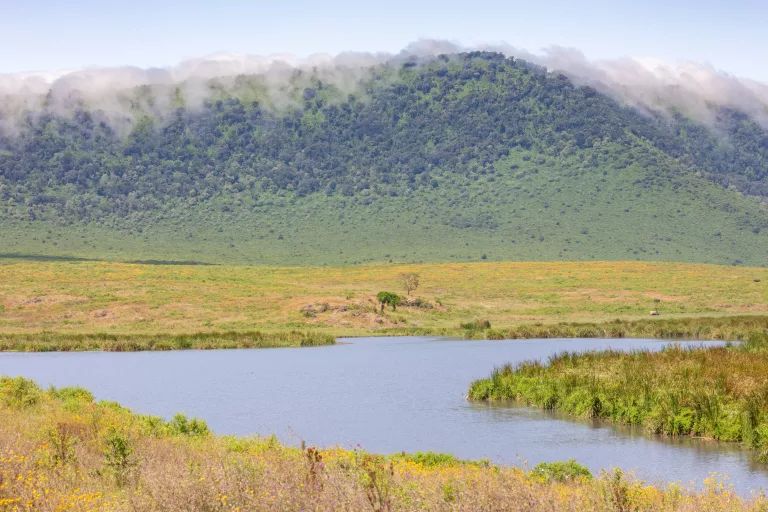
For NCAA, the challenge is to translate recognition into lasting results through responsible visitor management, quality services, conservation financing and meaningful benefits for communities.
Competing in Africa and the global travel market
Tanzania operates in a competitive regional and international tourism market alongside destinations such as Kenya, Rwanda, Uganda, Botswana and South Africa. These countries compete for visitors, investment, airline connectivity, tour operator partnerships and international marketing attention.
Tanzania’s strength lies in the breadth of its tourism offering. The northern safari circuit brings together Ngorongoro, Serengeti National Park, Tarangire National Park and Lake Manyara National Park. The Serengeti’s annual wildlife migration and Ngorongoro’s crater landscape are among the country’s most recognisable attractions.
Mount Kilimanjaro provides a major draw for mountaineering and adventure tourism, while Zanzibar combines beaches, marine experiences and the historic Stone Town. Further opportunities lie in the southern and western circuits, including Nyerere National Park, Ruaha National Park, Mahale Mountains National Park and Gombe Stream National Park.
This diversity gives Tanzania scope to attract different visitor segments, from high-value safari travellers and climbers to beach holidaymakers, cultural tourists and visitors interested in nature and conservation.
The country has also strengthened its international profile through destination awards. Tanzania was named Africa’s Leading Destination at the 2026 World Travel Awards, while Serengeti National Park received international recognition as a leading national park. Such distinctions can help raise awareness and support destination marketing, although their commercial value ultimately depends on converting interest into bookings, longer stays and visitor spending.
“Competitiveness requires more than awards, however. Air connectivity, reliable transport, service quality, digital booking facilities, visitor safety, pricing and the ease of moving between attractions all influence travellers’ choices,” a travel management expert at FCM Skylink Travel & Tours Limited told Business Insider.
“Coordinated marketing and stronger links between national parks, accommodation providers, airlines and tour operators are therefore essential to turn international visibility into sustained business growth,’ he added.
Turning recognition into wider development
The Ngorongoro award comes at a time when Tanzania is seeking to expand investment, diversify economic opportunities and strengthen the contribution of productive sectors to national development. Tourism can support these ambitions by generating foreign exchange, creating jobs for young people, opening markets for local suppliers and encouraging investment in transport, accommodation, communications and other infrastructure. Its links with agriculture, aviation, financial services, retail and creative industries also give it a broader economic footprint.